


Brown Farm Scene Painting
These brown farm scene painting works capture rural life on canvas and paper, offering a quiet glimpse into historical agricultural routines.
Brown Farm Scene Painting
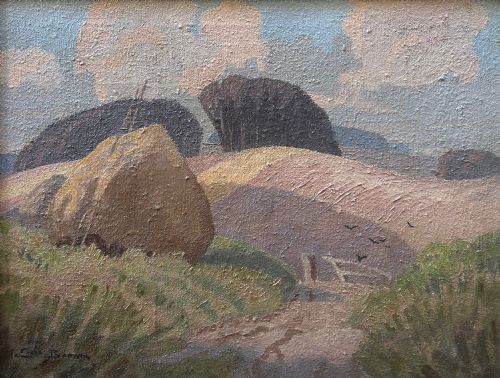
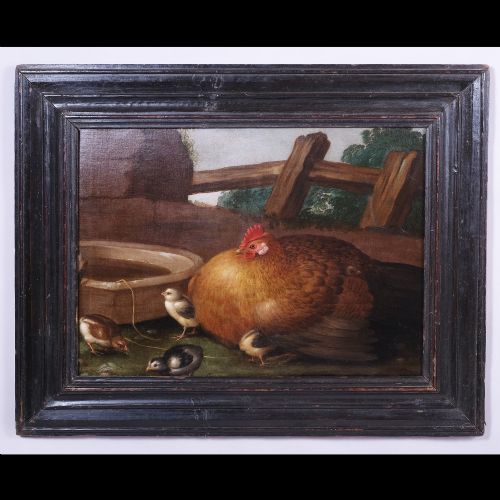
A brown farm scene painting typically portrays agricultural life, featuring working horses, cattle, farmyards, and pastoral landscapes. These works span from the eighteenth century through the early twentieth century, reflecting shifting rural traditions across Britain and France.
Buyers will encounter oil paintings on canvas and panel alongside watercolours on paper. The palette relies heavily on earthy brown tones to render fields, livestock, and traditional farm buildings.
Most examples originate from the nineteenth and early twentieth centuries, encompassing styles such as Victorian pastoral, British realism, and French provincialism. Common subjects include plough teams, haystacks, and labourers resting near barns.
Materials and technique
Artists painted primarily in oil on canvas or wood panels, building rich textures with layered pigments. Watercolours on paper provide a lighter medium for capturing agrarian subjects.
Brushes applied oil paint to render the varied textures of animal coats, timber barns, and muddy farmyards. Supports range from stretched canvas to solid wood panels and paper sheets.
Materials span canvas, wood, and paper, utilising oil paint and watercolour across nineteenth and twentieth-century British and French works.
Judging quality and execution
Quality rests in the handling of light, shadow, and anatomical accuracy in rendering farm animals and human figures. Stronger works demonstrate confident brushwork that defines the weight of shire horses and the atmosphere of a rural landscape.
The sophistication of the composition separates standard decorative watercolours from fine art oil paintings by named artists. A successful piece balances the dominant brown tones with subtle tonal shifts to give depth to the farmyard scene.
Raimond Louis Lecourt·James William Booth·Ernest Pile Bucknall·Samuel Joseph Clark·Percival Glenfern·John Frederick Herring·John Linnell·Pierre Emmanuel Dielmans·Florence Hess·Herbert Royle·Arthur Winter Shaw·Owen Bowen·Gustav Goemans·Frederick William Jackson·John Percy Cooke·Henry Birtles·Ernest Higgins Rigg·George Hamilton Constantine·William Greaves·Fred Lawson·Charles James Adams
The Brown Farm Scene Painting Glossary
- Oil on canvas
- Pigment suspended in drying oil applied to a woven fabric support stretched over a wooden frame. This combination allows for rich blending and deep earthy tones.
- Watercolour
- Pigments suspended in a water-soluble vehicle applied to paper. It yields transparent washes well suited to lighter landscape studies.
- Oil on panel
- Painting executed on a rigid wooden support rather than fabric. Panels offer a firm surface that preserves fine details in historical works.
- French provincial
- A regional style reflecting rural French aesthetics and domestic farm life. It emphasises unpretentious pastoral subjects rendered with direct observation.
- British realism
- An artistic approach focusing on truthful depictions of everyday subjects without idealisation. In these works, it portrays ordinary agricultural labour and livestock.
Brown Farm Scene Painting: Frequently Asked Questions
What periods do these paintings date from?
The works span from the eighteenth century through the early twentieth century, with a strong concentration of nineteenth-century Victorian and Edwardian examples.
Artists during these eras documented traditional agricultural methods before mechanisation altered rural landscapes entirely.
How should I care for an antique oil painting?
Keep paintings away from direct sunlight and fluctuating humidity to protect both the canvas and the wooden stretcher bars.
Dust the surface gently with a soft, dry brush and avoid using liquid cleaners on the paint layer.
What subjects appear most frequently?
Common motifs include plough horses, dairy cattle, haymaking, farmyards, and rustic barns with resting labourers.
These scenes reflect the daily rhythms of nineteenth and early twentieth-century farming communities.
How do I distinguish oil from watercolour?
Oil paintings feature textured, opaque layers on canvas or wood panel, often showing visible brushstrokes and a heavier surface sheen.
Watercolours are executed on paper under glass, showing transparent washes where the texture of the paper remains visible.