
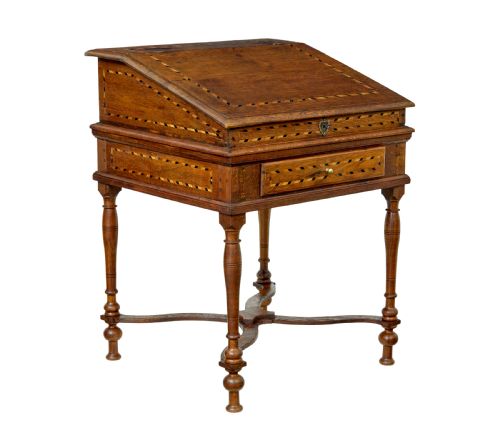


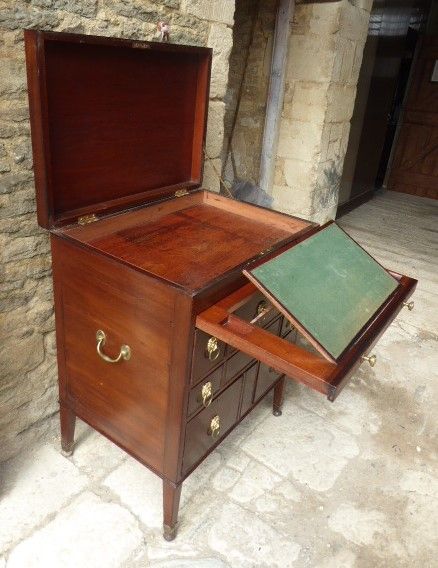


Brown Davenport Desk
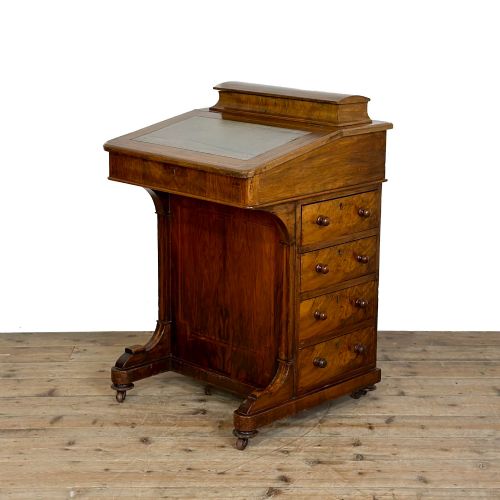
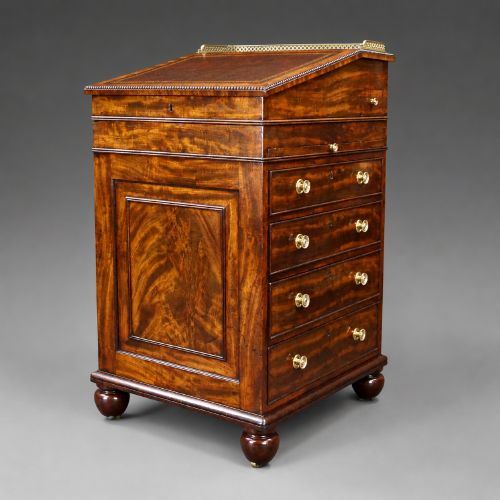
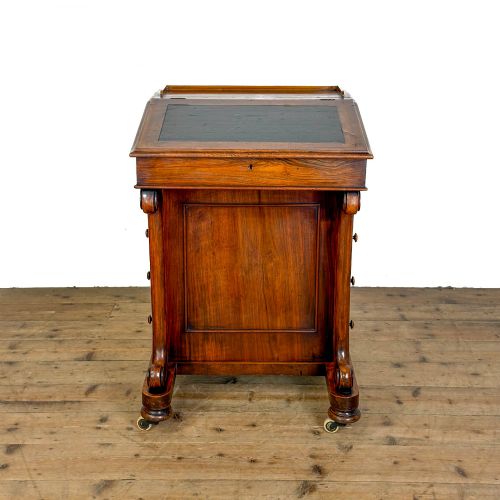
A brown davenport desk is a compact and versatile writing cabinet, combining a sloping top with functional drawers for practical home organisation.
Brown Davenport Desk
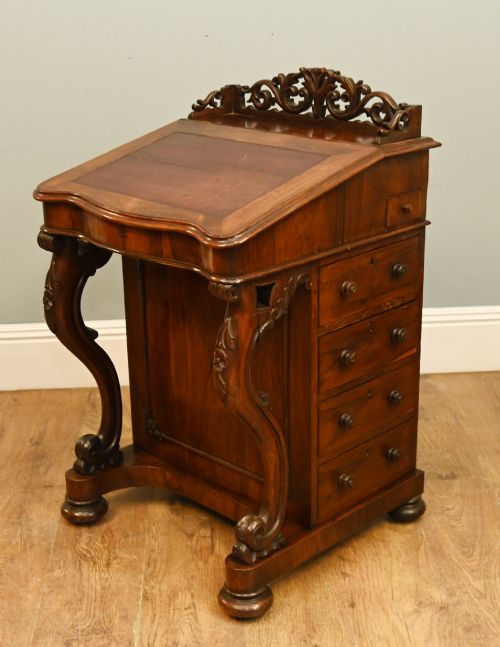
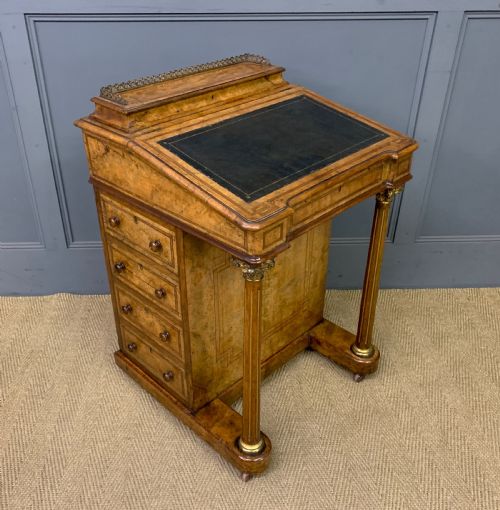
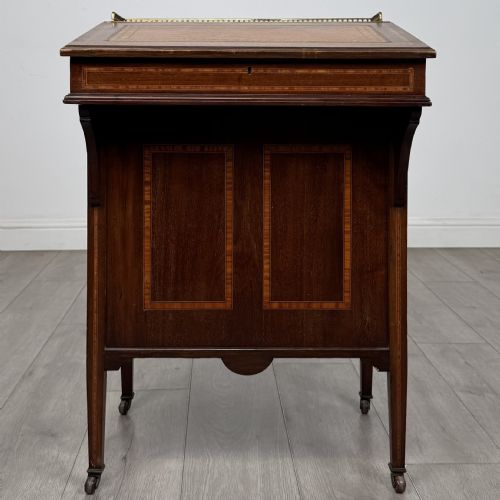
When searching for a brown davenport desk, a buyer encounters a compact writing cabinet designed primarily for domestic use during the Georgian, Regency, and Victorian periods. These pieces typically combine a sloped writing surface with a pedestal of side drawers, offering a clever economy of space without sacrificing utility.
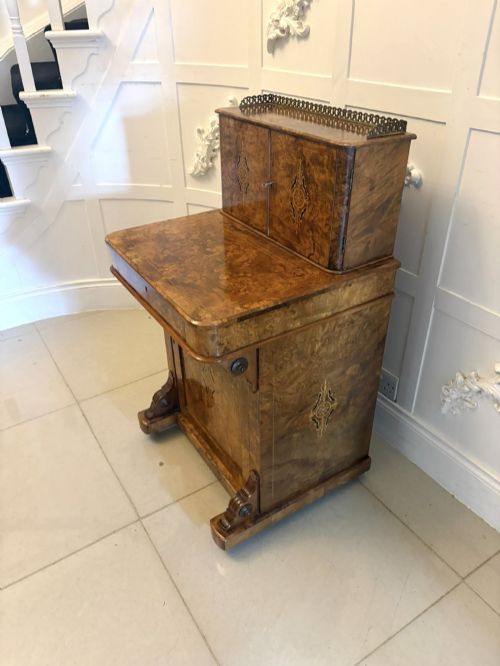
The version most commonly met on this page is the Victorian model executed in mahogany or burr walnut, often incorporating stationery compartments and satinwood interiors. Alongside these, examples span from the 18th century through to the Edwardian era, showing variations in form such as pop-up stationery boxes and slide tops.
Originating as portable writing furniture, these desks suited the parlours and sitting rooms of the 19th century where large library tables proved impractical. The survival of such diverse woods as rosewood, pollard oak, and burr elm demonstrates the enduring popularity of this form across multiple decades.
Materials and construction
Cabinet makers utilised dense hardwoods such as mahogany, walnut, and rosewood for the structural carcasses and outer veneers, applying decorative marquetry and inlay in satinwood for contrast. The incorporation of burr walnut and pollard oak provided striking natural grain patterns across the sloping lids and drawer fronts.
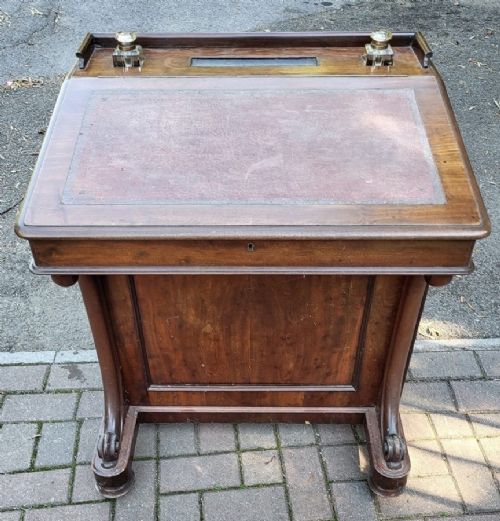
Internal components frequently utilised secondary timbers alongside brass hardware for handles, hinges, and drawer locks. Leather inserts were commonly fitted to the sloping writing surfaces to provide a durable writing plane, while specialised mechanisms allowed for pop-up stationery compartments.
Listings feature woods including mahogany, burr walnut, rosewood, pollard oak, and satinwood across the Victorian, Regency, and Georgian periods.
Assessing quality and execution
Quality in these writing cabinets rests upon the selection of timber veneers and the precision of the cabinet work, particularly in the alignment of drawer runners and secret compartments. Pieces originating from known workshops display superior timber figure, crisp inlay work, and robust internal framing.
The integration of mechanical elements, such as sliding tops and pop-up stationery boxes, separates standard production items from finer examples. Superior specimens maintain smooth operation in these mechanisms alongside well-figured timbers like burr walnut or flame mahogany.
Gillows of Lancaster
The Brown Davenport Desk Glossary
- Davenport desk
- A compact writing cabinet featuring a sloping lid above a pedestal of drawers. This form became popular in the late 18th century and remained a staple of Victorian interior furnishing.
- Burr walnut
- Timber taken from the warted growths on walnut trees, prized for its swirling, highly decorative grain patterns. Cabinet makers utilised it extensively for veneering the exterior surfaces of finer desks.
- Secretaire
- A piece of furniture containing a drawer or compartment configured for writing. In these desks, it often pulls out to reveal internal pigeonholes and small drawers.
- Stationery cabinet
- An upright compartment mounted on the rear of the writing desk to hold paper and envelopes. Some examples operate through a pop-up mechanism concealed within the main body.
- Inlay
- The technique of inserting pieces of contrasting wood or other materials into depressions carved in the base timber. This method created geometric patterns or floral motifs on the writing surfaces and panels.
Brown Davenport Desk: Frequently Asked Questions
What is a davenport desk?
A davenport desk is a small writing cabinet featuring a sloping lid that lifts or opens for storage, positioned above a pedestal of side drawers.
Originally designed as compact writing furniture for domestic interiors, it combined a desk and a set of drawers into a single footprint.
How were davenport desks used?
These desks served primarily for personal correspondence, letter writing, and the storage of writing paper and envelopes within built-in stationery compartments.
Owners typically sat beside the pedestal to write on the sloped surface, utilising the side drawers to keep writing materials close at hand.
Where should I place a davenport in a room?
Because these desks are finished on all sides or designed to stand against a wall, they fit well in corners, studies, or sitting rooms where space is limited.
Their compact size allows them to function as accent furniture while still providing a dedicated writing surface.