

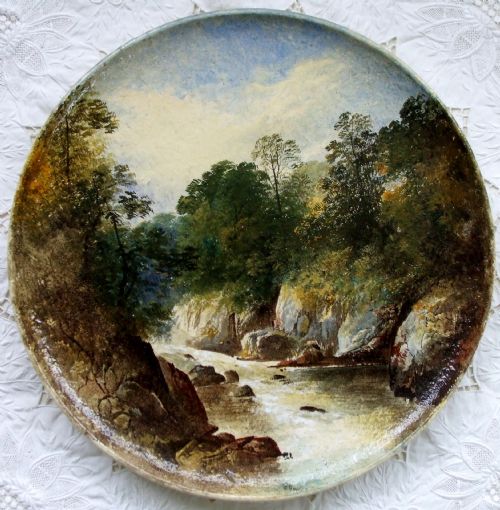


Brown Ceramic Plaque
A brown ceramic plaque brings rich, earthy warmth to a wall, offering painted landscapes and classical portraits captured in durable kiln-fired clay.
Brown Ceramic Plaque
A brown ceramic plaque encompasses decorative wall tiles, chargers, and framed earthenware pieces originating primarily from the nineteenth and early twentieth centuries. These works serve as pictorial art executed in clay rather than canvas, often capturing specific British landscapes or classical figures.
The versions most commonly met on this page include Victorian earthenware plaques painted with natural scenery, alongside French faience and English decorative tiles. They range from intimate cabinet plates to large wall-hanging chargers signed by notable ceramic artists.
How they were made
Potters shaped earthenware, porcelain, and terracotta bodies by hand or mould before applying fluid glazes and mineral pigments. Artisans then fired these pieces at high temperatures to fuse the metallic oxides into the ceramic surface.
Makers utilised detailed overglaze and underglaze painting techniques to render fine portraits and topographical views. Some items incorporate cloisonne work or enamel detailing upon ceramic and porcelain foundations.
Brown Ceramic Plaque Retail Price Guide 2026
Typical asking prices for brown ceramic plaque among the pieces listed under this phrase on Sellingantiques today, from the lower quarter to the upper quarter. They describe what is for sale here now, not the wider market.
One nineteenth-century terracotta mask glowers from the wall as a fierce lion, keeping watch over the room.
What varies in quality
Quality rests upon the skill of the brushwork and the precision of the portraiture or landscape execution. Hand-painted artist-signed pieces demonstrate superior draughtsmanship compared to standard factory output.
The depth and consistency of the glaze application alongside the intricacy of the ceramic body separate finer works from simpler commercial plaques. Kiln control during the firing process dictates the crispness of the final image.
Copeland Pottery·Sherwin and Cotton·Royal Worcester·Minton
The Brown Ceramic Plaque Glossary
- Earthenware
- Porous pottery fired at lower temperatures, commonly used for nineteenth-century wall plaques and decorative tiles. It requires an impermeable glaze to hold water and seal the clay body.
- Faience
- Tin-glazed earthenware originating in Europe, known for its opaque white or tinted background that accepts painted decoration. This technique allows for sharp pictorial scenes on a smooth ceramic face.
- Charger
- A large decorative plate intended for display on a wall or sideboard rather than dining use. These pieces often feature prominent central landscapes or portraits.
- Overglaze
- Pigments applied on top of a fired glaze surface and fixed with a secondary, lower-temperature firing. This method preserves delicate brushwork and vibrant enamel colours.
- Terracotta
- Unglazed or glazed fired red-brown clay utilised for sculptural wall masks and relief plaques. The natural earthy body provides a distinct warm tone.
Brown Ceramic Plaque: Frequently Asked Questions
How do I hang a ceramic plaque?
Most antique wall plaques feature integrated rear wire loops or fitted wooden backing frames designed for secure vertical support. Ensure the fixing matches the weight of the dense earthenware body.
Avoid hanging pieces in areas subject to heavy vibration or direct moisture to protect the ceramic and painted glaze over time.
Were these plaques meant for walls?
Many large chargers and decorative plates were manufactured specifically for display on interior walls or cabinets using wire hangers. Makers often pierced the footrings during production to make wall mounting straightforward.
Other items began as architectural tiles before being framed as standalone works of art for Victorian and Edwardian interiors.
How do I clean an antique plaque?
Dust the surface gently with a soft, dry brush to remove particles without disturbing delicate overglaze paint or enamel work. Avoid liquid cleaners or soaking, as older earthenware can absorb moisture through micro-fissures in the glaze.
Keep pieces away from direct sunlight to prevent the gradual fading of hand-painted pigments over the decades.
How do I identify Victorian pieces?
Victorian plaques frequently display impressed factory marks, registration numbers, or handwritten artist inscriptions on the reverse. The presence of nineteenth-century stylistic cues like pastoral British landscapes or classical revival motifs points directly to this era.
Examine the weight and colour of the earthenware body, as earlier Victorian pastes differ noticeably from twentieth-century porcelain compositions.