
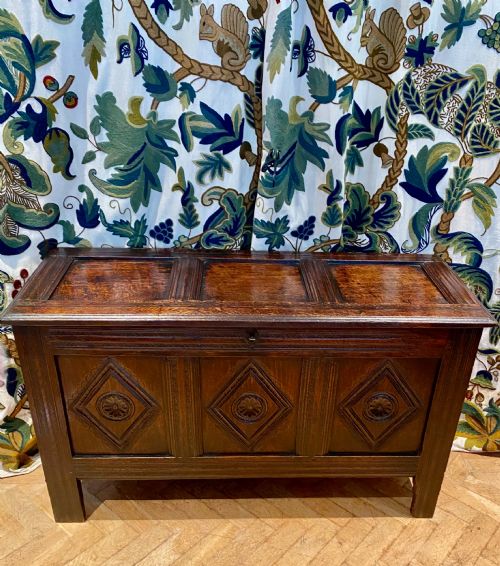
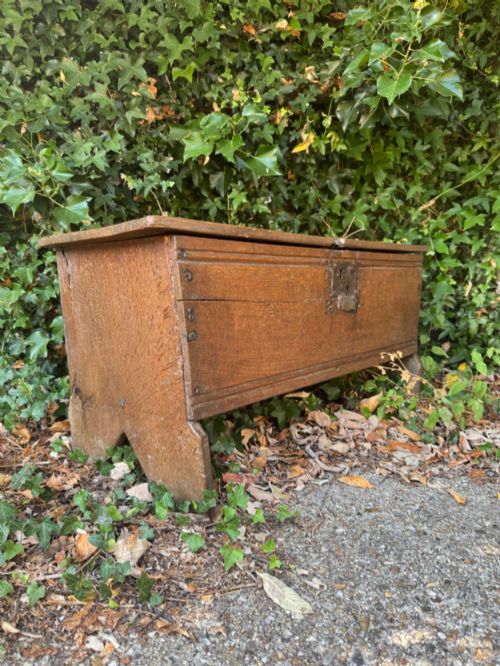
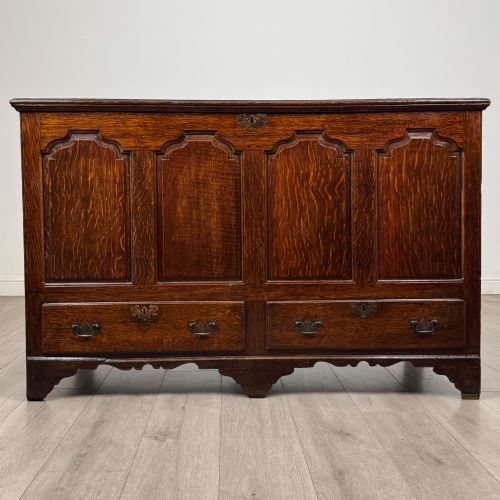
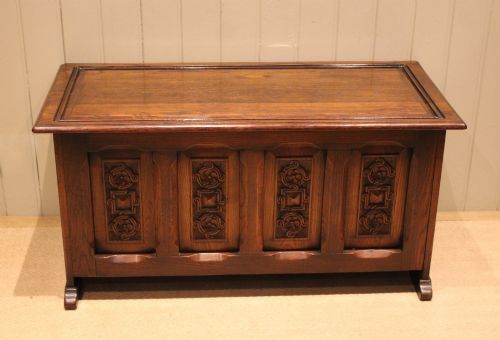
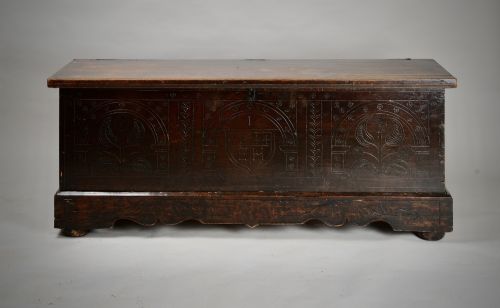
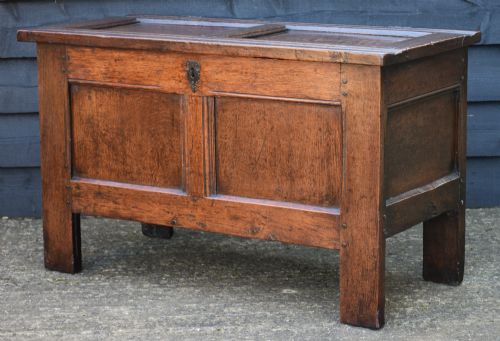
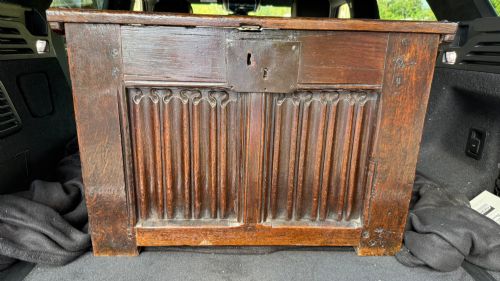
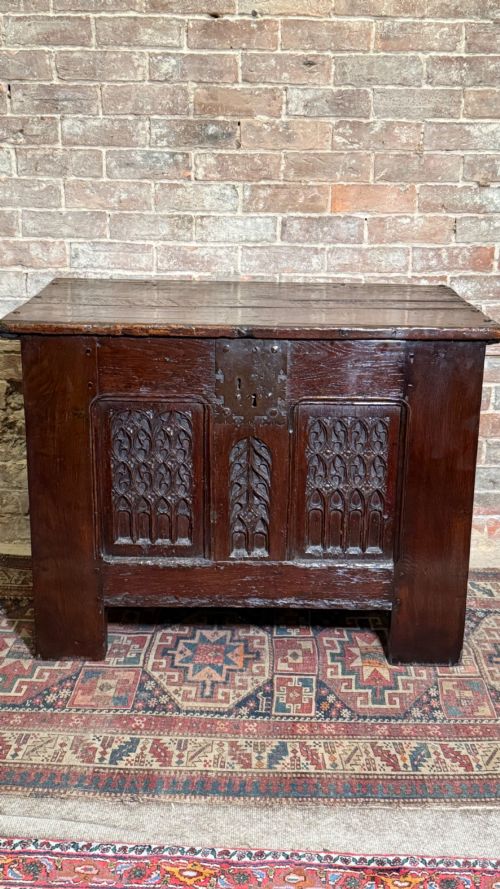
Brown Carved Wooden Trunk
A brown carved wooden trunk offers robust storage rooted in centuries of craftsmanship, bringing historical presence and texture into a room.
Brown Carved Wooden Trunk
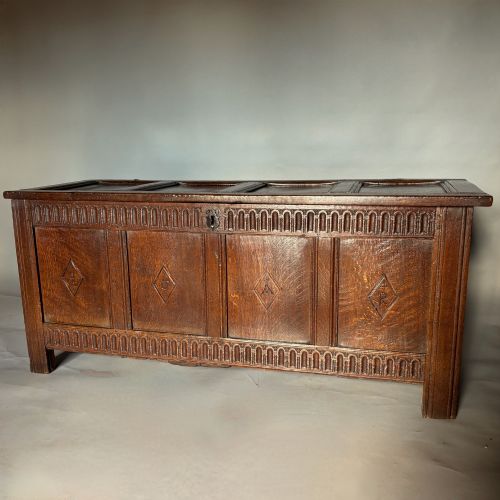
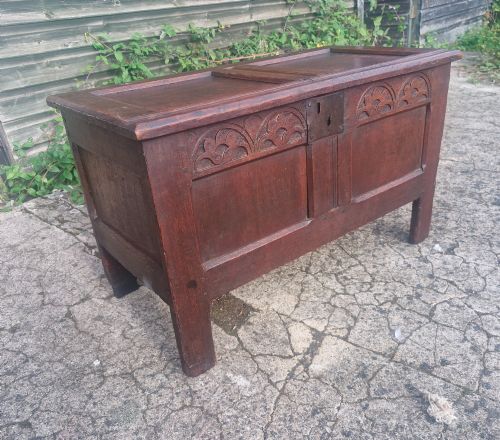
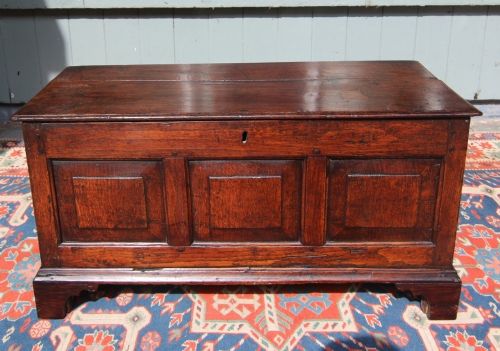
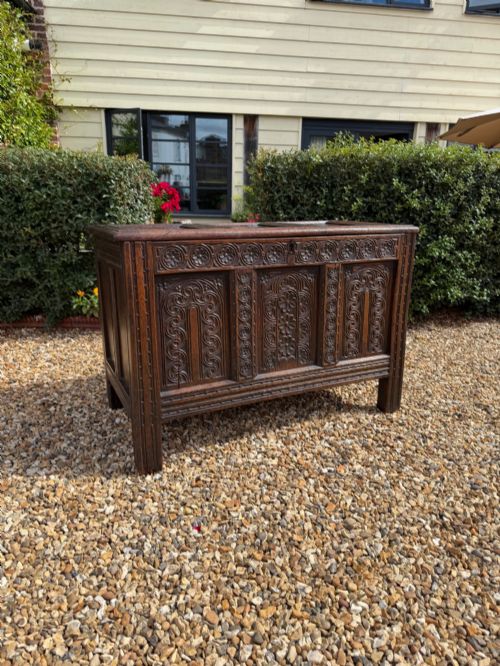
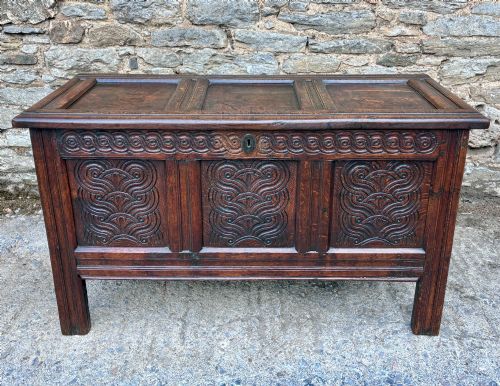
A brown carved wooden trunk appears primarily as an oak coffer or blanket chest originating from sixteenth, seventeenth, and eighteenth century workshops. These pieces serve as practical storage containers that double as substantial furniture items.
The selection ranges from English country pieces to regional European and Asian examples, including camphor wood trunks and dowry chests. Smaller proportions and cottage sizes frequently occur alongside monumental storage chests.
Jacobean and Georgian influences dominate the domestic English offerings, whilst provincial French and Oriental variants introduce distinct regional carving traditions to the selection.
Materials and Construction
Makers rely heavily on solid oak, hardwood, and camphor wood, reinforced with iron and brass fittings such as hinges, straps, and locks. Joinery techniques utilise panelled construction and hand carving directly into the timber surface.
Surface decoration involves hand chiselling, fluting, and figural carving, executed with simple workshop tools. Natural patination develops over centuries through handling and wax polishing.
Listings span from the sixteenth century through to the nineteen thirties, featuring solid oak, mahogany, camphor wood, and iron fittings.
Assessing Quality
Quality rests upon the crispness of the hand carving and the integrity of the original timber rather than uniformity of finish. Retaining original hardware, panel assemblies, and deep surface patination elevates an example.
Heavy alterations, replaced lids, and stripped surfaces diminish the historical integrity of early pieces. Strong construction and untouched timber surfaces distinguish superior examples from heavily restored ones.
The Brown Carved Wooden Trunk Glossary
- Coffer
- A heavy wooden chest traditionally used for storing valuables or documents. These pieces often feature hinged lids and sturdy panelled sides.
- Patina
- The surface sheen and colour developed by wood over long periods of use and exposure. A good patina indicates untouched age.
- Mule chest
- A storage chest featuring one or more drawers beneath the main compartment. This form emerged as domestic storage needs evolved.
- Dowry chest
- A large decorative trunk prepared for a bride's household goods. These items frequently display intricate regional carving or metal mounts.
Brown Carved Wooden Trunk: Frequently Asked Questions
How were these chests used originally?
These pieces served primarily for storing textiles, valuables, and household documents in domestic settings. Their sturdy construction also allowed them to function as seating benches or tables when space required.
Over centuries, their role shifted from utilitarian storage to prominent display furniture within the home.
Where should I place a trunk in my home?
A chest fits naturally at the foot of a bed for blanket storage or serves as a coffee table in a living room. Hallways and entryways also accommodate them well for concealing everyday items.
Keep wooden trunks away from direct heat sources and radiators to prevent the timber from splitting.
How do I distinguish seventeenth century oak?
Seventeenth century oak displays deep medullary rays, often referred to as silver grain, visible across quarter-sawn boards. The construction relies on pegged mortise and tenon joints rather than modern fasteners.
Surface textures show the uneven marks of hand adzes and pit saws rather than mechanical planing.
What is the difference between a coffer and a trunk?
A coffer strictly denotes a heavy box constructed with framed panels and stiles, typical of European cabinet making. A trunk often implies a simpler board construction or a travelling container covered in leather or metal.
In common usage, the terms frequently overlap across different regional traditions.