
Brown Carved Wooden Figure
A brown carved wooden figure brings centuries of hand-carved character into a room through rich tones and detailed craftsmanship.
Brown Carved Wooden Figure
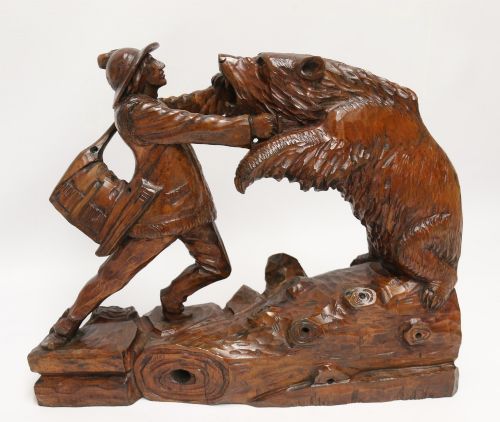
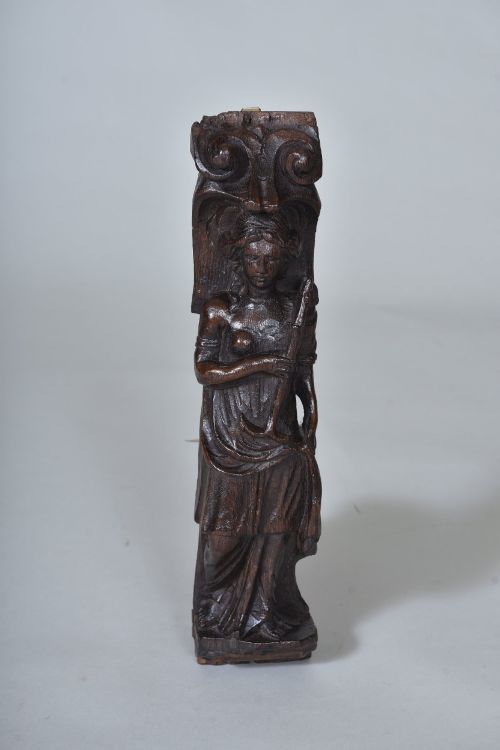
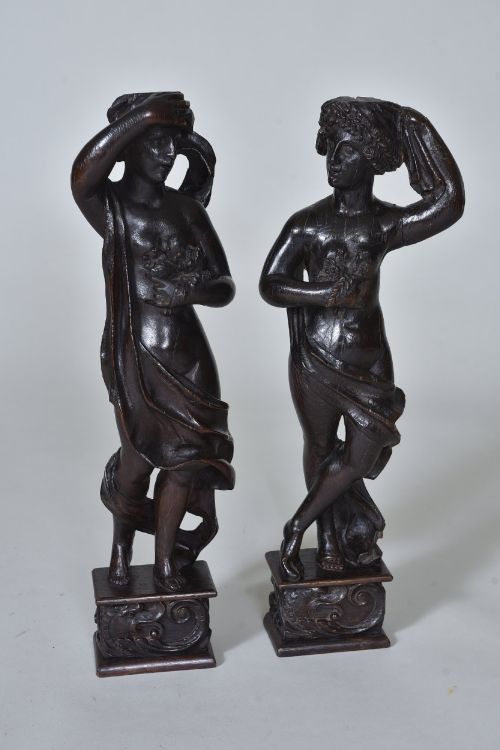
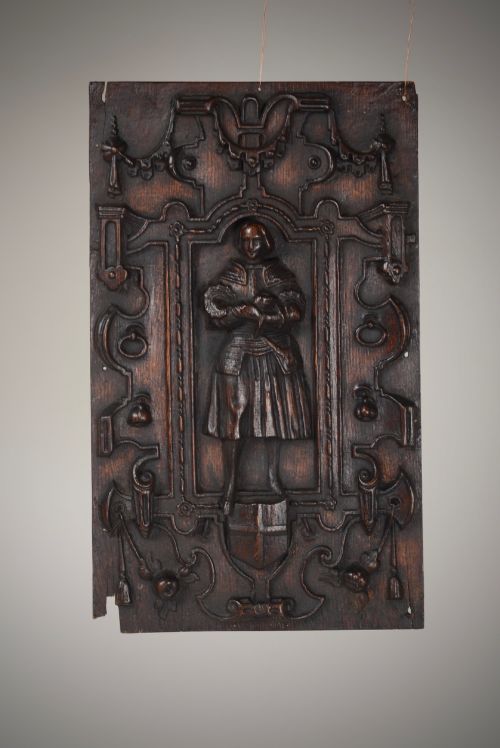
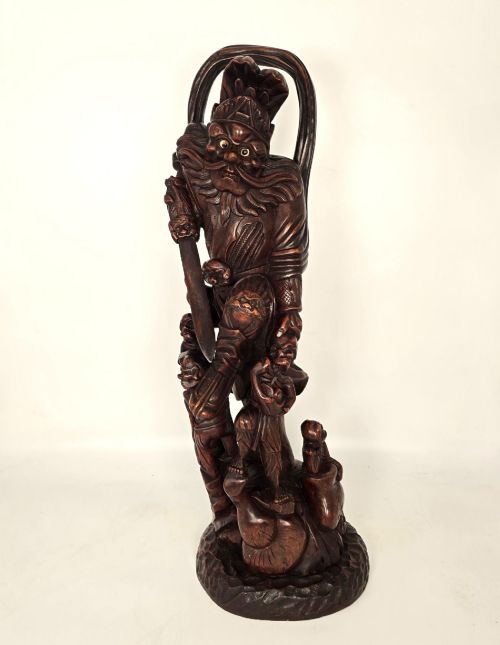
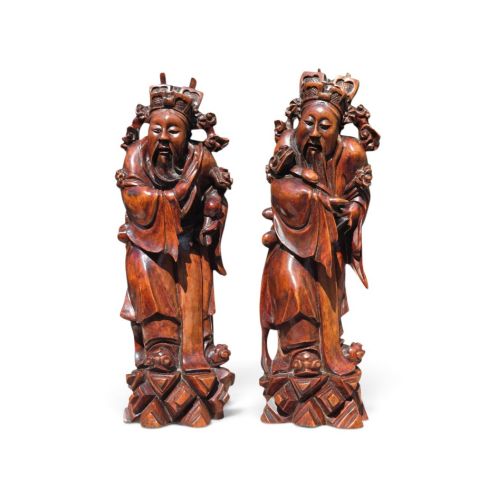
When you search for a brown carved wooden figure, you encounter a diverse selection of sculptural objects spanning from the seventeenth century through to the early twentieth century. The inventory includes animal studies, religious icons, articulated artist lay figures, and folk art originating from European workshops, British traditions, and East Asian dynasties.
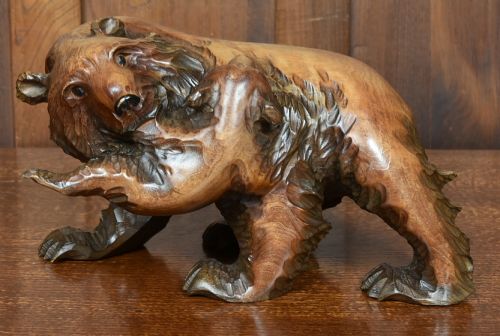
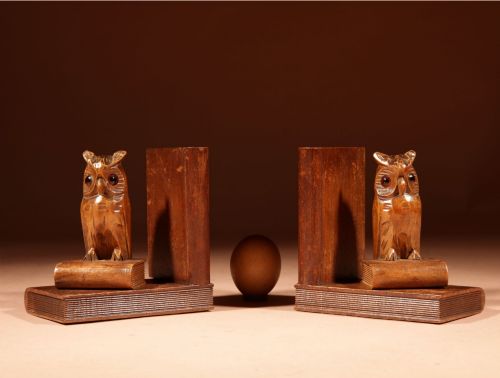
You are most likely to meet pieces originating from the Black Forest carving tradition, alongside Chinese hardwood sculptures and European devotional figures. These objects range from small functional items like bookends and match holders to monumental guardian figures and life-size human representations.
The materials reflect the diverse regional traditions of their makers, drawing on native European timbers like walnut, oak, and linden wood, as well as dense imported hardwoods. Each piece captures a distinct cultural aesthetic, whether through the naturalism of animal carvings or the formal styling of religious statuary.
How they were made
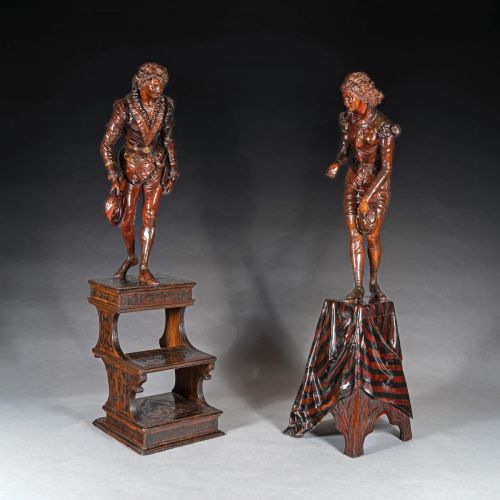
Carvers utilised traditional hand chisels and gouges to shape solid blocks of timber, selecting woods based on grain density and colour depth. European artisans frequently worked in softer pale timbers like linden wood or durable hardwoods such as oak and walnut, whilst Asian carvers utilised heavy, dense hardwoods.
Surface finishing involved hand scraping and waxing to enrich the natural grain, occasionally supplemented by polychrome paint applications or brass mounts. Articulated artist figures incorporated meticulous internal pegging and jointing to permit movement, whereas solid sculptures relied entirely on the integrity of the initial timber block.
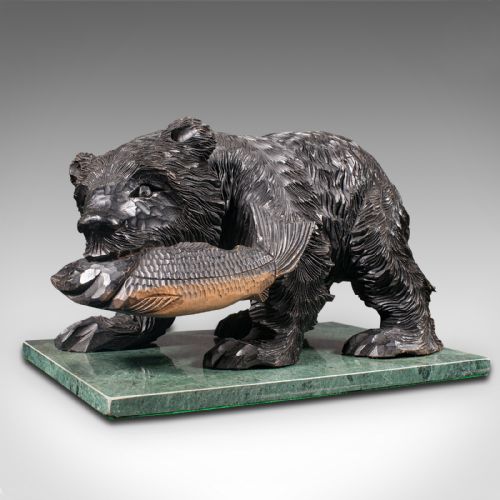
Several miniature bears peer out with tiny stud eyes, proving that nineteenth-century carvers delighted in giving fierce forest creatures an irresistibly charming expression.
What varies in quality
Material selection and surface preservation further define the grade of a piece, with unblemished timber grain and untouched original patination commanding greater appreciation. Poorer examples often suffer from blunt detailing, flattened proportions, or aggressive later cleaning that strips away the historic surface character.
J HUGGLER
The Brown Carved Wooden Figure Glossary
- Black Forest
- A nineteenth-century Swiss and German wood-carving style known for naturalistic animal figures, bears, and foliate ornament. These items were typically produced in regional workshops for the tourist and export markets.
- Lay figure
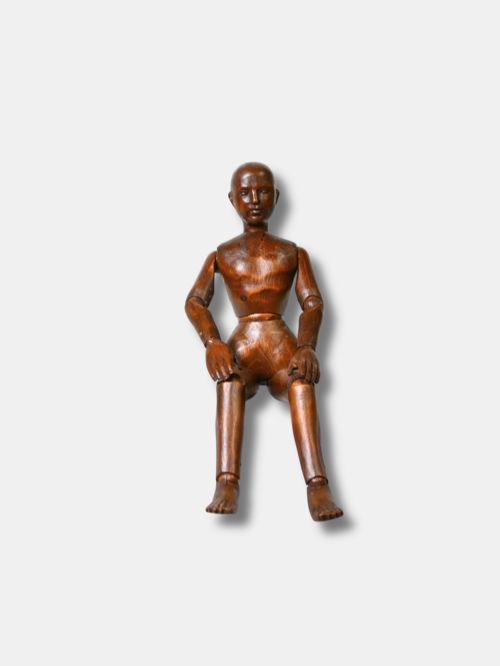
- An articulated wooden mannequin used by artists to study drapery and human form. Larger examples feature fully jointed limbs pegged together with wooden or brass pins.
- Polychrome
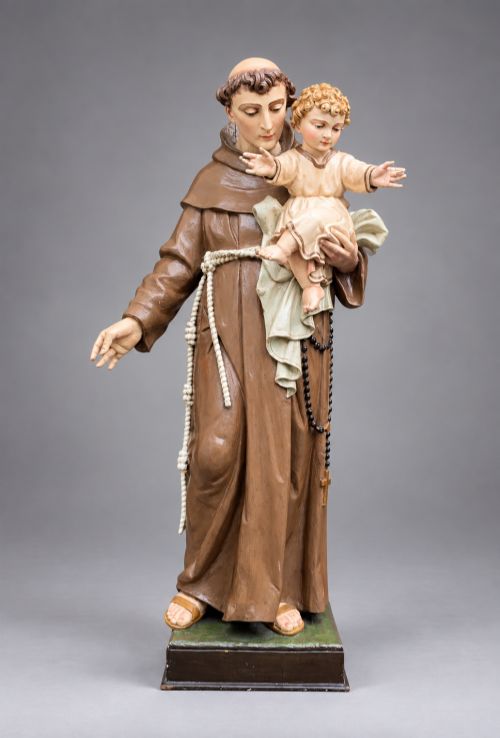
- Painted in several colours, often found on older religious wood carvings and saint figures. The pigment was typically applied over a chalk or gesso ground.
- Hardwood
- Timber derived from broad-leaved angiosperm trees, valued for its density and dark colour. Chinese sculptures frequently utilise dense varieties imported from tropical regions.
- Limewood
- A pale, fine-grained timber favoured by European carvers for its lack of prominent grain patterns. It allows for intricate undercutting and delicate facial expressions without splintering.
Brown Carved Wooden Figure: Frequently Asked Questions
How were these wooden figures used?
Many figures served devotional, decorative, or functional purposes within homes, studios, and religious spaces. Smaller carvings functioned as bookends, inkwells, or match holders, whilst larger statues occupied domestic interiors as ornaments.
Articulated figures were utilised by painters and sculptors to arrange complex poses and clothing folds. Religious figures stood in domestic shrines or churches as focal points for prayer and contemplation.
How should I care for a wooden figure?
Wooden sculptures require stable environmental conditions away from direct sunlight and sudden temperature shifts. Excessive heat or dryness can cause historic timber to split, whilst dampness encourages fungal growth or warping.
An occasional application of a suitable microcrystalline wax helps protect the surface and maintain the natural lustre of the wood. Avoid using household polishes containing silicones or harsh cleaning agents that might damage the historic patination.
How do I identify the period of a carving?
Dating a carved wooden figure involves examining the tool marks, timber species, wear patterns, and stylistic conventions of the era. Seventeenth and eighteenth-century pieces often display hand-adze marks and heavier patination, whereas nineteenth-century works frequently show greater anatomical precision.
Comparing the style of dress, hair, and base construction to dated comparative examples helps narrow down the decade of origin. Original surface finishes and signs of long-term handling also provide valuable clues to age.