


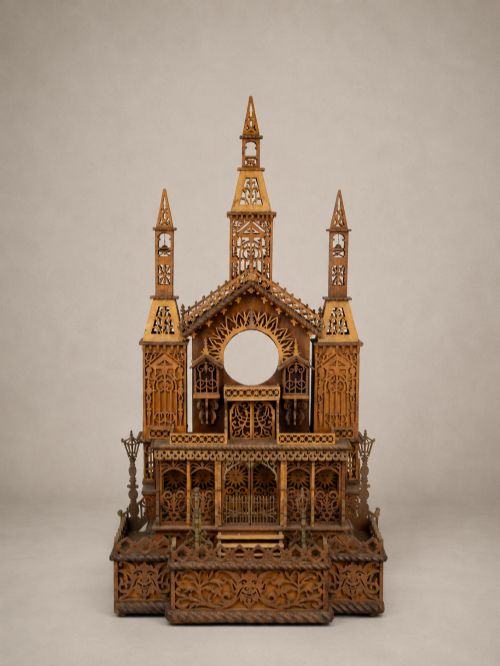


Brown Carved Mantel Clock
A brown carved mantel clock brings solid wood presence and precise movement to a shelf or desk, offering both timekeeping and architectural form.
Brown Carved Mantel Clock
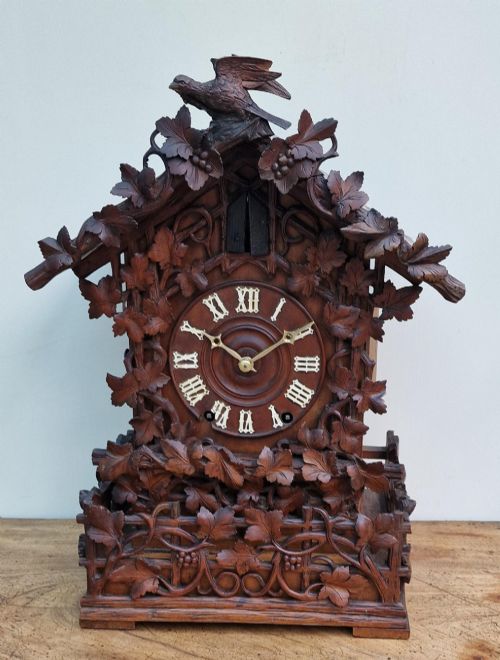
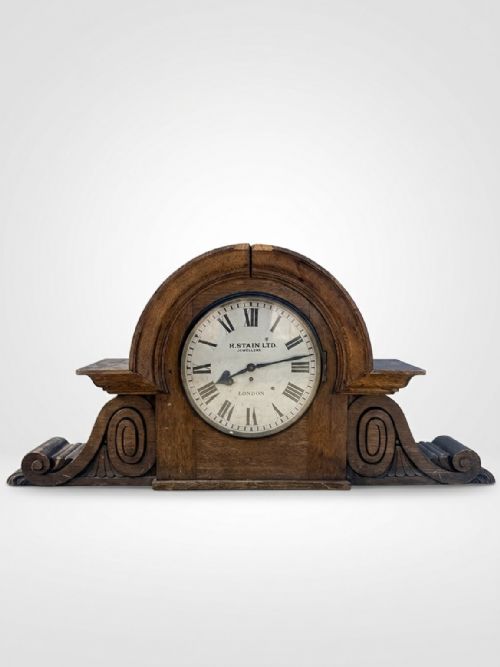
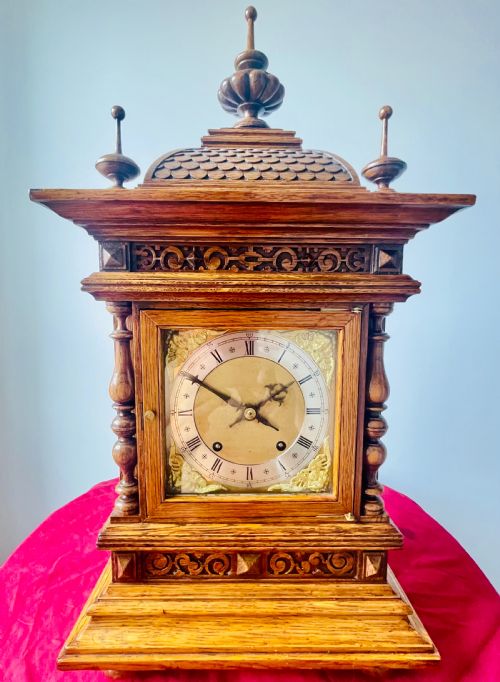
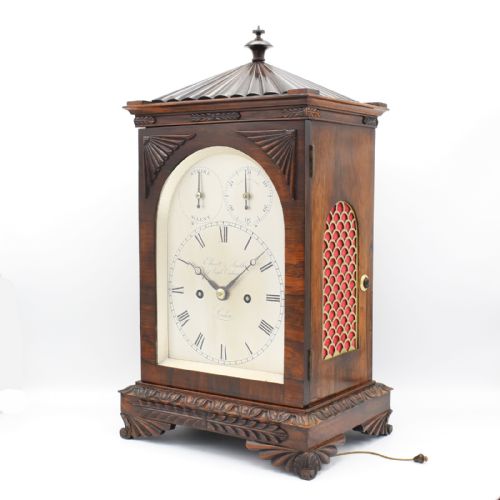
A brown carved mantel clock groups domestic timepieces housed in wooden cases ranging from compact library models to monumental architectural designs. These clocks frequently emerge from nineteenth-century Victorian workshops, alongside Edwardian, Regency, and Georgian interpretations.
The selections span distinct regional traditions, balancing English fusee movements in mahogany and oak with Swiss and German Black Forest linden wood carvings. Buyers encounter bracket clocks, architectural fretwork cases, and dial clocks featuring brass bezels and enamel faces.
Victorian examples dominate the selection, often rendered in richly grained walnut or carved oak. These pieces reflect diverse stylistic influences, touching upon Gothic Revival details and Swiss rustic artistry.
Markers of distinction
Quality rests in the fidelity of the wood carving and the complexity of the movement, separating standard production cases from workshop pieces signed by named makers. Crisp architectural fretwork and deeply undercut linden wood foliage signify superior craftsmanship.
The sophistication of the internal mechanism dictates value, with double fusee or quarterly striking movements sitting above simple timepieces. Heavy brass plates, signed dials by known watchmakers, and well-proportioned timber casings elevate individual examples.
Brown Carved Mantel Clock Retail Price Guide 2026
Typical asking prices for brown carved mantel clock among the pieces listed under this phrase on Sellingantiques today, from the lower quarter to the upper quarter. They describe what is for sale here now, not the wider market.
Several clocks wear their years with stoic grace, ticking through centuries of lost tea times and forgotten political regimes.
Ellicott & Smith·Winterhalder·Bush of London·Webster Cornhill London·Bergen & Co·Connell of London·Piggin Norwich·Geo Carter Hackney·J Kingerley Manchester·Purvis of London
The Brown Carved Mantel Clock Glossary
- Fusee
- A conical pulley used in mechanical clocks to equalise the declining power of the mainspring as it unwinds. This mechanism helps maintain consistent timekeeping accuracy.
- Bracket clock
- A portable domestic clock traditionally designed to sit upon a dedicated wall bracket or furniture surface. Many examples feature arched tops and carrying handles.
- Linden wood
- A pale, fine-grained timber favoured by Black Forest carvers for its ability to hold crisp, intricate details without splitting. It takes a warm brown tone when finished.
- Double fusee
- A movement incorporating two separate fusee cones, typically driving both the timekeeping train and the striking train independently. It represents a higher standard of clockmaking.
- Dial aperture
- A small window cut into the clock face, often used to display the date or mechanical settings. It breaks the uniform sweep of the enamel chapter ring.
Brown Carved Mantel Clock: Frequently Asked Questions
Where should I place a heavy mantel clock?
Position your clock on a sturdy, level surface such as a mantelpiece, sideboard, or heavy table where the case remains stable. Avoid areas subject to excessive vibrations or direct sunlight that might dry out the wood.
Ensure there is adequate clearance around the case for winding keys and pendulum swing if the specific model requires manual adjustment. A solid foundation prevents the mechanical beat from becoming uneven.
How do I wind an antique mechanical clock?
Insert the appropriate winding key into the dial arbours and turn gently until you feel firm resistance, avoiding over-winding. Most fusee or spring-driven movements require attention at regular weekly or fortnightly intervals.
Keep track of which arbour controls the time and which controls the strike to maintain the correct rhythm. Regular, gentle winding preserves the tension in the mainsprings.
How do I tell a Victorian clock from a Georgian one?
Georgian clocks generally display restrained proportions, clean mahogany veneers, and classical bracket feet reflecting earlier furniture tastes. Victorian models often introduce bolder architectural carvings, darker walnut tones, and more ornate dial surrounds.
Examining the interior movement and timber grain helps confirm the period of manufacture. Makers' signatures on the brass backplate provide definitive guidance.
What is a Black Forest carved clock?
These clocks originate from the mountainous region of Central Europe, celebrated for deeply carved linden wood cases depicting natural motifs, animals, or rustic foliage. They often feature prominent wooden bezels and detailed sculptural elements.
The sculptural approach contrasts with the formal geometric cases of English bracket clocks. Their charm lies in the organic unity between the timber case and the hand-carved ornamentation.