


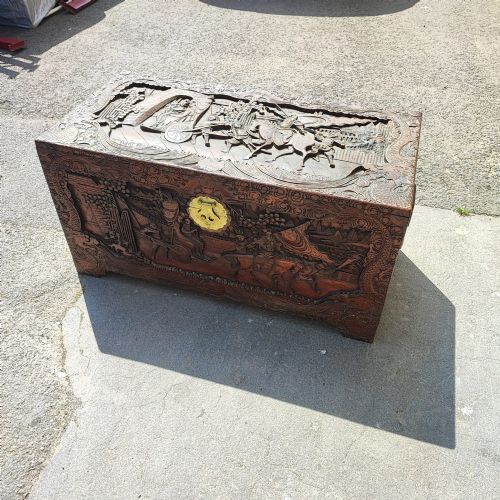


Brown Camphorwood Chest
A brown camphorwood chest brings the rich timber scent and sturdy brass fittings of nineteenth-century travel directly into a modern interior.
Brown Camphorwood Chest
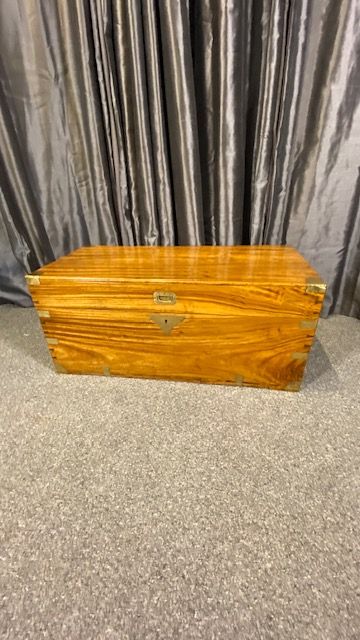
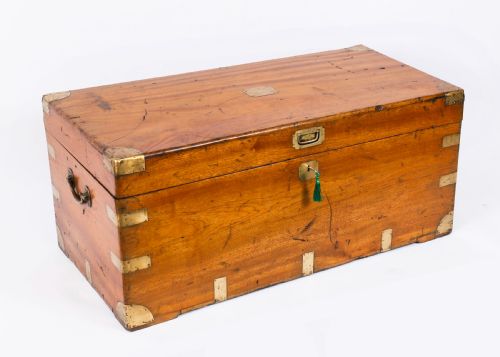
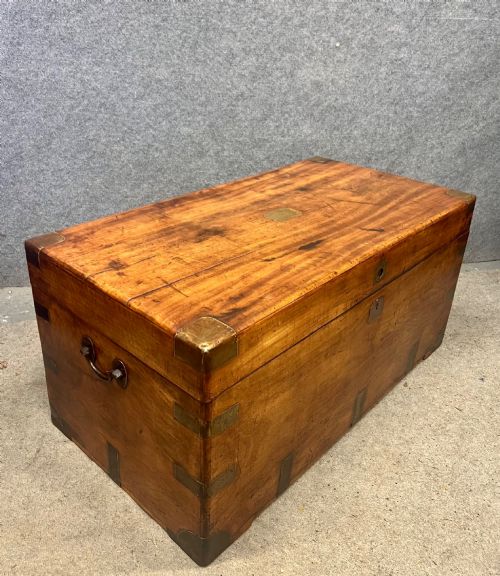
A brown camphorwood chest serves as a practical storage trunk or blanket box, originating primarily from nineteenth-century military campaigns and Chinese export trade. When you search for a brown camphorwood chest, you encounter sturdy pieces designed for transport by officers and merchants across distant seas.
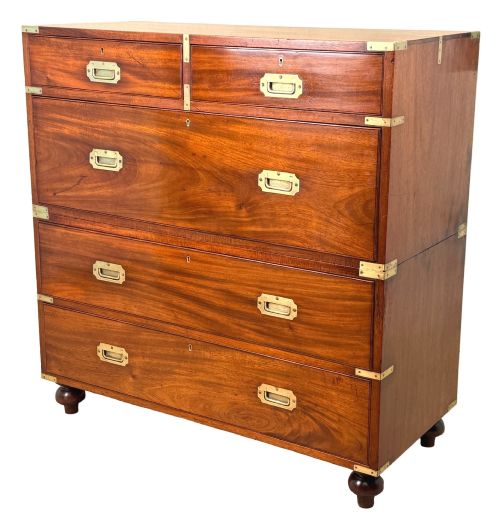
The most common forms on this page include plain campaign trunks with recessed brass handles alongside intricately carved trunks and fitted secretaire chests of drawers. These items date predominantly from the nineteenth century, including Victorian periods, with occasional pieces stretching into the early twentieth century.
Builders constructed these chests for utility and mobility, utilising the insect-repellent properties of the timber to protect garments during long voyages. Today, they function effectively as coffee tables, blanket boxes, and focal storage items in domestic settings.
Distinctions in quality and finish
Quality rests in the integrity of the timber grain, the weight and fastening of the brass hardware, and the precision of the joints. Finer military examples feature original recessed brass handles, flush corner brackets, and well-fitted internal writing slopes or secretaire compartments.
Carved pieces separate themselves through depth and clarity of detail in the woodwork rather than flat, machine-like tooling. The presence of original structural elements, such as maker-fitted carrying handles and robust framing, elevates a piece above simpler domestic boxes.
Brown Camphorwood Chest Retail Price Guide 2026
Typical asking prices for brown camphorwood chest among the pieces listed under this phrase on Sellingantiques today, from the lower quarter to the upper quarter. They describe what is for sale here now, not the wider market.
Opening an untouched nineteenth-century chest still releases the distinct, sharp aroma that protected Victorian officers' wool uniforms at sea.
The Brown Camphorwood Chest Glossary
- Campaign chest
- A portable set of drawers or a trunk designed in sections for easy dismantling and transport during military deployment. These pieces typically feature recessed brass handles and protective corner brackets.
- Secretaire chest
- A cabinet incorporating a fitted writing drawer with small compartments and a drop-down front. This dual-purpose form allowed nineteenth-century travellers to maintain correspondence on the move.
- Chinese export trade
- Goods manufactured in China specifically for Western markets during the eighteenth and nineteenth centuries. These items often combined traditional local cabinetmaking with European furniture forms.
- Coffer
- A large, heavy box used for storing valuables, linens, or provisions. In camphorwood, these chests doubled as protective blanket boxes due to the natural insect-repelling scent of the wood.
Brown Camphorwood Chest: Frequently Asked Questions
What is a camphorwood chest used for?
These chests originally served to transport officer uniforms and personal belongings during long military voyages or maritime trade journeys. The natural aroma of the timber kept moths and insects away from delicate fabrics.
Today, they function brilliantly in homes as durable coffee tables, living room storage trunks, and hallway blanket boxes. Their robust construction handles daily domestic use with ease.
Are these chests antique?
The pieces recorded here date primarily from the nineteenth century, encompassing Victorian and late Georgian periods. Makers constructed them during an era of active global trade and military expansion.
Some later examples extend into the early twentieth century, reflecting continued production of traditional Chinese carved trunks. Each piece carries the age-related patina of genuine historical utility.
Does camphorwood lose its scent?
Camphorwood retains its characteristic woody fragrance for decades, though the intensity softens over time. Lightly sanding the interior surfaces can renew the natural aroma if it fades.
The persistent scent remains the primary reason these chests excel at storing woollens, linens, and winter blankets without chemical mothballs.