

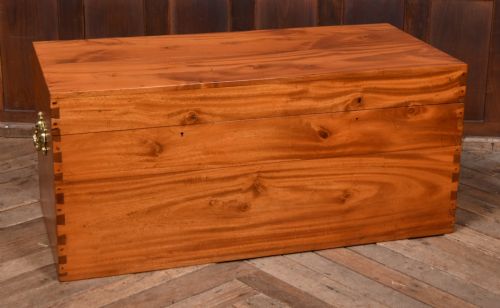
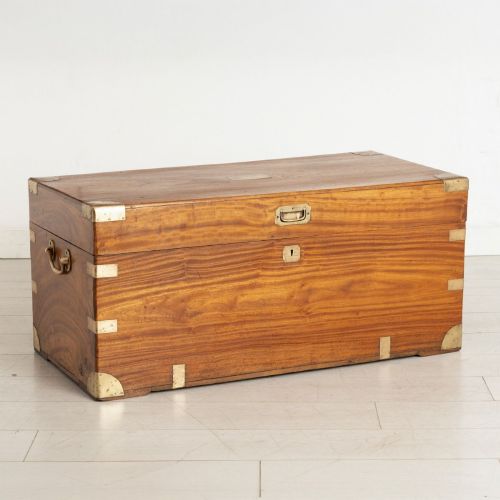
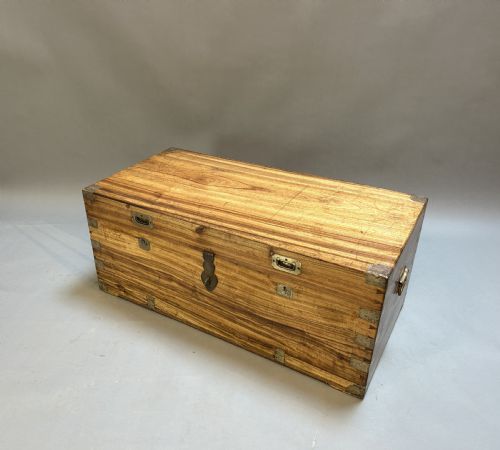
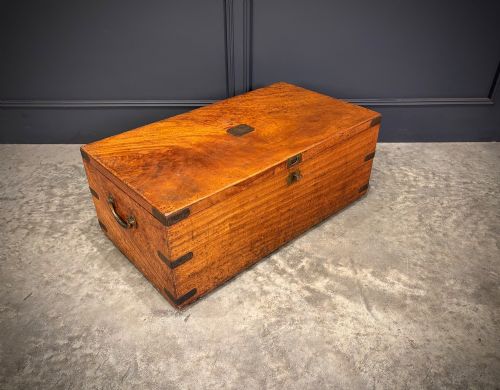
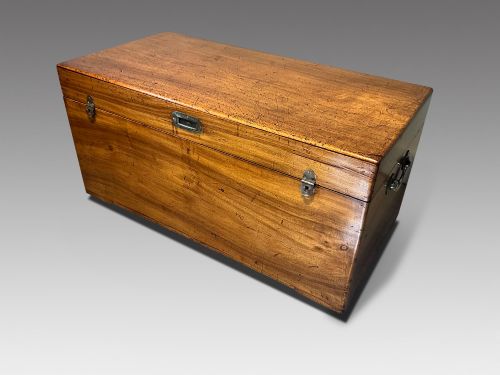


Brown Camphor Sea Trunk
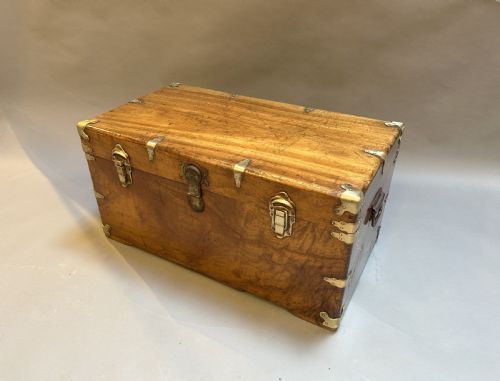
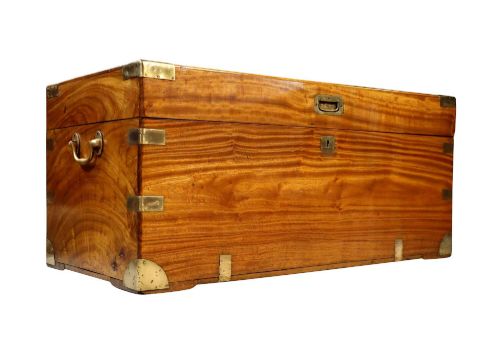
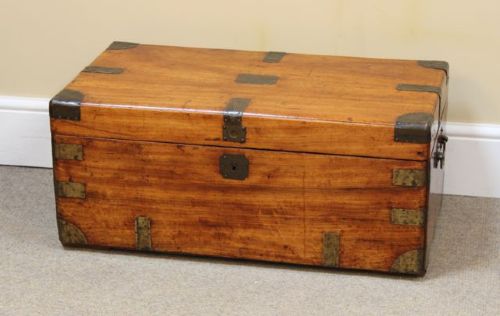
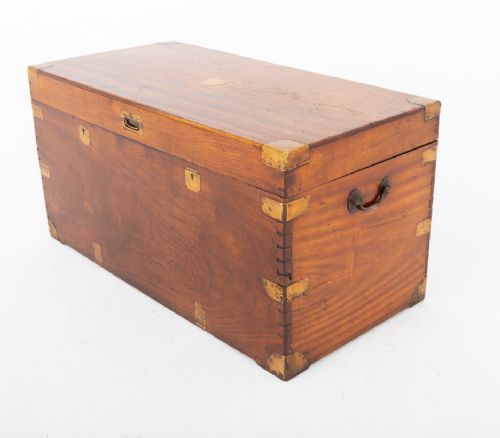
These robust brown camphor sea trunk examples are enduring travel chests built for officers and merchants navigating distant oceans.
Brown Camphor Sea Trunk
A brown camphor sea trunk serves as a durable receptacle designed to protect contents from moisture and pests during long journeys. When searching for a brown camphor sea trunk, buyers encounter various forms including campaign trunks, blanket boxes, and steamer trunks dating largely from the nineteenth century. These pieces reflect Victorian, Georgian, and Anglo-Chinese origins, often featuring compartmentalised interior fittings for travel utility.
Most examples originate from the nineteenth century, encompassing periods such as the Victorian era and the late Georgian epoch. The forms span simple storage chests to complex military campaign trunks equipped with keys and original hardware. Their primary function remains robust storage, distinguished by aromatic wood that naturally repels insects.
How they were made
Constructed predominantly from fragrant camphor wood or camphorwood, these chests utilise dense timber known for natural insect-repellent properties. Artisans join the solid boards using traditional corner techniques designed to withstand the stress of sea travel.
Metalwork forms an integral part of the construction, employing brass for protective bound corners, recessed carrying handles, and secure lockplates. Additional materials include iron, rope, and hardwood, reinforcing the structure for military or maritime transport.
Opening an antique camphor chest often releases a potent, century-old aroma of medicinal wood that instantly signals a long-gone voyage.
What varies in quality
The degree of refinement in brass hardware and interior configuration separates standard boxes from superior campaign trunks. Pieces retaining original brass fittings, working locks with keys, and fitted internal compartments command greater appreciation among collectors.
Timber selection and overall scale also dictate quality, with solid camphorwood construction showing finer grain consistency. Smaller proportions or unusually large dimensions alter the desirability of a chest depending on the specific domestic or decorative requirement.
The Brown Camphor Sea Trunk Glossary
- Campaign trunk
- A portable chest built for military officers or travellers, featuring recessed brass handles and reinforced corners to endure transit.
- Camphor wood
- A durable, highly aromatic timber native to Asia, utilised in maritime furniture for its natural ability to deter moths and insects.
- Brass bound
- A method of reinforcing wooden chest edges and corners with fitted brass plates and straps to prevent impact damage during travel.
- Blanket box
- A deep rectangular storage chest traditionally utilised in bedrooms for linens, blankets, and woollen garments.
- Steamer trunk
- A lower-profile travel trunk designed to fit easily beneath cabin berths on ocean liners during the twentieth century.
Brown Camphor Sea Trunk: Frequently Asked Questions
Are these trunks waterproof?
While camphor wood naturally resists moisture and humidity to protect contents at sea, these chests are constructed primarily for storage and transport rather than submersion.
Rubber seals are absent from historical models, meaning they protect against damp environments rather than direct water immersion.
How do I identify a campaign trunk?
Campaign trunks feature distinct military adaptations such as flush-mounted brass handles that do not protrude during stacking and reinforced metal corners.
Many examples also split into modular sections or include internal compartments designed for rapid packing by travelling officers.
Does camphor wood lose its scent?
The distinct aromatic qualities of camphor wood can fade slightly over decades, particularly on exposed exterior surfaces subject to regular cleaning.
Lightly sanding the interior timber often revives the natural fragrance, releasing the protective oils embedded within the grain.
Where were these chests made?
Many nineteenth-century trunks originate from workshops in China, particularly Cantonese treaty ports, created specifically for export to British military and mercantile buyers.
Other examples reflect British colonial production or domestic cabinetmakers adapting imported aromatic timber for military outfitters.