





Brown Campaign Cabinet
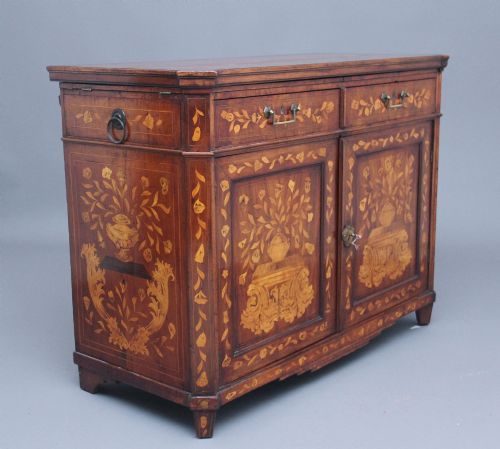
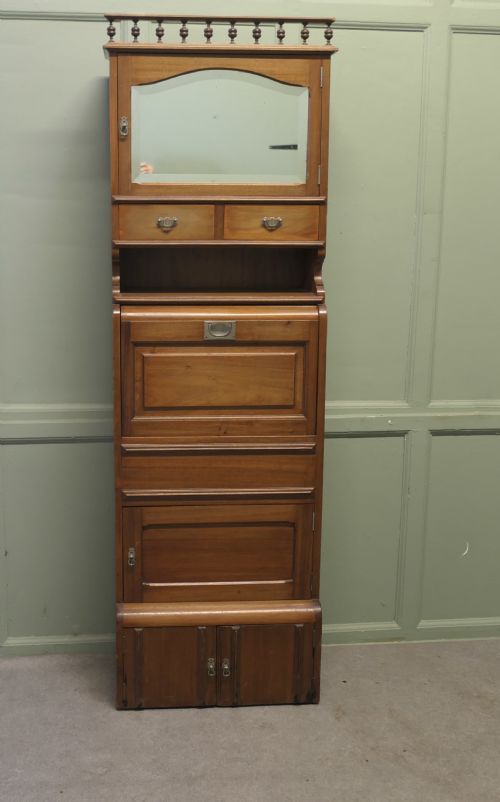
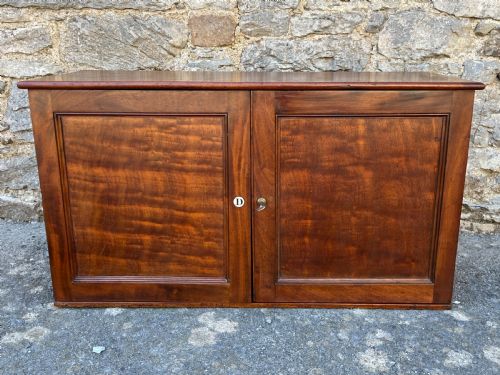
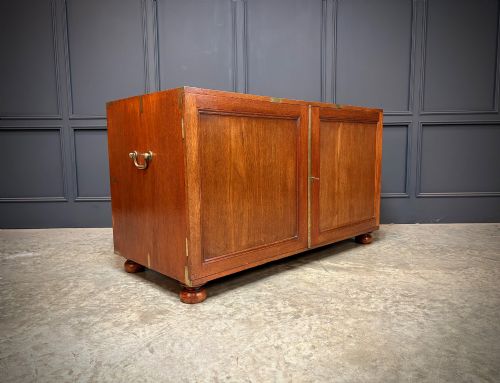
These brown campaign cabinets are portable pieces built for travel and service, offering clever storage with distinct brass mounts.
Brown Campaign Cabinet
A brown campaign cabinet is typically encountered from the Georgian, Regency, and Victorian periods, often taking the form of desks, washstands, and chests of drawers. These portable items were designed for military officers and travellers, featuring sturdy construction meant to endure long journeys.
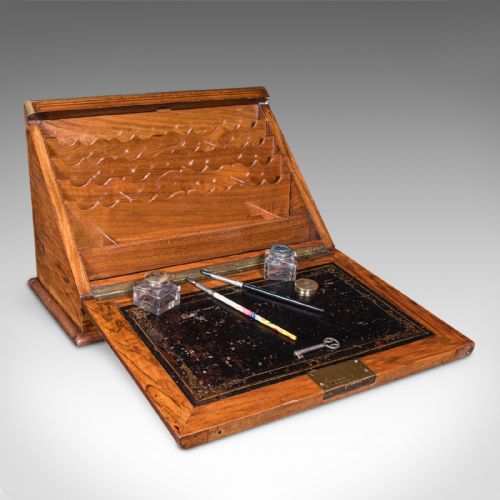
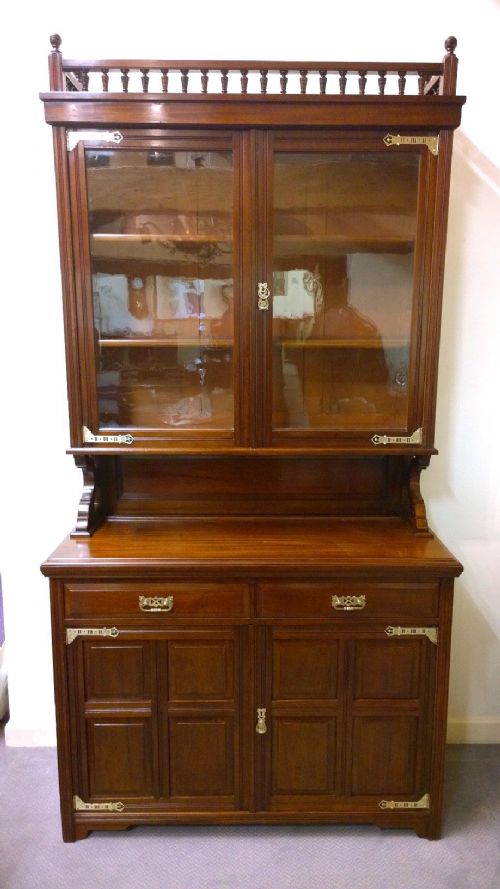
The pieces listed span various forms including side cabinets, writing stations, and specimen cases, predominantly built in mahogany, walnut, and oak. Such items combine domestic comfort with functional utility, reflecting the practical demands of nineteenth-century mobility.
Materials and construction methods
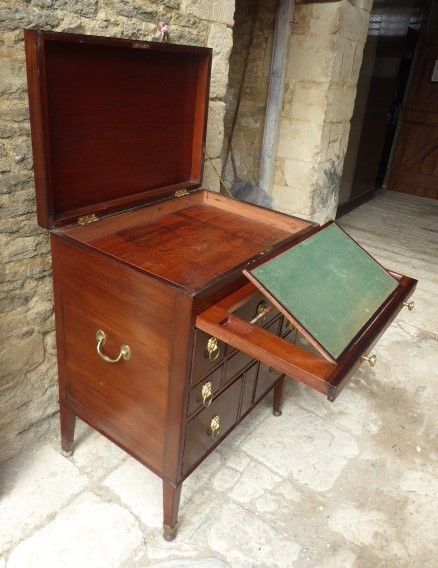
Carpenters utilised durable timbers like mahogany, walnut, oak, and satinwood to build these portable units, often incorporating brass corners and flush handles for protection against knocks during transit. These metal fixtures reinforced the joints while keeping the outer profile smooth and square.
Internal configurations frequently involved clever folding mechanisms, sliding writing surfaces, and modular sections designed to dismantle or lock securely. This thoughtful engineering ensured that heavy items remained stable yet manageable for transport.
Brown Campaign Cabinet Retail Price Guide 2026
Typical asking prices for brown campaign cabinet among the pieces listed under this phrase on Sellingantiques today, from the lower quarter to the upper quarter. They describe what is for sale here now, not the wider market.
Current listings feature pieces spanning the Georgian, Regency, and Victorian periods, constructed in materials including mahogany, walnut, oak, and brass.
Distinguishing quality in portable furniture
The standard of a piece rests on the precision of its brass hardware integration and the tightness of its joinery, which maintained structural integrity under repeated dismantling. Superior examples display careful timber selection, such as burr walnut or figured mahogany, matched evenly across opening doors and drawer fronts.
Refinement is also evident in the complexity of internal fittings, such as secret compartments, fitted writing drawers, and original leather writing surfaces. Lesser versions rely on simpler construction with fewer specialised compartments for travel use.
The Brown Campaign Cabinet Glossary
- Campaign furniture
- Portable items built in sections with recessed handles and protective brass corners, designed for military personnel on the move.
- Secretaire chest
- A chest of drawers featuring a pull-out writing drawer with a fall front, revealing internal pigeon holes and small compartments.
- Wellington chest
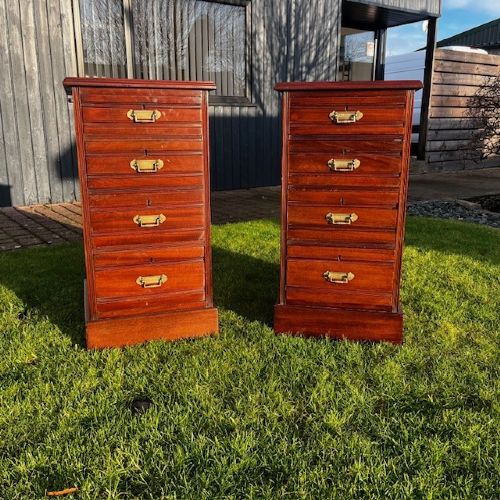
- A tall, slender stack of drawers secured by a locking side flap that is hinged to the main carcase.
- Flush handle
- A metal pull inset into the wood surface so it does not project beyond the edge during transport.
Brown Campaign Cabinet: Frequently Asked Questions
What is a campaign cabinet?
A campaign cabinet is a portable piece of furniture designed for military officers, diplomats, or travellers who required functional living quarters while on the move.
These items often feature sectional construction, brass bound edges, and recessed handles to withstand frequent transport without sustaining damage.
How do I identify a Victorian campaign piece?
Victorian campaign pieces are typically constructed from dense timbers such as mahogany or teak, fitted with solid brass corners and flush pulls.
Look for split-carcase designs that separate into upper and lower halves, making them easier to carry on ships or carriages.
Where were campaign cabinets used?
These cabinets were utilised in military tents, field offices, naval vessels, and temporary colonial outposts by officers needing organised workspace.
Their design allowed personal documents, stationery, and wash equipment to travel securely across rough terrain.
How do I care for antique campaign furniture?
Maintain these pieces by applying a traditional beeswax polish to nourish the timber and avoid placing them near direct heat sources.
Keep brass mounts clean with a soft cloth to preserve their metallic lustre without damaging the surrounding wood.