


Brown Bronze Clock
A brown bronze clock brings rich dark metal tones and sculptural presence to a mantelpiece, offering a classic focal point for any room.
Brown Bronze Clock
A brown bronze clock is primarily represented on this page by nineteenth-century French mantel clocks, longcase clocks, and clock sets. These pieces range from substantial figural mantel clocks to tall grandfather clocks housed in wood or metal.
Buyers will encounter works spanning several distinct design movements, including Louis XVI Revival, Louis XV, Art Deco, and French Animalier styles. Many incorporate sculptural elements or decorative side pieces to form complete garnitures.
The objects frequently date from the eighteen-sixties through to the nineteen-thirties, reflecting diverse regional craftsmanship from nineteenth-century France.
How they were made
Maker workshops utilised foundational metal alloys such as bronze, brass, or bronzed spelter, often pairing the dark metal surfaces with gleaming ormolu highlights. These metallic structures frequently housed silvered or white enamel dials to display the time clearly.
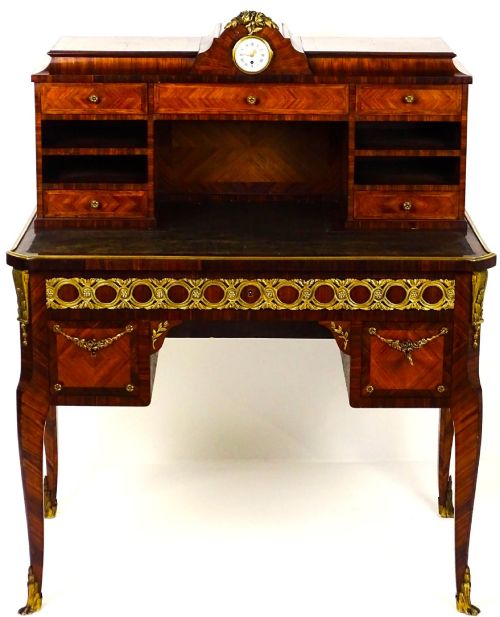
Cabinetmakers and bronze-workers incorporated rich wooden elements like kingwood and mahogany, sometimes employing tortoise shell or faux tortoise shell veneers. Glass panels and marble bases were also integrated to frame and support the movement.
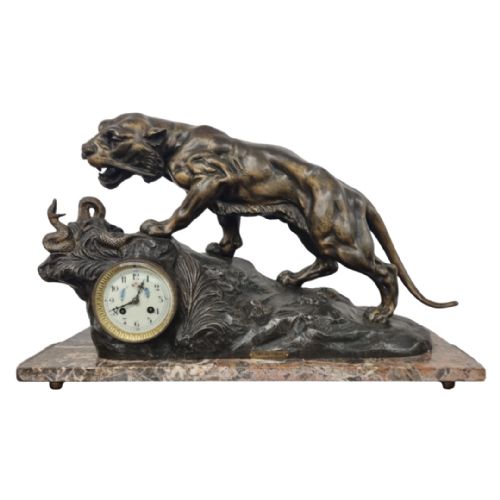
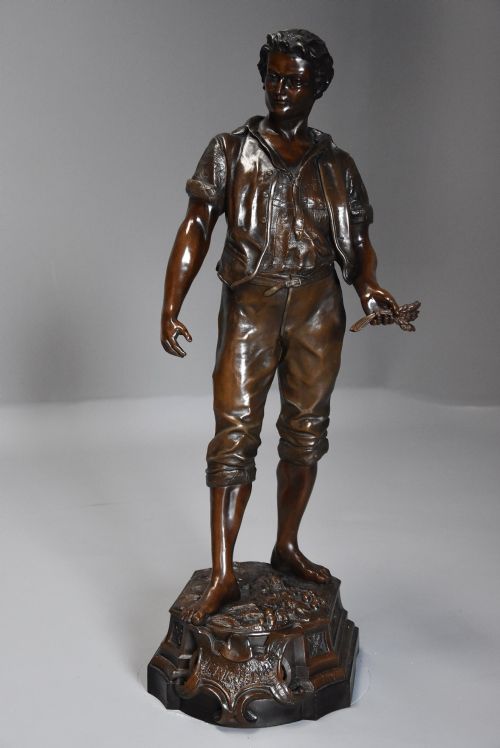
Several clocks on this page feature vigilant serpents, lounging greyhounds, and hardworking farm labourers keeping time.
What varies in quality
The refinement of the casting and chiselling separates standard works from exceptional examples, particularly in figural pieces depicting animals or human labourers. Artisans who achieved greater depth and naturalism in the patination created more lifelike and enduring sculptures.
The integration of cabinet woods such as kingwood and mahogany alongside intricate ormolu mounts determines the overall execution. Clocks that form part of a complete three-piece matching set demonstrate a higher level of original workshop ambition.
Paul Sormani·R Varnier·F Milliot
The Brown Bronze Clock Glossary
- Ormolu
- Gilt bronze created by applying finely ground gold to a bronze base. This technique yields a bright golden finish that contrasts with dark bronze surfaces.
- Spelter
- A zinc alloy frequently used as a cost-effective substitute for bronze in nineteenth-century figures. It accepted various patinations, including bronzed finishes.
- Kingwood
- A dense, richly figured wood utilised for veneering luxury French furniture and clock cases. It displays striking dark and light grain patterns.
- Portico clock
- A clock featuring a architectural case supported by four columns. This neoclassical design gained popularity during the nineteenth century.
- Animalier
- A nineteenth-century French artistic style focusing on realistic depictions of animals. These sculptures often feature naturalistic poses and detailed fur textures.
Brown Bronze Clock: Frequently Asked Questions
What is a brown bronze clock?
A brown bronze clock is a timekeeper featuring a patinated bronze case, frequently originating from nineteenth-century French workshops.
These pieces often take the form of mantel clocks or large decorative clock sets incorporating sculptural figures and classical motifs.
How do I care for a bronze clock?
Bronze surfaces require gentle dusting with a soft cloth to prevent the accumulation of dirt within intricate crevices.
Avoid chemical polishes or abrasive cleaners, which can strip the original patina from the metal.
What materials are used in these clocks?
The construction typically combines cast bronze or bronzed spelter with brass movements and enamel or silvered dials.
Many examples also incorporate wooden veneers such as kingwood and mahogany, alongside marble bases and ormolu mounts.
How can I tell the period?
Stylistic indicators such as Louis XV curves, Empire motifs, or Art Deco geometric lines provide clear chronological markers for these timepieces.
Material choices, dial construction, and signature marks from makers or foundries further help to narrow the date of manufacture.