

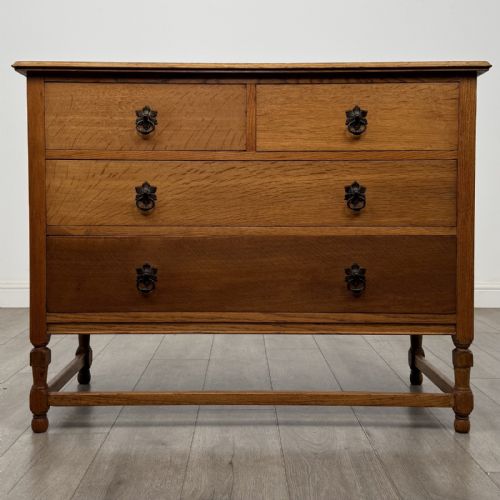
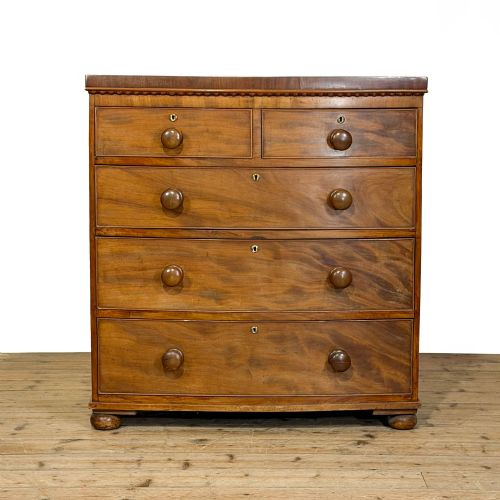
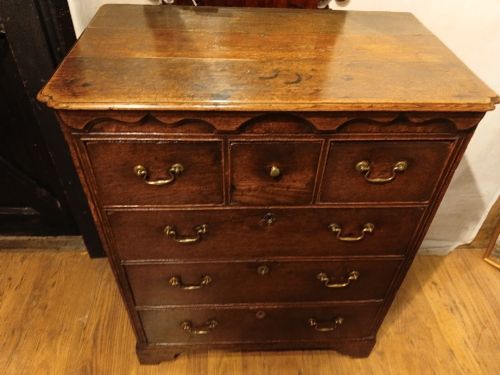
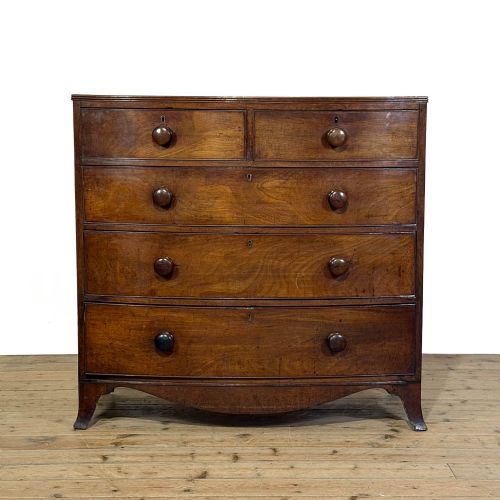
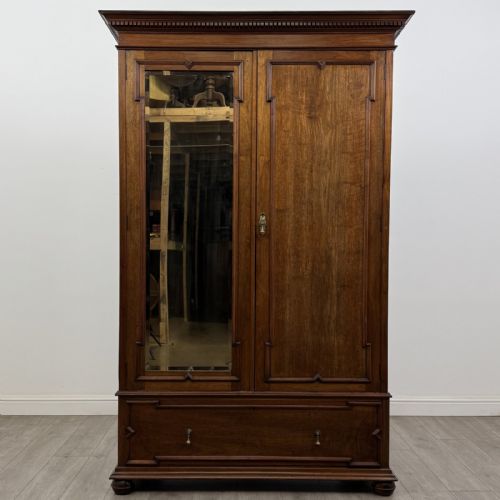
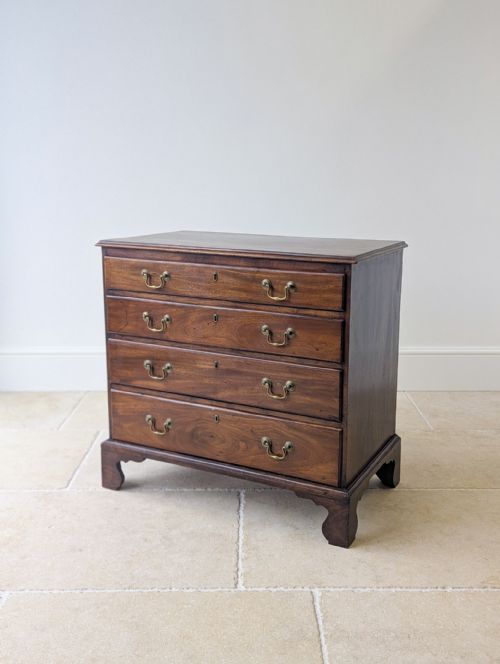
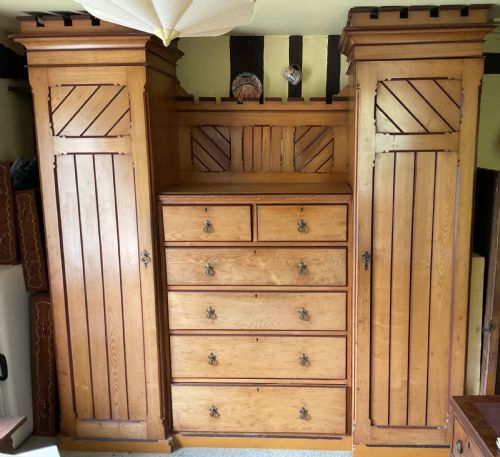
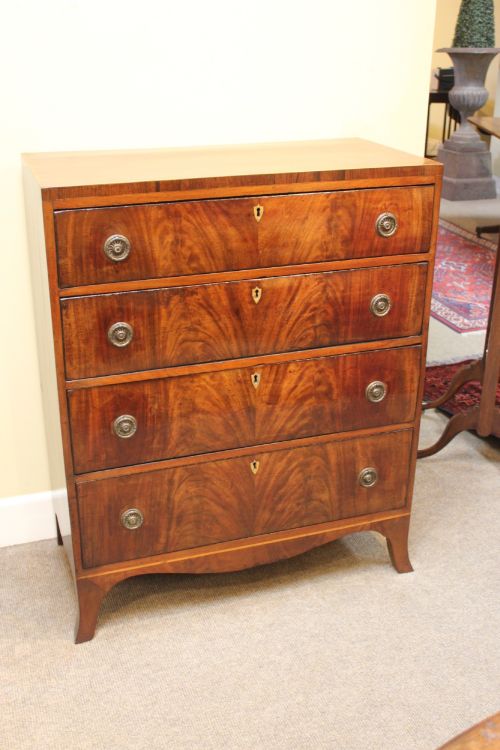
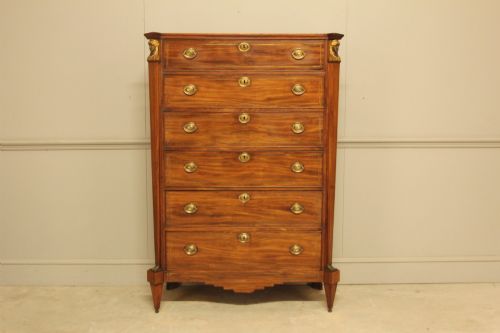
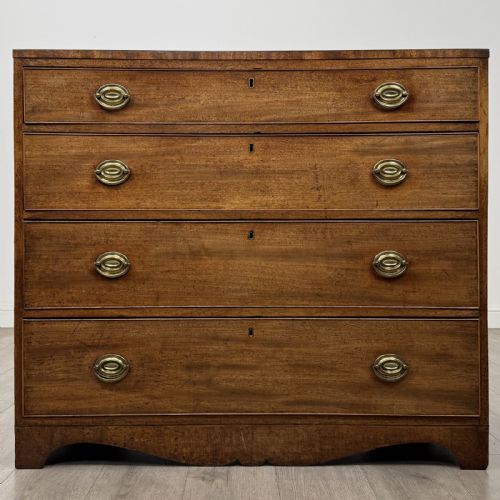
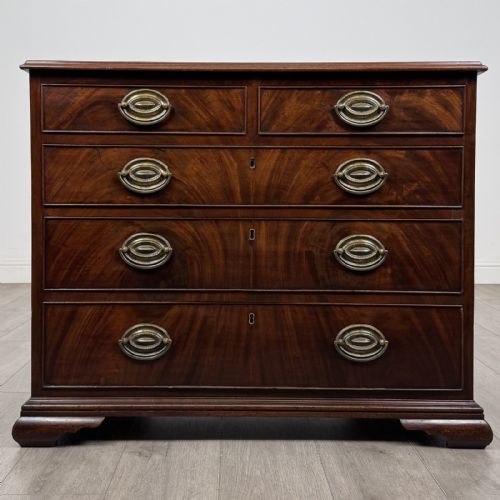
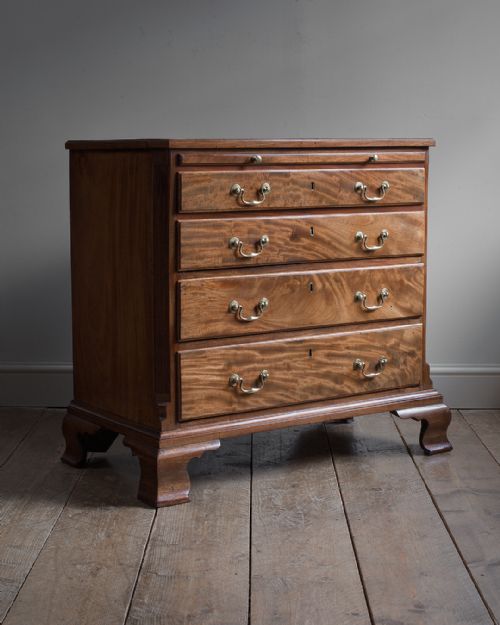
Brown Bedroom Drawers
Brown bedroom drawers provide essential storage in timber finishes, spanning Georgian, Victorian and Edwardian periods.
Brown Bedroom Drawers
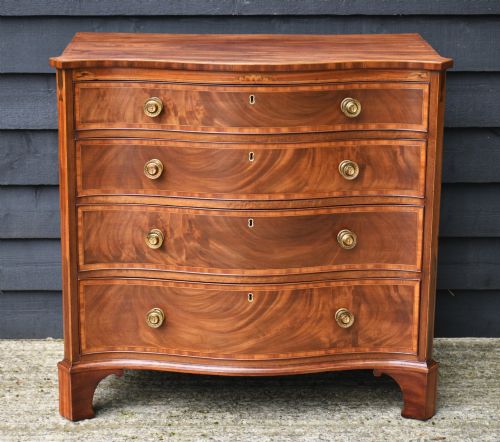
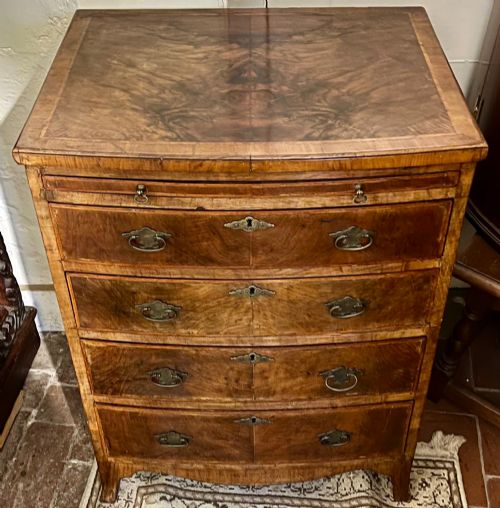
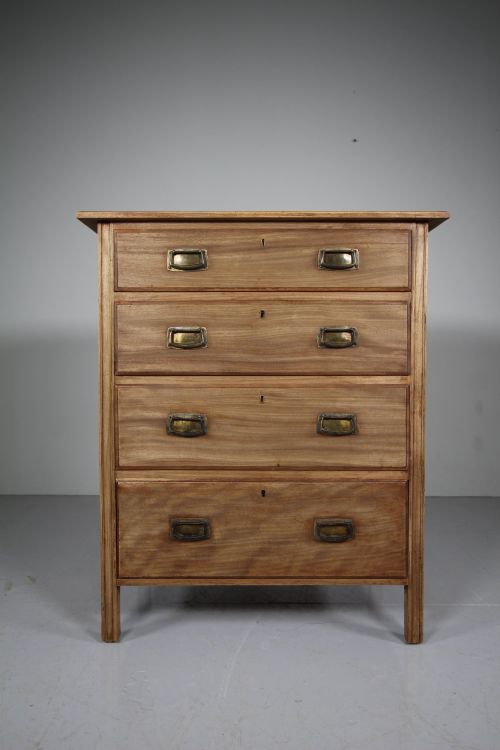
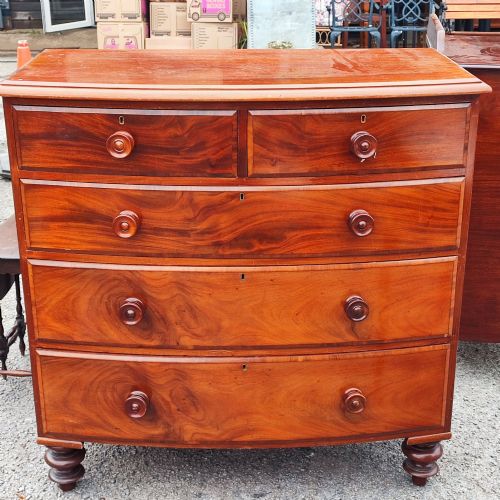
Brown bedroom drawers encompass a variety of storage furniture designed for sleeping quarters, drawing upon traditional periods such as Georgian, Victorian, Edwardian and Regency. The selection most frequently includes chests of drawers, alongside bedside chests, dressing tables, tallboys and commodes.
These pieces emerge in distinct forms, from bow-front and serpentine chests to taller formats like the Wellington chest and chest-on-chest. Timber variations dominate the selection, offering substantial capacity through multiple graduated tiers fitted with brass or wooden hardware.
Materials and Construction
Cabinet makers utilised dense hardwoods including mahogany, oak and walnut, frequently applying flame mahogany veneer or burr walnut to prominent exterior surfaces for visual depth. Secondary timbers like pine appear on internal drawer linings and carcass backs.
Construction techniques involve dovetail joints for drawer assembly and precise carcase framing, often finished with brass handles, bun feet or bracket feet. Selected pieces incorporate marble tops or inlaid stringing to accentuate the timber grain.
Brown Bedroom Drawers Retail Price Guide 2026
Typical asking prices for brown bedroom drawers among the pieces listed under this phrase on Sellingantiques today, from the lower quarter to the upper quarter. They describe what is for sale here now, not the wider market.
Period origins span from the eighteenth-century Georgian era through Regency, Victorian and Edwardian up to the 1930s.
Distinctions in Quality
Quality rests upon the selection of timber veneers and the crispness of execution in details like drawer linings, dovetailing and brass hardware. Superior examples display carefully matched burr walnut or flame mahogany grains across drawer fronts without disruption.
Structural integrity and proportion define the upper tier of pieces, where carcases remain square and drawers run smoothly within their openings. Original feet, handles and keys further elevate the standing of a piece against later replacements.
Gillows·Shapland & Petter
The Brown Bedroom Drawers Glossary
- Bow-front
- A convex curved cabinet front that projects outward in the centre, popular during the Regency and Georgian periods. This shape softens the profile of large timber storage items.
- Tallboy
- A tall chest of drawers built in two stacked sections, often combining a chest on chest or a chest raised on a separate stand. It maximises vertical storage space.
- Wellington chest
- A tall, narrow Victorian locking chest featuring a hinged side pilaster that secures all drawers simultaneously. It typically contains seven drawers.
- Bracket foot
- A structural support foot shaped like a bracket, commonly found on Georgian furniture corners. It lifts the carcase slightly off the floor.
- Dovetail
- A traditional interlocking joint utilised in drawer construction for maximum strength. Its triangular fingers resist pulling apart under daily use.
Brown Bedroom Drawers: Frequently Asked Questions
What defines a Georgian chest of drawers?
Georgian chests typically utilise solid mahogany or oak, featuring clean proportions, bracket or ogee feet, and hand-cut dovetails on the internal drawer boxes. These items date from the eighteenth and early nineteenth centuries.
They often display brass drop handles or bail handles attached to backplates, reflecting the prevailing taste of the era for understated classical design.
How do I identify a Victorian piece?
Victorian examples frequently employ heavier mahogany or walnut timber, sometimes incorporating turned bun feet, glass handles or raised galleries. The scale tends to be robust.
Interior construction shifts slightly during this era with machine assistance, though hand-dovetailing remains standard on better quality bedroom furniture.
Where were bedside chests used?
Bedside chests and tables served to hold personal items and lighting close to the sleeping area within period bedrooms. Their compact dimensions suited smaller spaces.
French commodes and low cabinets from the nineteenth century also fulfil this role, providing enclosed cupboard or drawer storage beside a bed.
What is a serpentine front?
A serpentine front curves outward in the middle and inward at the sides in a continuous wave shape. This decorative form requires high skill from the cabinet maker.
Such shaping appears on fine eighteenth-century mahogany chests and commodes, elevating the visual complexity of the timber surface.