
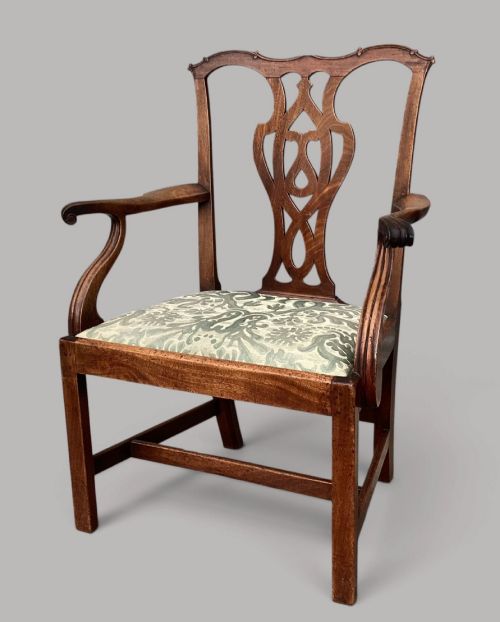
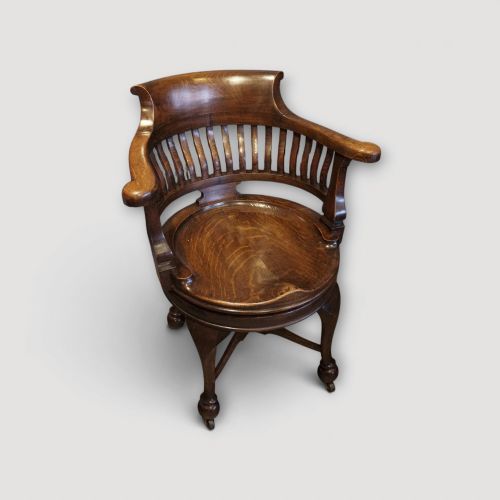
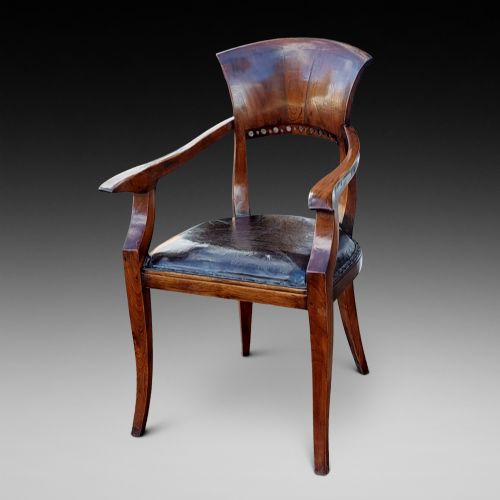
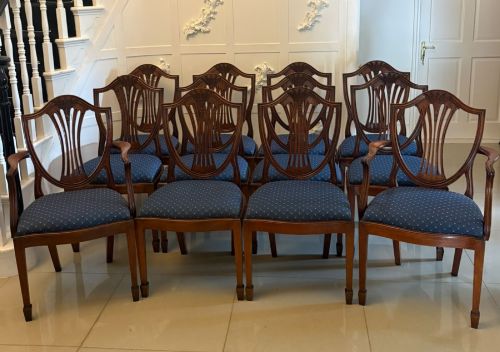
Brown Armchair
A brown armchair anchors a room with rich timber tones and tactile leather, offering enduring comfort through centuries of careful British and continental joinery.
Brown Armchair
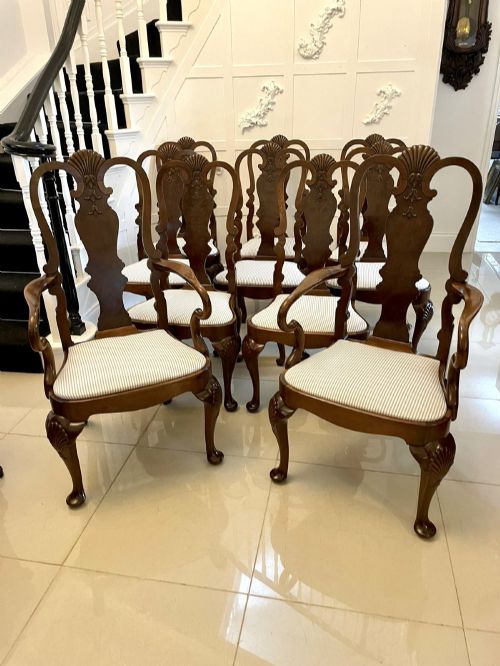
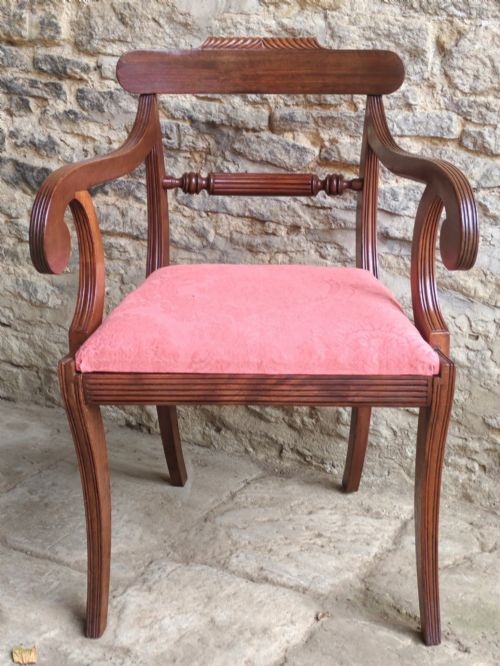
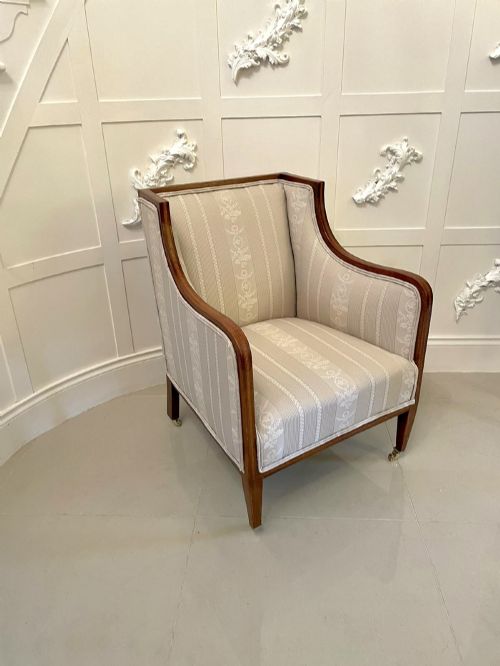
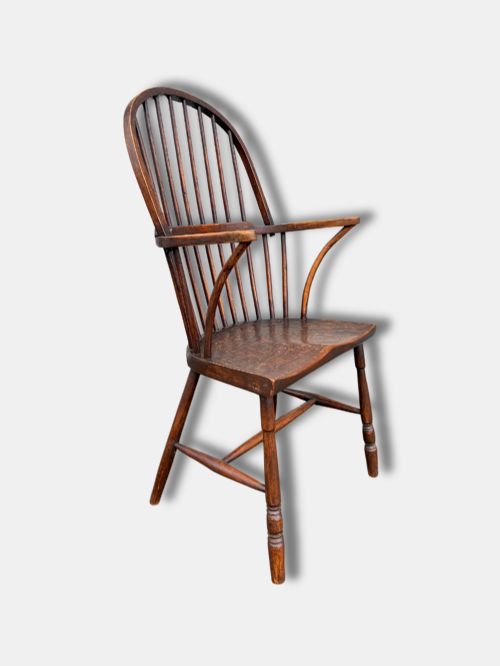
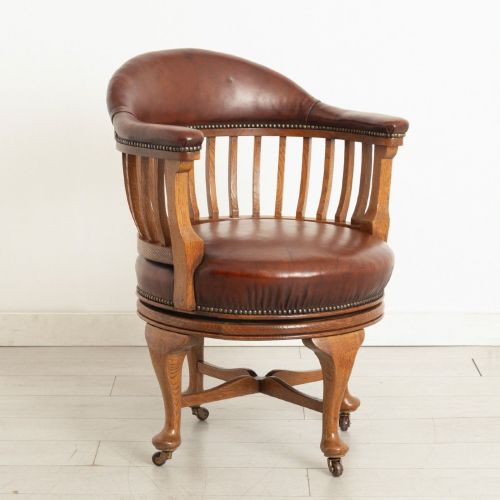
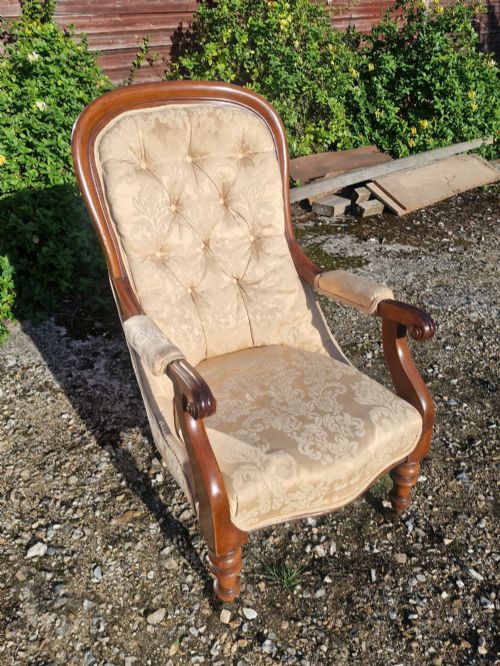
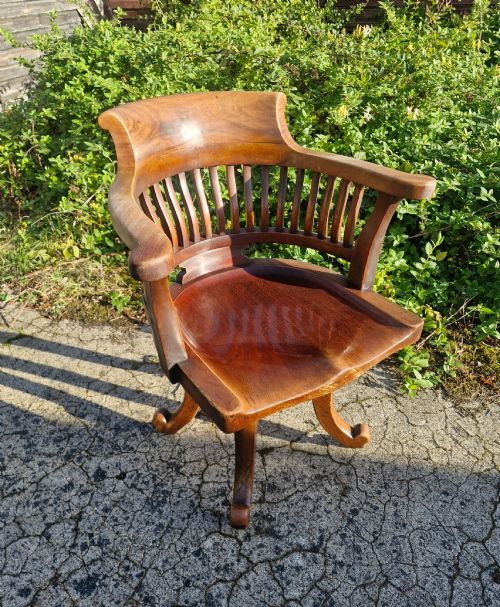
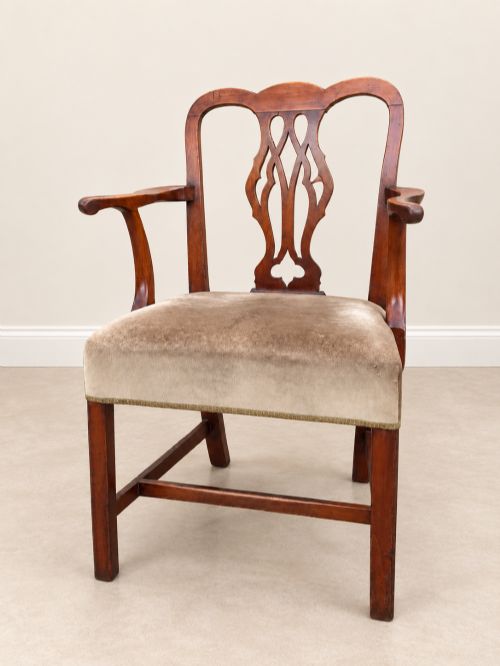
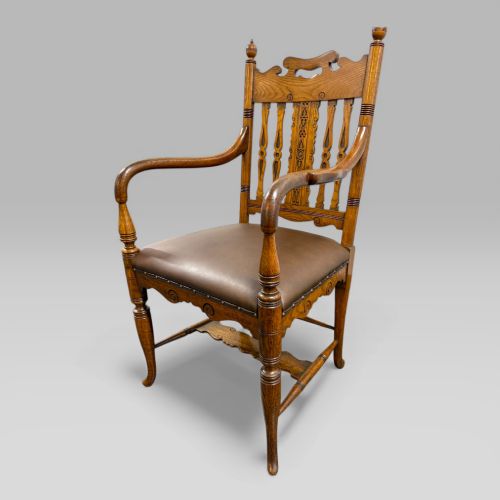
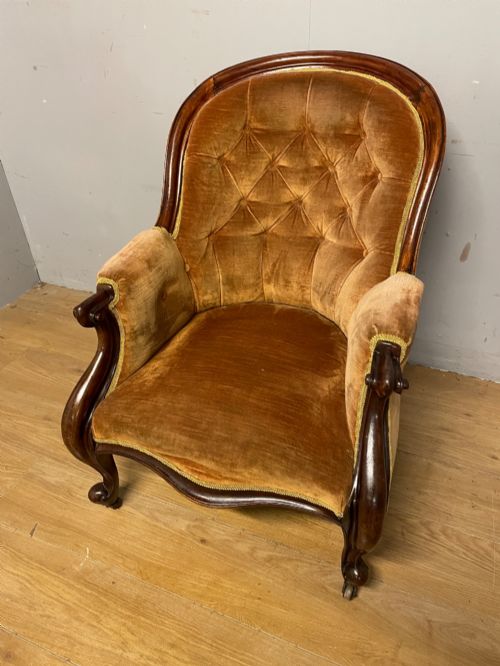
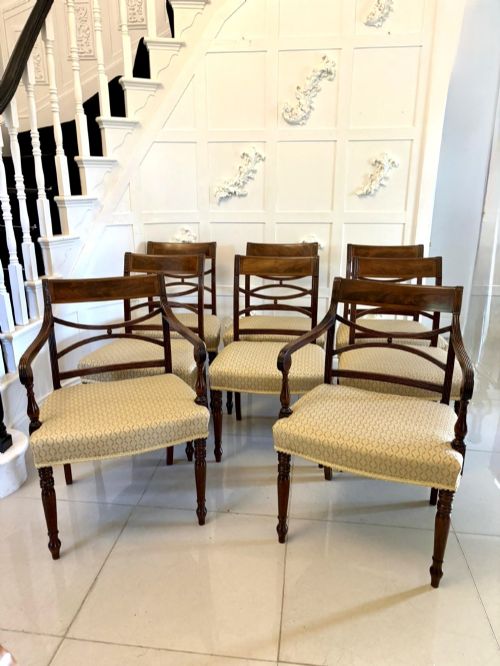
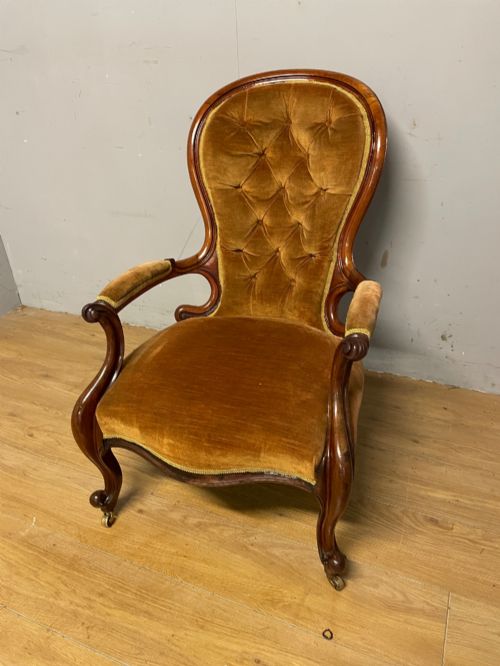
A brown armchair covers a diverse range of seating, from sturdy 18th-century Windsor designs in yew and elm to button-backed Victorian library chairs upholstered in rich leather. Buyers searching for a brown armchair encounter functional office seating like revolving desk chairs alongside stately Georgian elbow chairs and deep-seated smoking bows.
The materials dictate the shade and grain of each brown armchair, spanning deep polished mahogany, warm walnut, honey-coloured oak, and dense fruitwoods. Many examples combine turned wooden spindles or solid frames with original tan leather, woven cane, or damask covers originating across the Georgian, Victorian, and Edwardian periods.
How they were made
Cabinetmakers and country joiners built these frames using seasoned hardwoods like mahogany, oak, walnut, and yew, often securing joints with traditional pegs and tenons. Windsor and country models utilise a combination of elm, beech, ash, and yew, bending green timber into hoop backs and steam-curved armrests.
Upholstered variants rely on internal webbing, horsehair stuffing, and hand-tacked leather or fabric fastened over sturdy mahogany or oak frameworks. Metal components appear as cast brass castors on swivel library chairs and complex iron mechanisms beneath revolving office seats.
Listings feature 19th century, Victorian, Georgian, and Edwardian periods alongside materials like mahogany, oak, walnut, yew, leather, and brass.
What varies in quality
The distinction between standard utility seating and exceptional workshop production lies in timber selection, carving depth, and structural integrity. Master cabinetmakers shaped substantial mahogany and figured walnut into crisply defined shield backs or heavily carved library frames.
In country seating, quality shows in the symmetry of turned spindles, the grain complexity of yew wood, and the retention of original surface patination. Mechanised office chairs derive their value from the smoothness of early swivel mechanisms and solid timber revolving bases.
Gillows·Gabbitass of Worksop·Bruce James Talbert·Philip Webb
The Brown Armchair Glossary
- Windsor chair
- A wooden armchair constructed with a solid shaped seat into which the legs and back spindles are wedged directly. These country pieces often incorporate flexible bentwood hoops and combined timbers such as elm, ash, and yew.
- Library chair
- A heavy upholstered armchair designed for reading rooms, frequently featuring leather button-backed padding and mahogany frames. Many incorporate pivoting mechanisms or reading desks.
- Carver
- An armchair designed to match a set of dining chairs, usually placed at the head of the table. They share the decorative style of the smaller dining chairs but include open elbow rests.
- Tub chair
- An armchair featuring a rounded, enclosed back that curves continuously to form the armrests. These compact seats often sit on low wooden frames or brass castors.
- Smokers bow
- A low-backed Windsor armchair with a rounded, continuous rail serving as arms and backrest, popular in domestic and commercial settings during the 19th century.
Brown Armchair: Frequently Asked Questions
How were antique armchairs used?
Historic armchairs served specific domestic and professional functions, from reading in private libraries to working at partner desks and dining in formal rooms.
Swivel and revolving variants accommodated office work, while sturdy Windsor and smoking bow chairs furnished country homes and taverns.
How do I style a brown armchair?
A brown armchair grounds a contemporary or traditional interior by introducing natural wood grain and tactile leather textures.
Position a mahogany library chair beside a bookshelf or place a Windsor armchair in a hallway to highlight its turned spindles and rich timber patina.
How do I date an antique armchair?
Dating relies on identifying the prevailing timber species, construction techniques, and stylistic markers characteristic of periods like the Georgian era or Victorian reign.
Examine the joinery beneath the seat, the turning of the legs, and the presence of period hardware such as cast brass castors.