

Brown Bedside Table
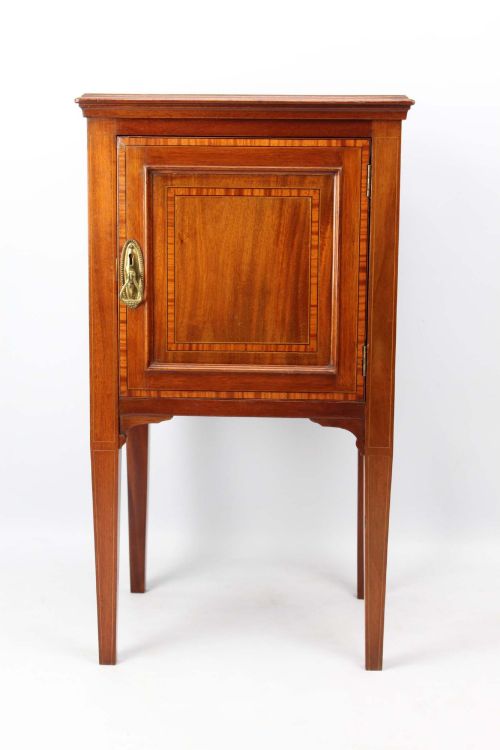
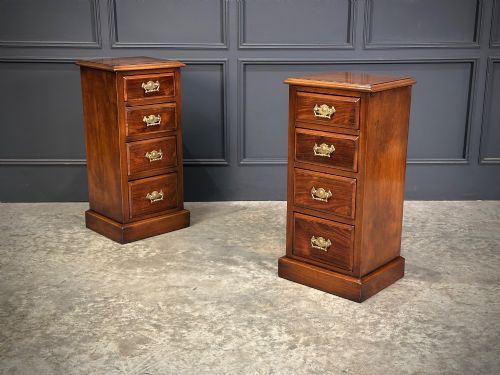
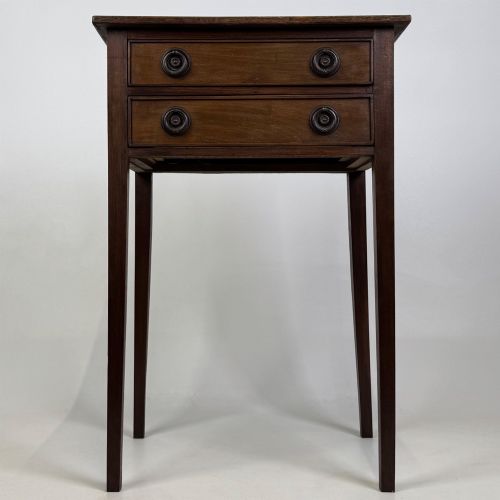
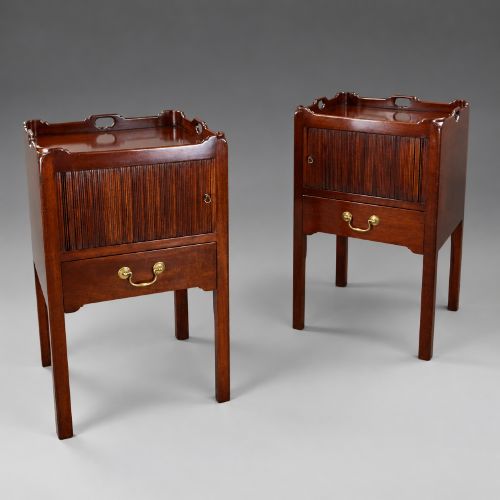
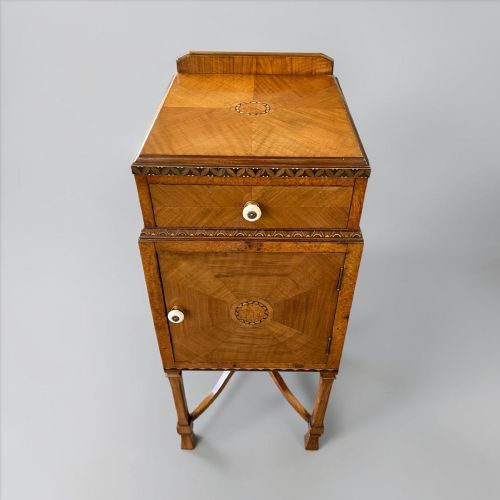
A brown antique bedside table brings timber warmth and practical storage to the bedroom, grounding the room with period character.
Brown Bedside Table
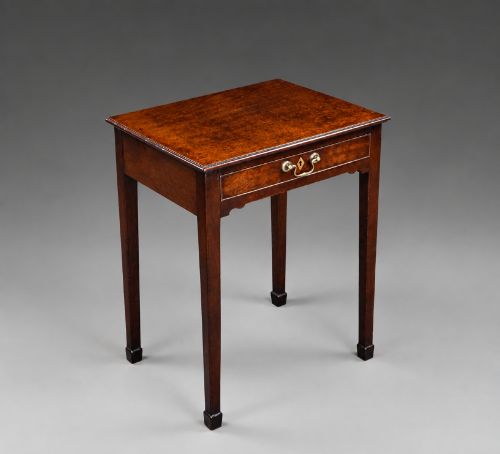
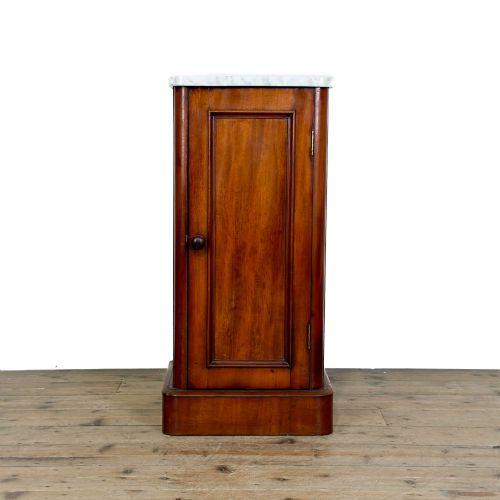
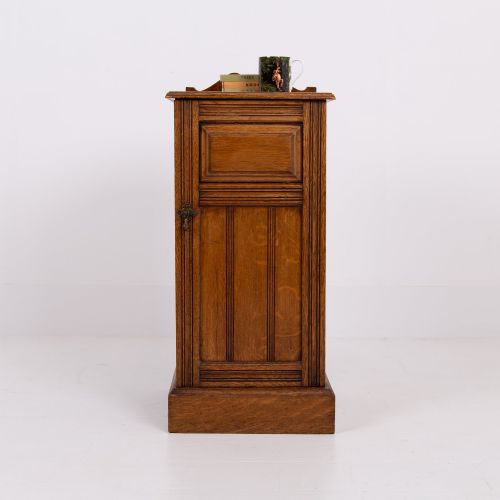
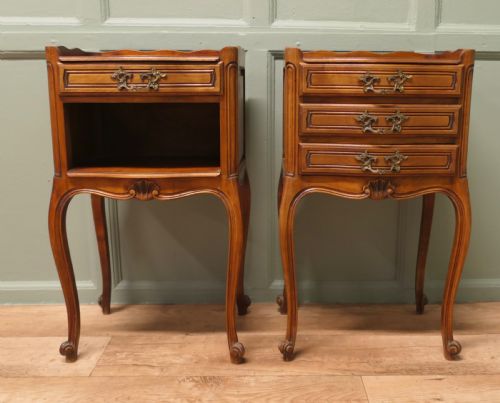
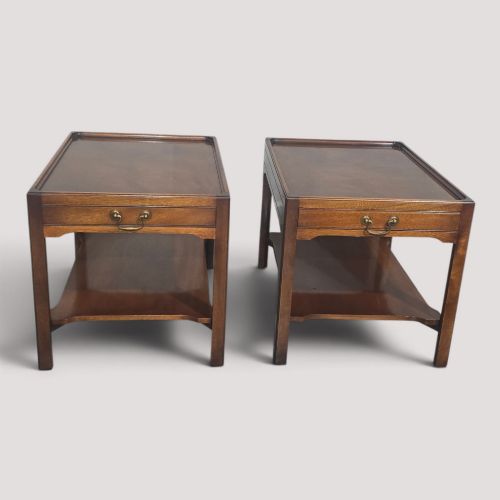
A brown antique bedside table encompasses a practical range of small furniture designed to sit beside a bed, holding lamps and evening essentials. These pieces take forms such as compact bedside cabinets, side tables, small chests of drawers, and open pot cupboards.
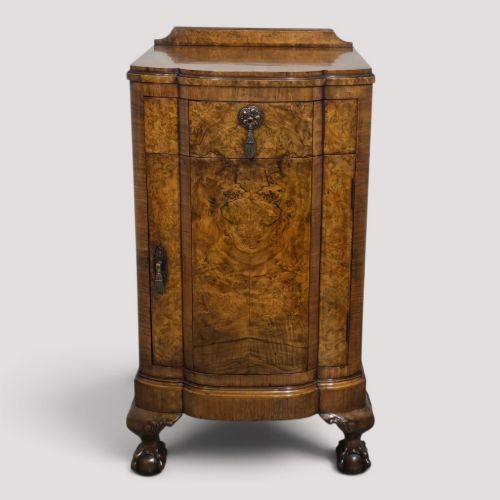
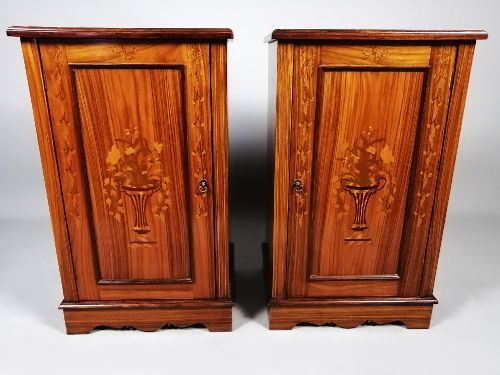
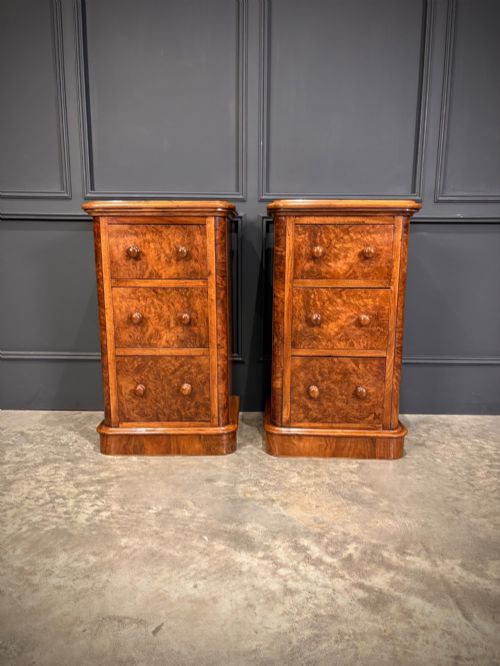
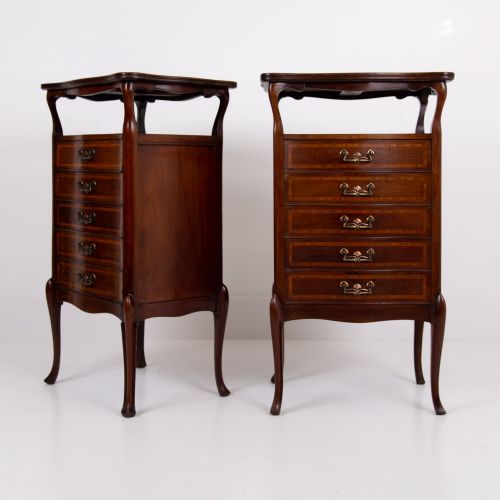
Buyers searching for a brown antique bedside table most frequently encounter mahogany and walnut examples dating from the Victorian and Edwardian eras, alongside early twentieth-century variations. Many survive as matched pairs, though single cabinets and side tables appear regularly.
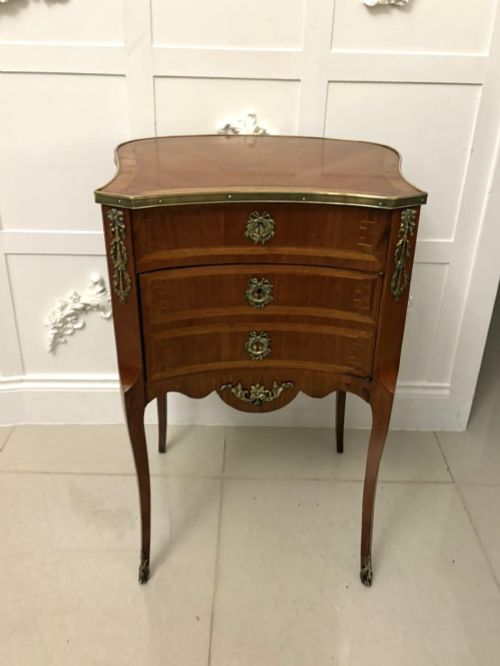
Origin and proportion vary significantly across the selection, ranging from simple English oak cupboards to serpentine French tables fitted with marble tops. Each piece reflects the domestic storage needs and stylistic tastes of its specific period, from Georgian restraint to Art Deco geometry.
How they were made
Cabinetmakers constructed these tables primarily using solid and veneered hardwoods, relying heavily on rich mahogany, walnut, and burr walnut for their characteristic deep brown tones. Oak and pine also served as sturdy timbers, particularly for interior framing and simpler regional pieces.
Surface embellishment often involved decorative techniques such as marquetry, fine inlay, and wax finishing to highlight the natural grain of the wood. Metal elements like brass handles and ormolu mounts added functional detail and contrast to the dark timber surfaces.
Marble-topped cabinets appear alongside timber surfaces, reflecting French design influences from the nineteenth and early twentieth centuries.
What varies in quality
The standard of a brown antique bedside table rests upon the choice of timber and the precision of its construction, particularly in the selection of figured mahogany or burr walnut veneers. Superior pieces display seamless matching of wood grain across drawer fronts and cabinet doors.
Refinement in carving, the presence of original brass or ormolu hardware, and thoughtful proportions separate exceptional examples from standard utilitarian items. Details like serpentine curves and integrated marble tops indicate a higher grade of craftsmanship.
François Linke
The Brown Bedside Table Glossary
- Pot cupboard
- A small bedside cabinet originally designed to house a chamber pot behind a single door. These compact units now serve widely as general bedside storage.
- Ormolu
- Gilt bronze ornamentation applied to furniture, frequently found on French pieces of the nineteenth century. This decorative metalwork provides a bright contrast to dark mahogany and walnut.
- Marquetry
- The art of applying pieces of veneer to a structure to form decorative patterns and pictures. Skilled cabinetmakers utilised contrasting woods to create intricate floral or geometric designs on tabletops.
- Serpentine
- A furniture front or tabletop shaped with a double-curved contour, swelling outward at the centre and receding at the sides. This fluid line demands advanced woodworking skill.
- Burr walnut
- Timber taken from a tree growth or burl, yielding a highly swirled and mottled grain pattern. It was prized for luxury veneering on tabletops and cabinet doors.
Brown Bedside Table: Frequently Asked Questions
How do I match an antique bedside table with a modern bed?
Mixing period brown timber pieces with contemporary beds relies on balancing wood tones and keeping proportions consistent. A rich mahogany or walnut cabinet adds warmth and textural contrast against neutral modern upholstery.
Matching the height of the tabletop to the top of the mattress ensures the piece remains practical for daily use, regardless of the bed frame style.
Are these tables usually sold as pairs?
Many bedside tables from the Victorian, Edwardian, and later periods survive and are listed as matching pairs, though single tables also appear frequently. Pairs offer symmetrical balance on either side of a double or king-size bed.
Single tables work well in smaller bedrooms, guest rooms, or paired with mismatched furniture for a more collected look.
How can I tell a Victorian bedside chest from a later Edwardian one?
Victorian bedside chests often display heavier proportions, darker mahogany timbers, and simpler architectural lines built for sturdiness. Edwardian examples tend to be lighter in scale, sometimes featuring delicate inlay, satinwood banding, or tapered legs.
Examining the internal drawer construction and timber choice helps clarify the manufacturing period of each piece.