
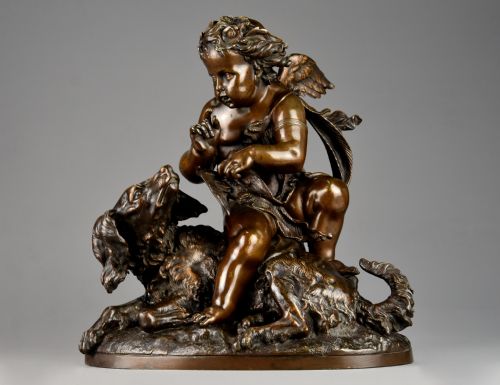


Bronze Winged Figure
When you search for a bronze winged figure, you enter a world of neoclassical deities, putti and allegorical forms cast in metal.
Bronze Winged Figure
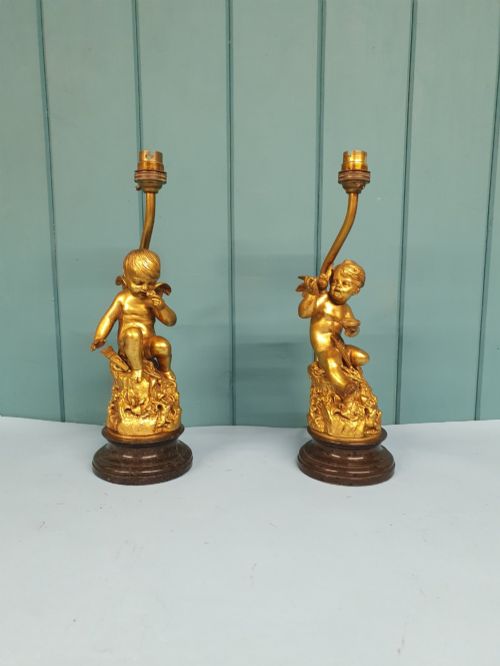
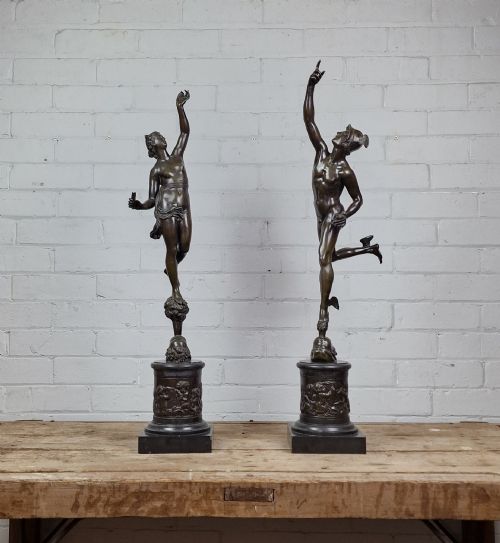
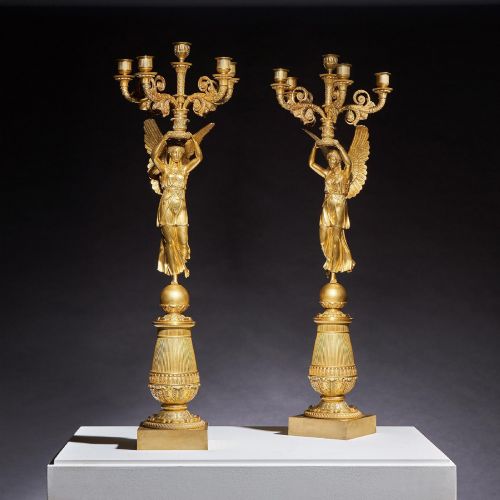
A bronze winged figure brings classical mythology and decorative elegance into an interior, taking the form of figures like Mercury, Hermes, Cupid, putti, and symbolic animals such as eagles and lions. These pieces emerge predominantly from nineteenth-century European workshops, encompassing French Empire, Grand Tour, and Art Deco aesthetics.
The objects span domestic decorative art and functional lighting, appearing as standalone sculptures, mounted candelabra, and table lamps. Figures often sit upon pedestals or bases fashioned from marble, slate, or wood.
On this page, buyers most frequently encounter nineteenth-century French bronzes and patinated or gilt metal figures, reflecting the period's fascination with classical antiquity and mythological subjects.
How they were made
Foundries utilised traditional casting methods to shape molten metal into complex anatomical and feathered details, subsequently applying patination, gilding, or ormolu finishes to achieve varied surface textures. Many sculptures employ patinated bronze for the primary subject while incorporating gilt bronze or ormolu for contrasting decorative elements.
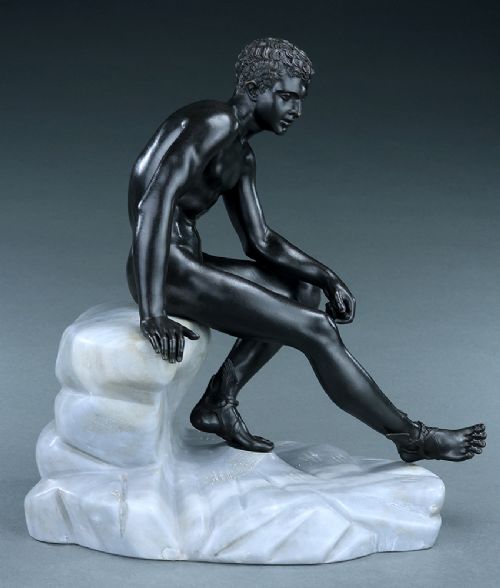
Makers integrated heavy natural supports, mounting metal castings onto bases of black marble, grey marble, black slate, or inlaid wood to provide stability and visual contrast for standing or seated figures.
Listings feature bronzes mounted on black slate, black marble, grey marble, and inlaid wood bases.
What varies in quality
The integrity of the partnership between the bronze figure and its stone or wood plinth matters significantly, as original mountings demonstrate careful proportion and secure assembly. Inferior or later adaptations often display mismatched materials or clumsy attachment methods between the sculpture and its base.
Pierre Philippe Thomire·Antoine Louis Barye·Barbedienne·Louis Auguste Moreau·Charles Cumberworth·Simon Louis Boizot
The Bronze Winged Figure Glossary
- Ormolu
- Gilded bronze applied to decorative objects and furniture mounts, popular in French Empire and Rococo metalwork. This technique involves coating base metal with a mercury and gold amalgam.
- Patinated bronze
- Bronze treated with chemical solutions to produce a specific surface colour, ranging from deep brown to greenish tones. It protects the metal and accentuates sculptural contours.
- Grand Tour
- The nineteenth-century practice where affluent travellers collected classical antiquities and reductions of famous sculptures across Europe. These souvenir bronzes often replicated iconic monuments and mythological figures.
- Animalier
- A nineteenth-century artistic style focused on the realistic depiction of animals, frequently applied to birds of prey and beasts in dynamic poses. French sculptors specialised in this observant, naturalistic medium.
- Putto
- A plump, winged child figure derived from classical art, commonly appearing as a cherub or infant deity in nineteenth-century decorative sculpture. These figures frequently accompany allegorical scenes.
Bronze Winged Figure: Frequently Asked Questions
What periods do these figures come from?
The pieces span the Georgian era through the nineteenth century into the Art Deco period of the 1930s. Most examples date from the nineteenth century during the height of French and European foundry production.
Stylistic influences range from classical Neoclassicism and French Empire to Tibetan iconography and Animalier realism.
How were these figures used originally?
Many served as decorative sculptures placed upon mantelpieces, desks, or cabinets in grand nineteenth-century interiors. Others functioned as illumination, integrated into candelabra and table lamps.
Grand Tour bronzes functioned primarily as travel mementos celebrating classical art and architecture.
How do I identify a Grand Tour piece?
Grand Tour sculptures often depict famous classical subjects, such as Mercury or Hermes, reduced in scale for travellers to transport home. They frequently feature detailed patination and specialised marble or slate bases typical of nineteenth-century Italian and French workshops.
These pieces reflect the neoclassical education and tastes of nineteenth-century collectors.
What materials are combined with the bronze?
Foundries frequently mounted bronze figures onto heavy stone plinths made of black marble, grey marble, or black slate. Some pieces incorporate inlaid wood bases or gilt brass and ormolu highlights to enhance the visual depth of the composition.
These mixed media constructions provided necessary weight and structural stability.
How do I care for patinated bronze?
Dust the surface gently with a soft, dry cloth to prevent the accumulation of grit in crevices and feathered wing details. Avoid using commercial metal polishes, water, or abrasive cleaners, as these can strip the original patination or gilding.
Maintain a stable indoor environment away from excessive humidity and direct sunlight.