


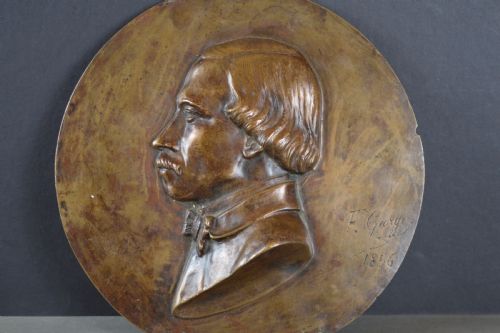

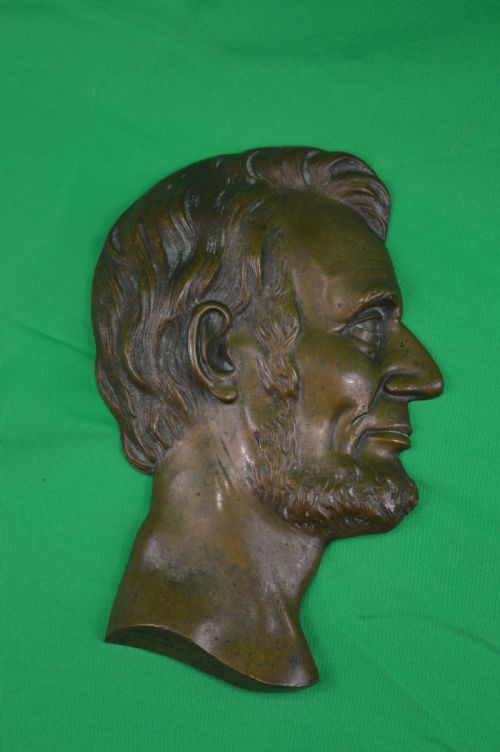


Bronze Portrait Relief
A bronze portrait relief captures a likeness in cast metal, offering a tangible link to historical figures through enduring sculptural work.
Bronze Portrait Relief
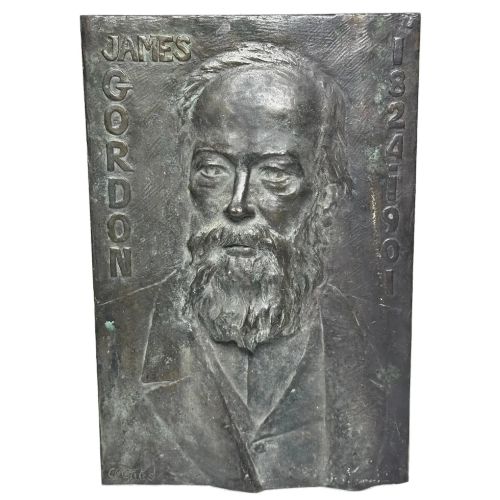
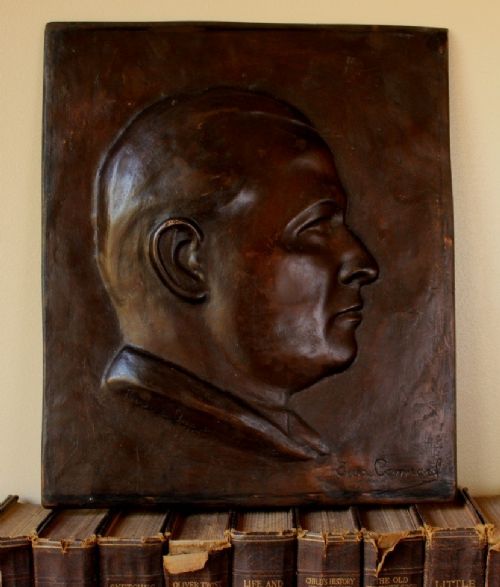
When you search for bronze portrait relief, you encounter sculptural wall plaques and roundels depicting historical figures, literary icons, and notable individuals. The selection spans the Victorian, Edwardian, and Art Deco periods, alongside nineteenth-century classical and revival styles.
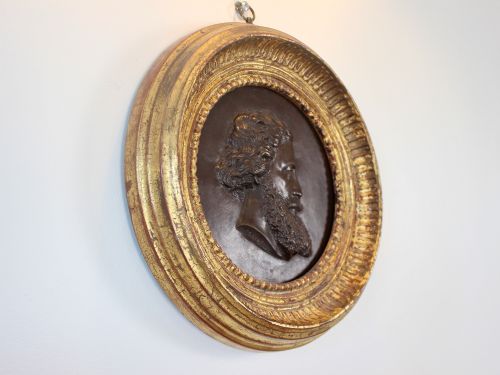
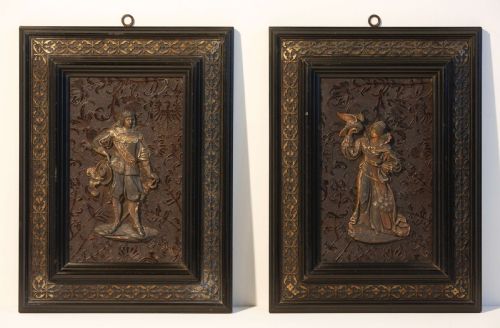
You are most likely to meet single wall plaques or matched pairs cast in bronze, copper, or white metal, frequently mounted within wood or brass frames. These pieces take the form of profile medallions, bust sculptures, and rectangular wall panels intended for interior display.
How they were made
Makers utilised casting techniques to shape bronze, copper, and white metal into detailed facial likenesses, occasionally employing giltwood, mahogany, or ebonised wood for surrounding frames. Some examples combine cast lead with bronzed finishes or utilise plaster as a base material.
Surface treatment varied from natural patination to gilding or bronzing applied over plaster or base metals. Frames were often turned from timber to house roundels and wall panels securely.
Among the historical likenesses, Shakespeare and Rubens share wall space with Charles Dickens and Napoleon.
What varies in quality
The choice of framing material, such as turned mahogany or gilded bronze mounts, influences the character of the piece. Superior examples exhibit deliberate chasing and finishing work to the metal surface after casting.
Eugene Canneel·Gustav Grohe·J Lavergne
The Bronze Portrait Relief Glossary
- Relief
- A sculptural technique where figures project from a flat background surface. This approach creates a sense of three-dimensional depth on a two-dimensional plane.
- Roundel
- A circular panel or plaque used for decorative artwork. These are frequently mounted within turned wooden frames.
- Patina
- The surface coloration and sheen acquired by bronze and copper over time through oxidation and handling. It often indicates the age and history of the metalwork.
- Medallion
- A large medal or medallion-shaped plaque created for commemoration or portraiture. They are commonly cast in bronze or brass.
Bronze Portrait Relief: Frequently Asked Questions
How were bronze portrait reliefs displayed?
These pieces were typically hung on interior walls as decorative panels or commemorative plaques. Many incorporate original timber frames or brass mounts designed for suspension.
Their substantial weight required secure fixings, and they were often arranged in pairs or sets within libraries and studies.
What subjects do these reliefs depict?
The subjects range from literary figures such as Shakespeare and Charles Dickens to political leaders like Abraham Lincoln and Napoleon. Commemorative pieces also honour historical monarchs and figures from the American Civil War.
Many works record the likenesses of private individuals commissioned during the nineteenth and early twentieth centuries.
How do I care for a bronze relief?
Maintenance involves gentle dusting with a soft, dry cloth to prevent the accumulation of grime on the metal surface. Avoid abrasive cleaners or polishes that can strip the historic patina.
Stable environmental conditions help protect both the metal casting and any accompanying wooden or gilt frames from moisture damage.
Are all these pieces cast from bronze?
While bronze is the primary metal, the selection includes pieces made from copper, white metal, cast lead with bronzed finishes, and bronzed plaster. Frames and backing panels incorporate materials such as mahogany, ebonised wood, and giltwood.
Different periods favoured varied metal alloys depending on the workshop and the intended style.