




Bronze Plant Vessel
A bronze plant vessel brings sculptural weight to botanical displays, combining cast metalwork with traditional horticulture.
Bronze Plant Vessel
A bronze plant vessel most commonly appears on this page as a jardiniere, planter bowl, or decorative vase originating from nineteenth-century Japanese, Chinese, and European workshops. These receptacles accommodated indoor potted plants and floral arrangements in formal reception rooms and parlours. Collectors encounter diverse forms ranging from French baroque ormolu bowls to Meiji period Japanese bronzes.
The inventory on this page spans the Victorian era into the early twentieth century, incorporating items created during the Edo period, late Qing dynasty, and Meiji period. Pieces often double as standalone decorative objects or centrepieces when not holding foliage. The scale varies from modest tabletop planters to heavy vessels exceeding two kilograms.
How they were made
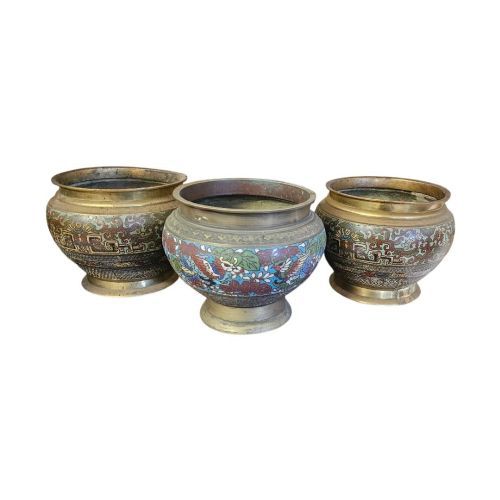
The primary material across these listings is bronze, supplemented by brass, gilt bronze, and ormolu for European models. Artisans employed sophisticated casting methods to achieve thick-walled vessels capable of holding soil and water safely. Surface decoration frequently incorporates cloisonné and champlevé enamel techniques, fusing coloured glass pastes into recessed metal compartments before firing.
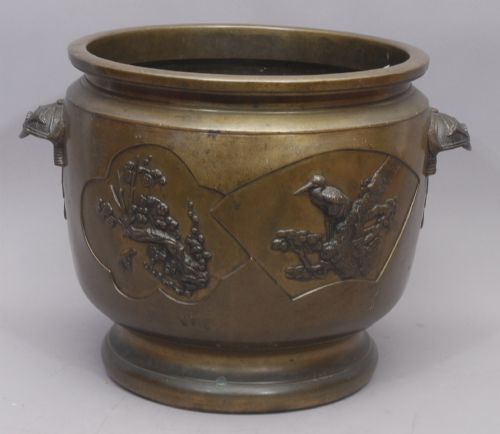
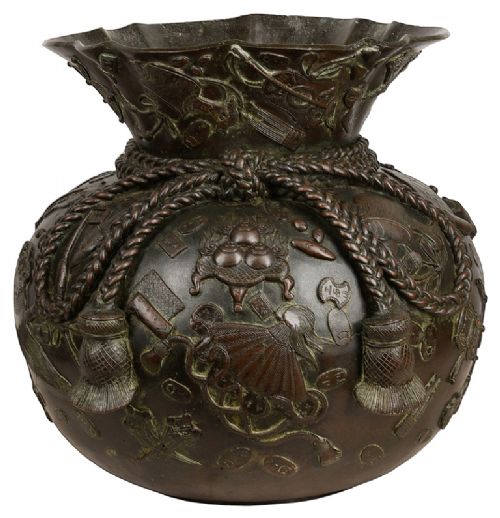
Certain pieces integrate contrasting elements such as porcelain or Samson Imari panels set within the metal framework. Japanese works from the Meiji and Edo periods utilise intricate chiselling and patination to create textured exterior reliefs. French items display fire-gilded ormolu finishes that impart a brilliant golden lustre to the cast bronze structure.
Bronze Plant Vessel Retail Price Guide 2026
Typical asking prices for bronze plant vessel among the pieces listed under this phrase on Sellingantiques today, from the lower quarter to the upper quarter. They describe what is for sale here now, not the wider market.
One remarkably sturdy Japanese bronze bowl tips the scales at a hefty 2.7kg.
What varies in quality
The distinction between standard utility items and superior examples lies in the crispness of the casting and the depth of the chased surface detail. Finer pieces exhibit hand-finished chisel work that sharpens the contours of botanical or geometric motifs rather than relying solely on the raw cast. Enamelling quality also separates grades, with dense, evenly fired cloisonné cells commanding greater appreciation than hastily filled surfaces.
Weight and structural integrity indicate manufacturing standard, particularly in larger Japanese bronze bowls and French ormolu jardiniere pairs. The cohesion of mixed media, such as the seamless integration of porcelain panels or enamel work into the bronze body, determines the overall refinement of the vessel.
The Bronze Plant Vessel Glossary
- Jardiniere
- An ornamental pot or receptacle designed to hold a plant or flower arrangement. These vessels sit on tables or stands within domestic interiors.
- Cloisonne enamel
- A decorative metalwork technique where thin metal wires are soldered to a base to form cells, which are then filled with coloured glass paste and fired. This method produces intricate, multi-coloured surface patterns.
- Champleve enamel
- A process in which troughs or cavities are gouged out of the metal surface and filled with enamel before firing. It differs from cloisonné by sinking the design directly into the metal plate.
- Ormolu
- Finely ground high-carat gold applied to a bronze object using a mercury amalgamation process, yielding a brilliant golden finish. The term derives from the French for milled gold.
- Samson Imari
- Ceramics produced by the Parisian firm Samson et Editeurs mimicking Japanese Imari porcelain styles. These decorative panels occasionally appear mounted in nineteenth-century metalwork.
Bronze Plant Vessel: Frequently Asked Questions
What is a bronze plant vessel used for?
These vessels functioned primarily as interior planters and ornamental bowls to house potted ferns or floral displays in nineteenth-century homes.
They also served as decorative centrepieces on dining tables or sideboards without necessarily containing living plants.
How do I identify a Meiji period piece?
Meiji period works originate from Japan between 1868 and 1912, often featuring distinct bronze patination and intricate cast or chased motifs.
Many bear traditional aesthetic traits influenced by Japanese craftsmanship of that era, sometimes combined with export-oriented production.
What is the difference between ormolu and bronze?
Bronze is an alloy of copper and tin used as the structural base metal for casting these decorative vessels.
Ormolu refers specifically to the gilded surface finish applied to bronze mounts, particularly on nineteenth-century French decorative items.
How do I clean an antique jardiniere?
Dust gently with a soft, dry brush to preserve the historical patina on exposed bronze surfaces.
Avoid abrasive polishes or chemical cleaners that might strip away original patination, enamelling, or gilt layers.