

Bronze Mounted Furniture
Bronze mounted furniture brings together fine timber and cast metal details to create functional pieces for the home.
Bronze Mounted Furniture
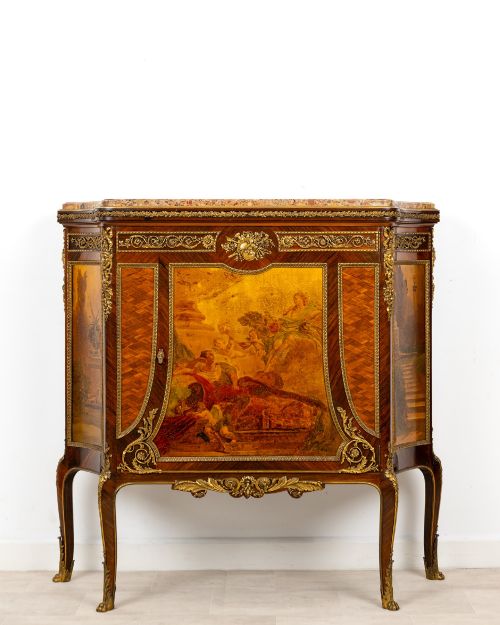
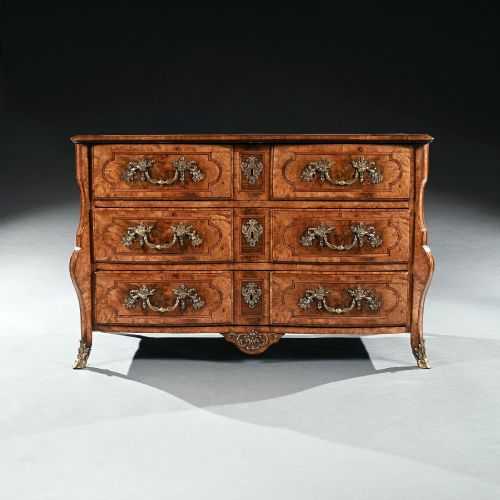
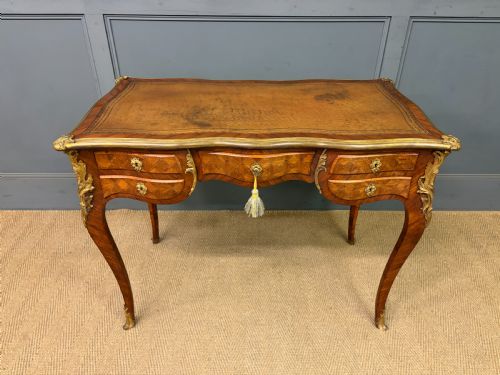
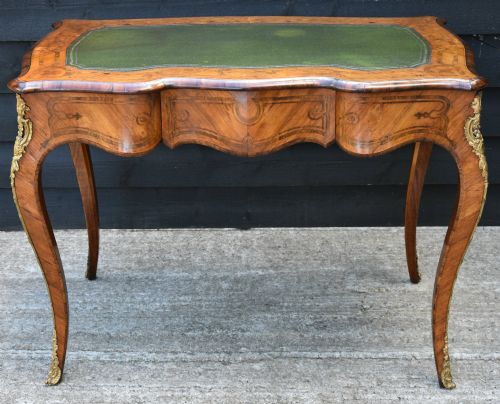
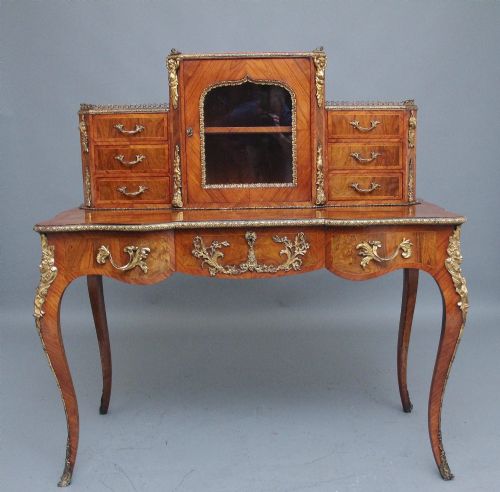
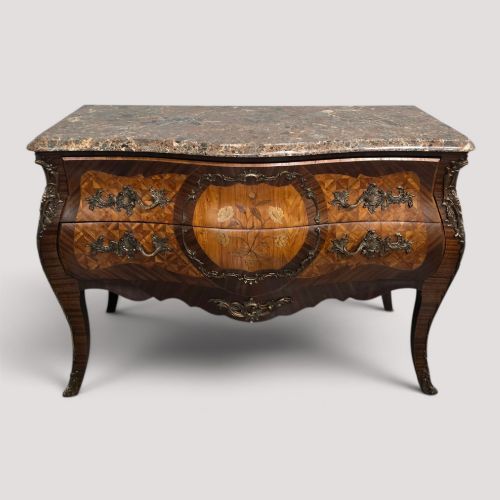
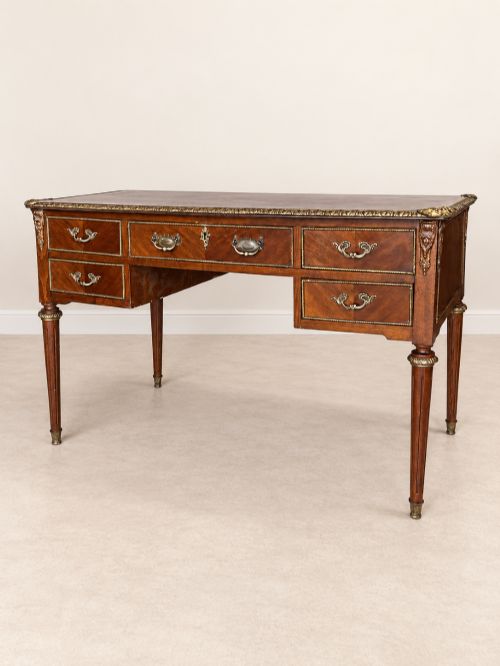
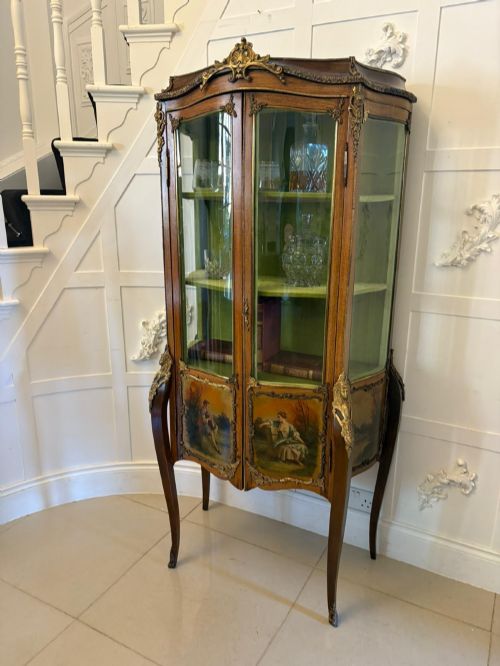
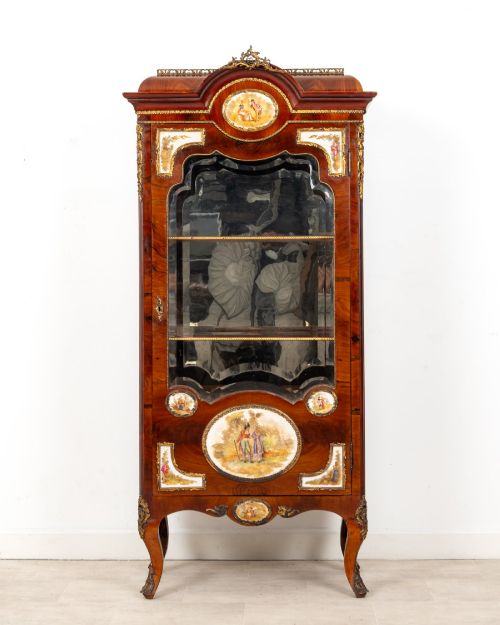
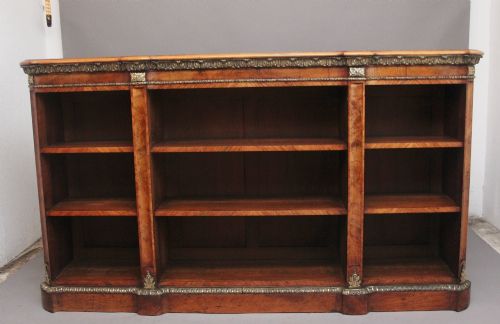
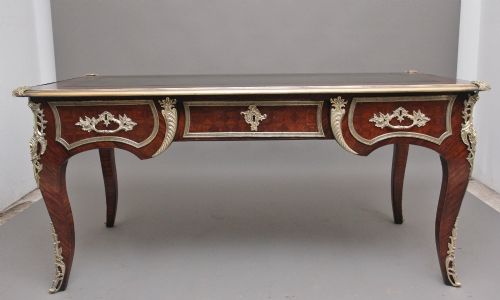
Bronze mounted furniture spans functional pieces such as desks, writing tables, commodes, and display cabinets designed to hold precious objects. These items combine timber frames with cast metal mounts to create decorative surfaces.
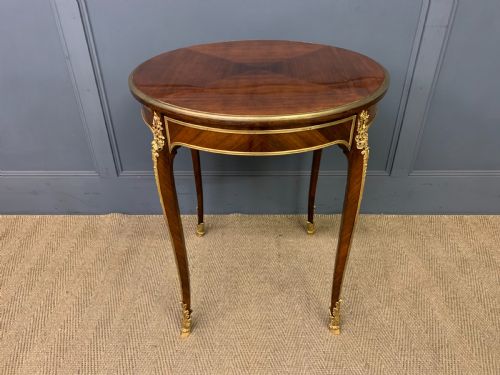
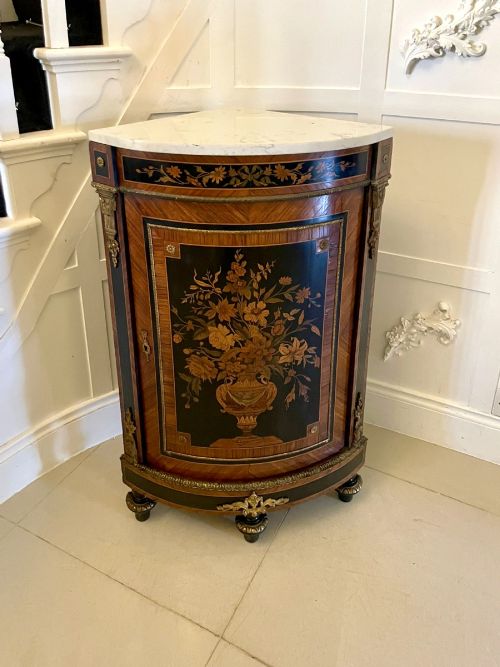
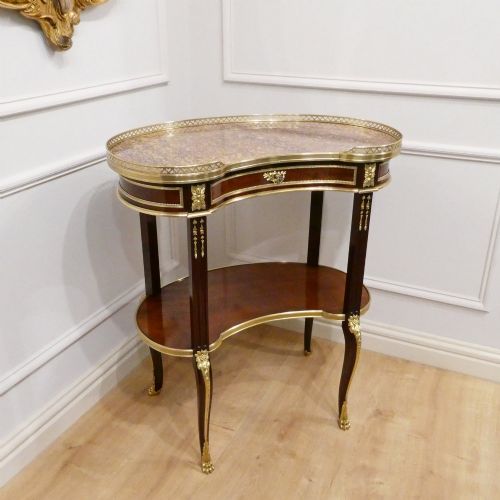
The selections on this page draw heavily from the nineteenth century, reflecting French revivals of Louis styles alongside Victorian production. Cabinets, side tables, and bureau plats dominate the forms seen here.
Makers utilised woods like kingwood, mahogany, and walnut as backdrops for gilt bronze and ormolu. Marble tops appear frequently on cabinets and commodes, adding weight and colour to the designs.
Materials and Construction
Cabinet makers built foundational structures from native and exotic timbers, applying veneers in parquetry, marquetry, and burr patterns across surfaces. Woods such as kingwood, rosewood, and mahogany provide the primary body for these items.
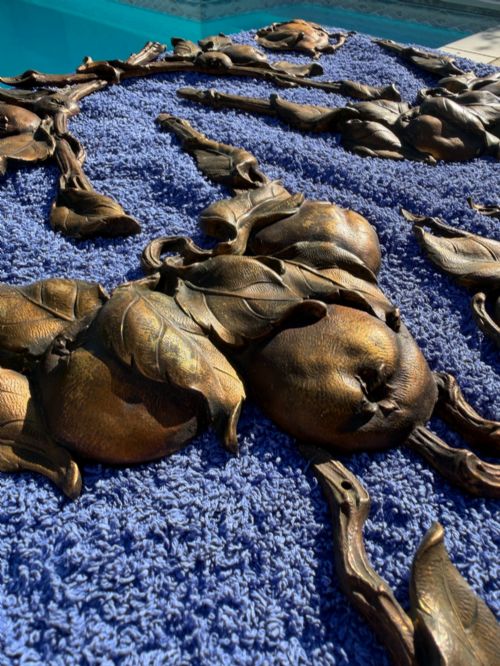
Metalworkers cast bronze details, applying mercury gilding or modern electroplating to produce ormolu and gilt bronze mounts. These metal elements were fastened securely to corners, feet, and drawer fronts to protect and adorn the timber.
Listings feature eighteenth-century pieces alongside nineteenth-century revivals, highlighting timber veneers such as kingwood, walnut, and mahogany paired with gilt bronze.
Distinctions in Quality
The standard of bronze mounted furniture rests on the crispness of the metal casting and the precision of the timber work. Mounts that retain sharp chisel work and deep chasing indicate skilled metalworking rather than mass production.
Joinery execution dictates durability and refinement, visible in the snug fit of drawers and the alignment of veneer patterns. Pieces bearing stamps from known makers or fine proportions demonstrate the higher tiers of workshop output.
François Linke·Thomas Hache·Gillows·Gabriel Viardot·Johnstone and Jeanes·Maison Millet·H. J. Hatfield and Sons·Henry Dasson·Mercier Frères·E. Kahn·Blake
The Bronze Mounted Furniture Glossary
- Ormolu
- Gilt bronze applied to furniture mounts and decorative objects. The technique involves coating metal with a gold amalgam and heating to leave a golden finish.
- Marquetry
- Inlaid wood veneers arranged to form decorative pictures or geometric patterns. Craftsmen cut various coloured woods to fit precisely into a background veneer.
- Parquetry
- Geometric wood inlay forming repeating patterns such as cubes or chequers. This technique uses small wooden tiles assembled on a backing surface.
- Vitrine
- A glass-fronted cabinet used for displaying porcelain, books, or curiosities. These pieces often feature marble tops and gilt bronze mounts.
- Commode
- A low chest of drawers designed for domestic rooms. Eighteenth and nineteenth-century examples frequently feature serpentine fronts and marble surfaces.
Bronze Mounted Furniture: Frequently Asked Questions
What is bronze mounted furniture?
Bronze mounted furniture refers to wooden cabinets, desks, and tables decorated with cast bronze or ormolu mounts. These metal ornaments highlight the structural lines and corners of each piece.
Craftsmen combined rich timbers with gilded metal to produce formal furnishings for drawing rooms and studies during the eighteenth and nineteenth centuries.
How do I clean ormolu mounts?
Ormolu mounts require gentle dusting with a soft, dry brush to prevent the accumulation of dirt in recessed areas. Avoid abrasive cleaners or harsh chemicals that strip the original gilding.
Professional conservation may be necessary if the metal shows significant tarnish or if the protective lacquer has deteriorated over time.
Where should I place a vitrine?
A vitrine suits reception rooms or hallways where it can safely display porcelain, glassware, or small collectibles behind glass panels. Position the cabinet away from direct sunlight to protect interior wooden surfaces and displayed items.
Ensure the floor is level so the glass doors open and close smoothly without catching on the frame.
How do I identify French revival styles?
French revival pieces incorporate curved cabriole legs, floral marquetry, and asymmetrical mounts characteristic of the Louis XV style. Louis XVI versions favour straight tapered legs, neoclassical symmetry, and geometric parquetry.
Examining the underlying timber and the casting style of the bronze mounts helps confirm whether a piece dates to the eighteenth century or a nineteenth-century revival.