

Bronze Mounted Bureau
A bronze mounted bureau brings French Rococo and Neoclassical elegance into a room through rich timbers and gilded mounts.
Bronze Mounted Bureau
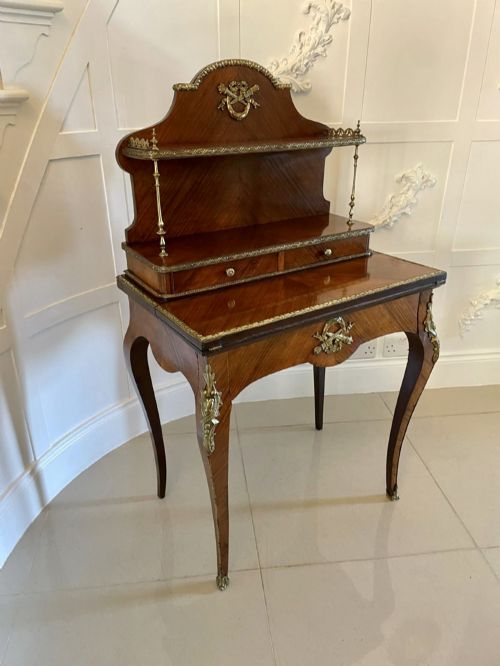
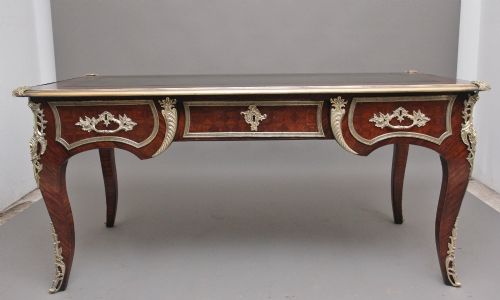
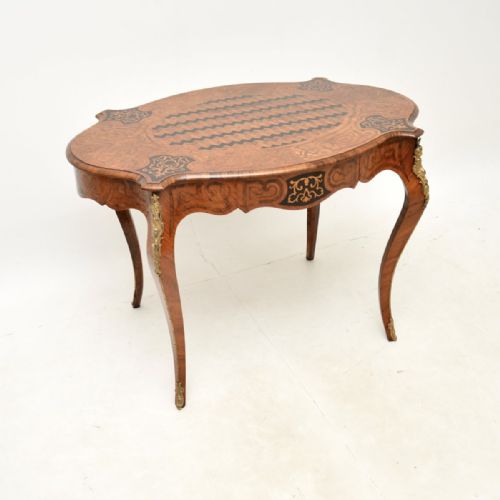
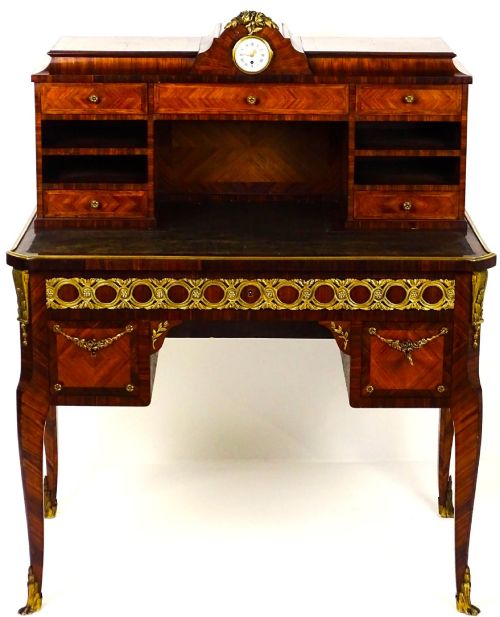
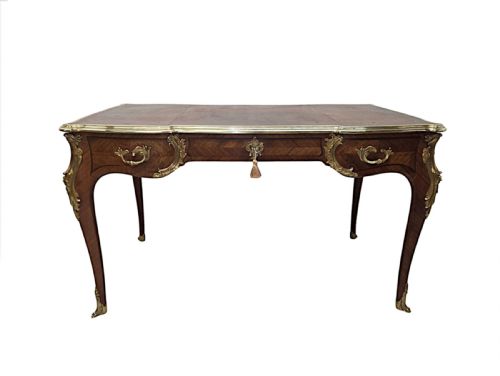
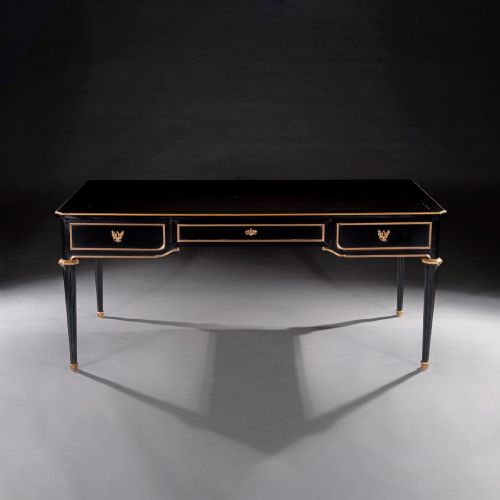
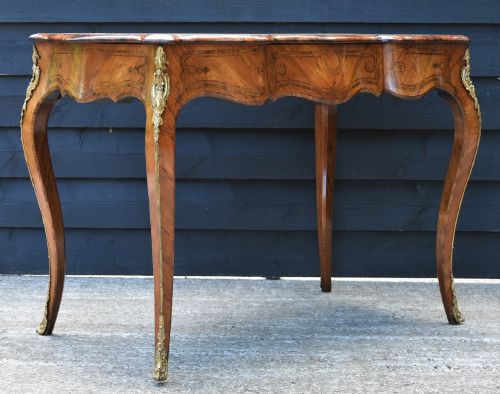
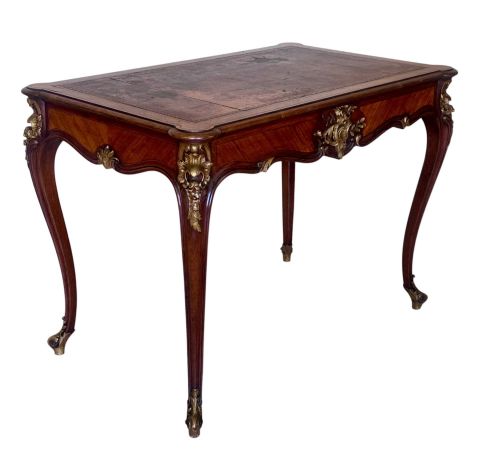
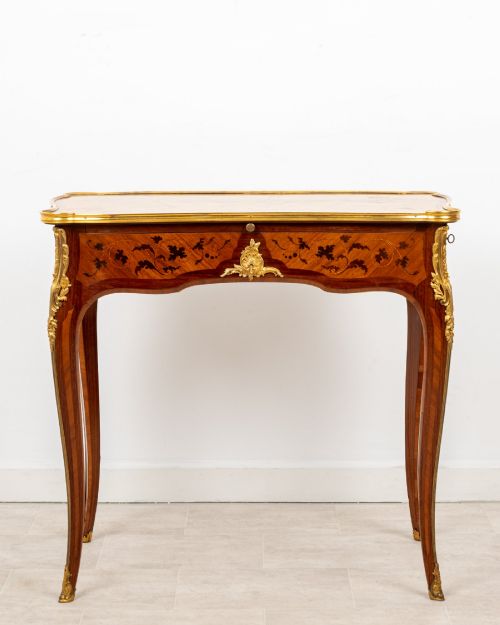
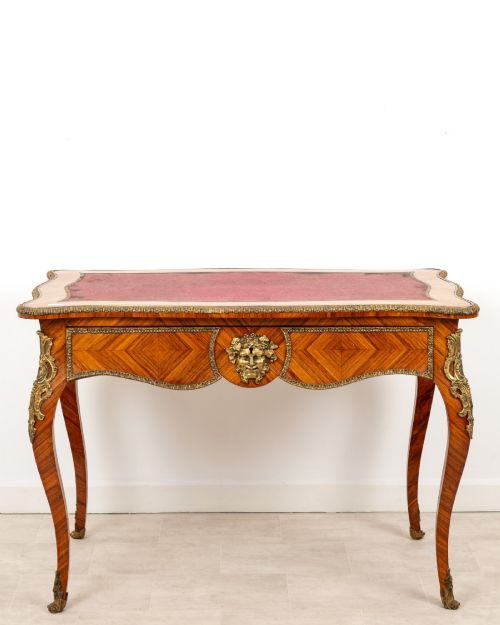
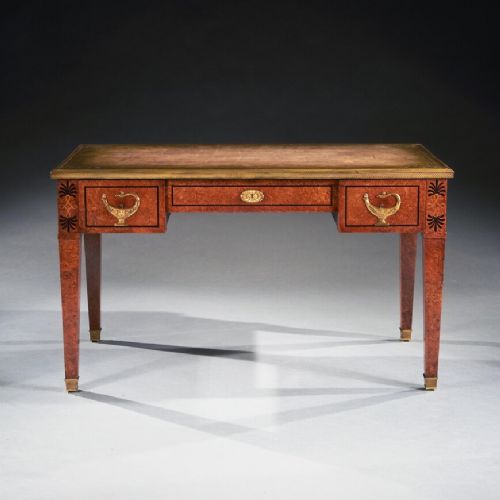
A bronze mounted bureau covers a range of nineteenth century writing furniture, most frequently appearing as a bureau plat, a freestanding writing table, or a diminutive bonheur du jour. These forms originate from French revival movements of the Victorian era, particularly drawing upon the fluid asymmetry of Louis XV and the cleaner geometry of Louis XVI styles.
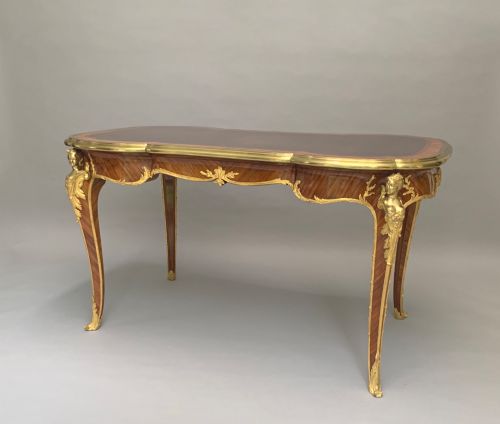
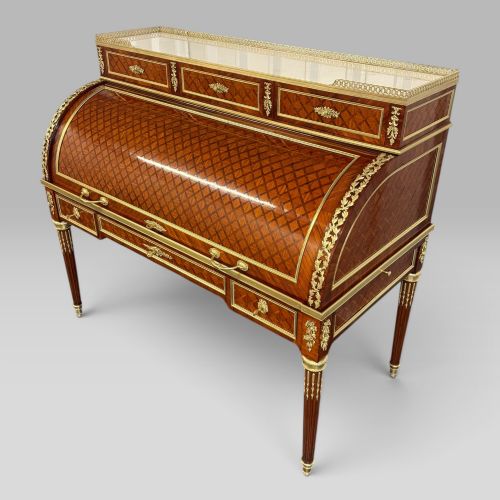
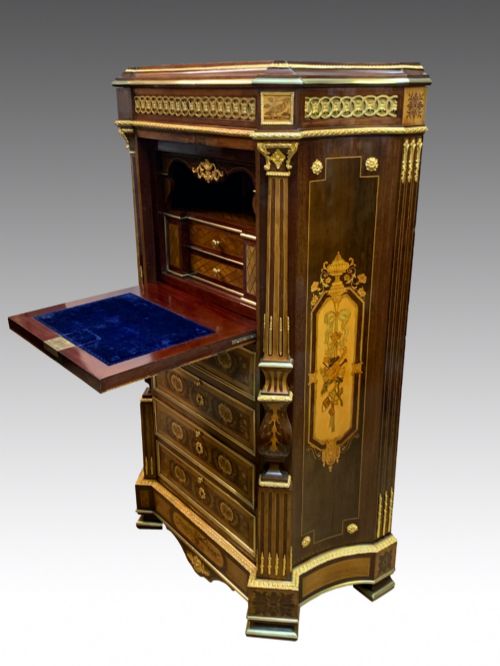
The pieces listed here lean heavily towards French craftsmanship from the eighteen-eighties and eighteen-nineties, executed in exotic veneers with elaborate cast metal enrichment. Alongside the standard writing desk, variations include cylinder desks, drop front secretaires, and kidney shaped ladies writing tables designed for boudoir use.
How they were made
Cabinetmakers constructed these writing pieces upon robust carcases of mahogany, walnut, or oak before applying intricate geometric parquetry and floral marquetry veneers of kingwood, rosewood, tulipwood, and amboyna. Surfaces frequently incorporate inset panels of tooled leather alongside decorative additions such as Sèvres porcelain plaques or Vernis Martin painted panels.
The signature bronze and ormolu mounts were cast in metal, chased by hand to sharpen the leaf and scroll motifs, and then gilded or polished before being secured to the corners, friezes, and legs to accentuate the structural lines of the desk.
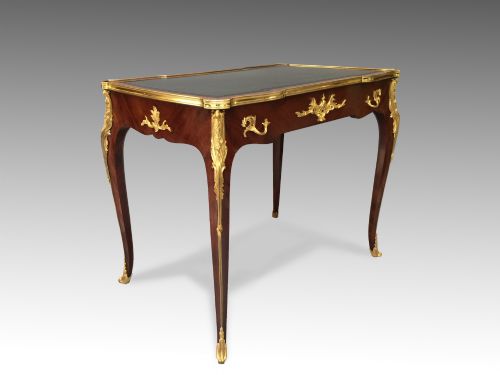
The listings show nineteenth century French writing desks utilising kingwood, mahogany, and rosewood veneers paired with gilt bronze mounts.
What varies in quality
The distinction between ordinary production and exceptional cabinet work rests entirely on the crispness of the bronze chasing and the depth of the veneer selection. Master workshops ensured that gilt bronze mounts fit seamlessly against the serpentine curves of the wood, whereas lesser examples display crude casting and rigid, mechanical application.
The integrity of the internal construction also dictates worth, separating standard trade pieces from signed creations by preeminent makers who maintained rigorous standards in their marquetry patterns and secondary framing timbers.
Francois Linke·Edwards and Roberts·Paul Sormani·Maison Krieger·CH Jeanselme and Co·Durand·Blake·Fournier
The Bronze Mounted Bureau Glossary
- Ormolu
- Gilt bronze mounts applied to furniture to protect corners and provide ornamentation. The technique involves treating copper alloys with mercury and gold.
- Bureau plat
- A freestanding double sided writing table fitted with drawers across the frieze. This form developed in France during the eighteenth century.
- Bonheur du jour
- A light ladies writing desk featuring a small cabinet or set of shelves superstructure above the main writing surface. These compact items appeared frequently during nineteenth century revivals.
- Marquetry
- Decorative veneer patterns assembled from thin slices of diverse coloured woods to form pictorial or geometric designs. Craftsmen cut these pieces together to ensure tight joints.
- Parquetry
- Geometric wood inlay arranged in repetitive patterns such as cubes, lozenges, or chequers. It differs from marquetry by strictly using geometric repeats rather than pictorial motifs.
- Secretaire abattant
- A tall upright cabinet with a drop front writing flap that conceals fitted interior compartments and pigeon holes. It typically combines a marble top with heavy bronze mounts.
Bronze Mounted Bureau: Frequently Asked Questions
What is a bronze mounted bureau?
A bronze mounted bureau is a nineteenth century writing desk enriched with cast metal mounts of ormolu or gilt bronze. These pieces generally follow French revival styles from the Victorian period.
They serve as decorative centrepieces in a room while providing a functional writing surface with inset leather and storage drawers.
Where should I place a bureau plat?
A bureau plat is designed as a freestanding desk with finished decoration on all sides. This allows it to sit prominently in the middle of a study or drawing room rather than pushed against a wall.
Ensure adequate clearance around the piece so the shaped legs and bronze mounts remain fully visible from every angle.
How do I care for kingwood veneer?
Kingwood and other exotic veneers require stable indoor humidity away from direct sunlight to prevent the timber from drying out or fading. Dust the polished surfaces regularly with a soft, dry cloth.
Avoid liquid furniture polishes and silicone sprays, which can build up a residue and dull the historic finish over time.
How do I distinguish Louis XV from Louis XVI style?
Louis XV style furniture is characterised by flowing serpentine curves, cabriole legs, and asymmetrical Rococo scrollwork in the bronze mounts. The overall aesthetic feels organic and fluid.
Louis XVI style shifts toward Neoclassical straight lines, fluted tapered legs, and symmetrical geometric mounts reflecting classical architectural restraint.