

Bronze Mount Table
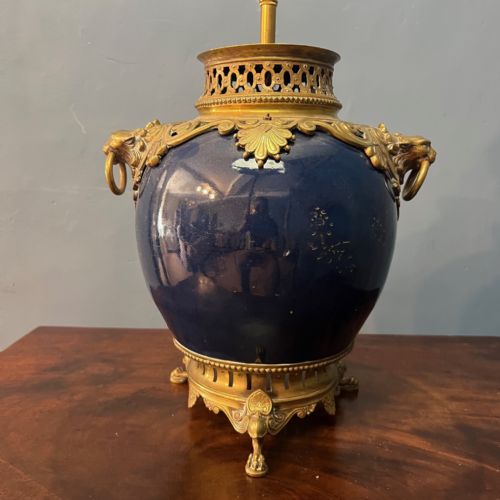
A bronze mount table brings together rich timbers and cast metalwork, offering practical surface space combined with decorative presence.
Bronze Mount Table
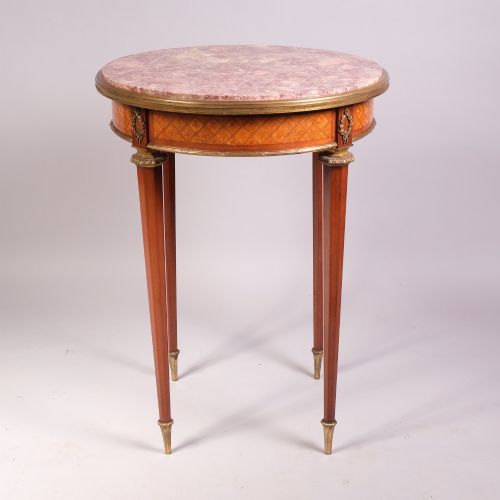
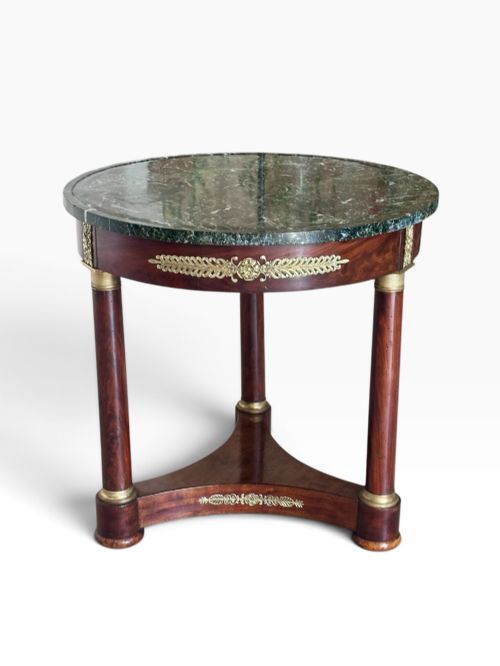
A bronze mount table combines functional furniture forms such as writing desks, centre tables, and side tables with ornamental metal detailing. Pieces matching this search phrase span from the nineteenth century into the twentieth, heavily drawing upon French design revivals.
The most common examples encountered in this category include French writing desks, coffee tables, and occasional tables featuring classical styles like Louis XV and Louis XVI. These items integrate decorative metalwork into everyday furniture types to elevate their visual weight.
How they were made
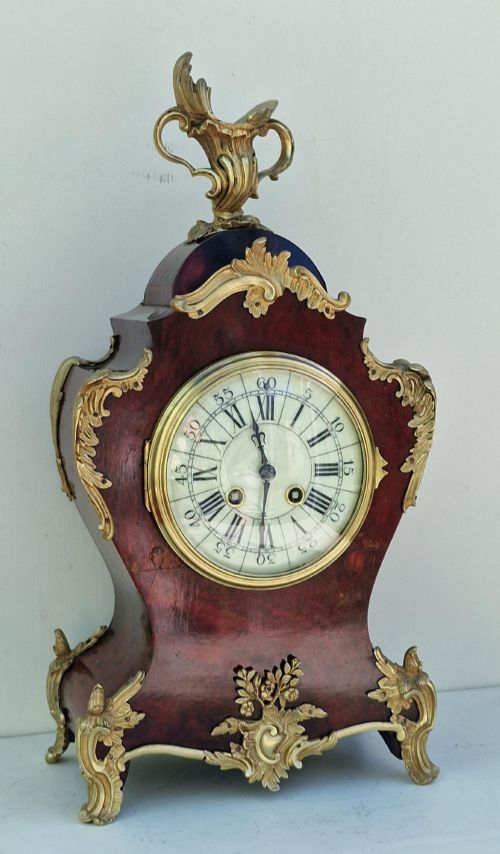
Construction relies upon dense cabinet timbers such as kingwood, mahogany, and walnut, often inlaid with parquetry, marquetry, or tortoiseshell in Boulle work. These wooden carcases provide the foundational structure for the decorative elements.
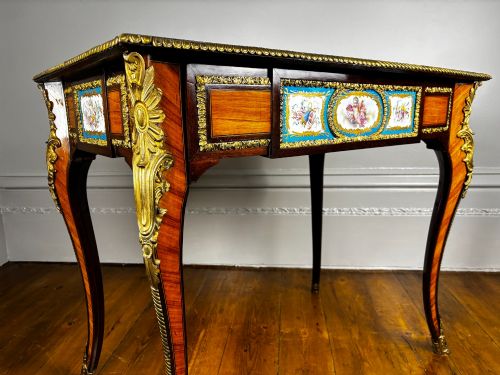
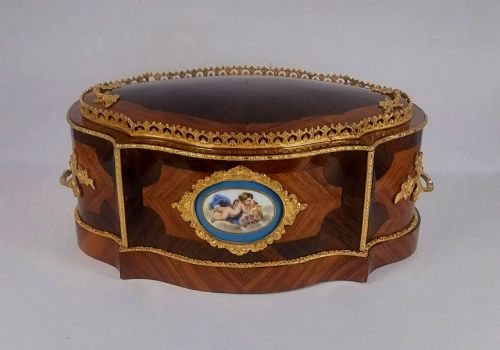
Ormolu and gilt brass mountings are cast, chased, and applied to corners, edges, and aprons to frame the timber panels and marble or leather inserts.
Bronze Mount Table Retail Price Guide 2026
Typical asking prices for bronze mount table among the pieces listed under this phrase on Sellingantiques today, from the lower quarter to the upper quarter. They describe what is for sale here now, not the wider market.
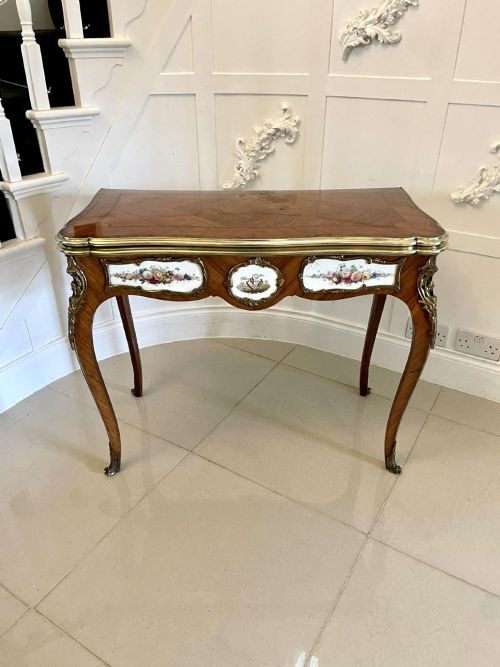
Some nineteenth-century occasional tables conceal sophisticated mechanical actions inside their kingwood frames, designed to surprise those seated nearby.
What varies in quality
The sharpness and depth of the cast metal mounts separate ordinary work from finer productions, as well-chased ormolu shows crisp detail in leaves and scrolls. Cabinetwork precision, from the tightness of the marquetry to the smoothness of mechanical actions in desks, indicates the maker's hand.
The choice of secondary materials, such as heavy rouge marble tops or hand-painted porcelain plaques, further distinguishes superior examples from standard commercial pieces.
Gillows·Francois Linke·Edward Holmes Baldock·Maison Millet·Paul Sormani
The Bronze Mount Table Glossary
- Ormolu
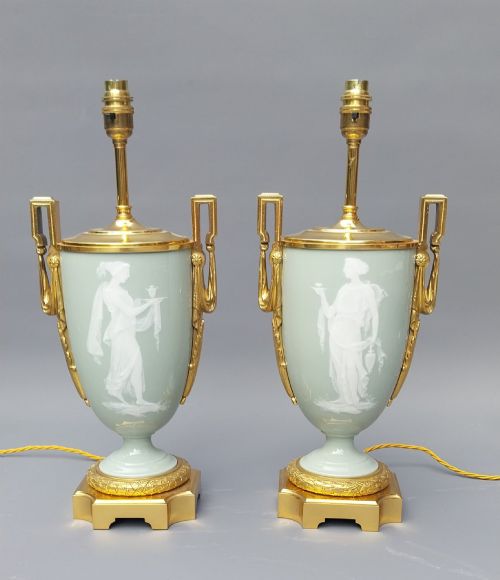
- Gilt bronze used for furniture mounts and decorative objects. It involves applying a gold amalgam to bronze and heating it.
- Marquetry
- Decorative veneer patterns formed by fitting together thin pieces of wood, shell, or ivory. These designs often depict floral or geometric motifs across table tops.
- Boulle
- A form of marquetry using tortoiseshell and brass inlay developed in France. It creates a contrasting pattern of dark shell and bright metal.
- Bureau Plat
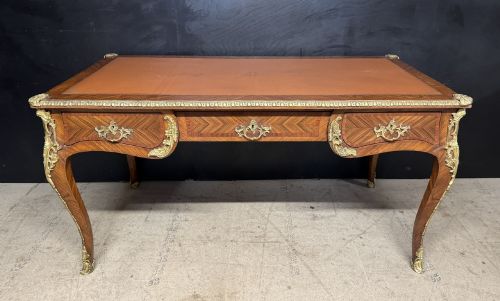
- A flat-topped writing desk fitted with drawers in the frieze. These desks frequently feature leather writing surfaces and extensive bronze mounts.
- Parquetry
- Geometric wood inlay work arranged in patterns like cubes or chequers. It provides textural variety to table tops and cabinet doors.
Bronze Mount Table: Frequently Asked Questions
What is a bronze mount table?
A bronze mount table is a piece of furniture, such as a desk, side table, or centre table, embellished with cast metal decorative elements.
These pieces typically date from the nineteenth century and reflect French revival styles utilising woods like kingwood and mahogany alongside ormolu.
How do I identify the style?
Styles are identified through the shape of the timber frame and the motifs within the metal mounts. Louis XV pieces feature curved serpentine lines and asymmetrical rococo foliage, while Louis XVI items show straight tapered legs and neoclassical symmetry.
Examining the inlay work and marble tops also helps pinpoint the specific revival period.
Where should I place it?
These tables suit principal reception rooms, studies, or hallways where their decorative metalwork and inlaid veneers catch the light. Centre tables work well in open spaces, whereas writing desks and side tables fit against walls or beneath windows.
Ensure the piece has adequate clearance from direct heat sources to protect the wood and veneer.
How do I care for the surface?
Dust the timber and metal mounts regularly with a soft, dry cloth to prevent grime accumulation. Avoid using chemical sprays or abrasive cleaners that can damage the polish on the wood and the gilding on the bronze.
Leather inserts on desks benefit from occasional treatment with appropriate conditioners to prevent cracking.