


Bronze Mount Light
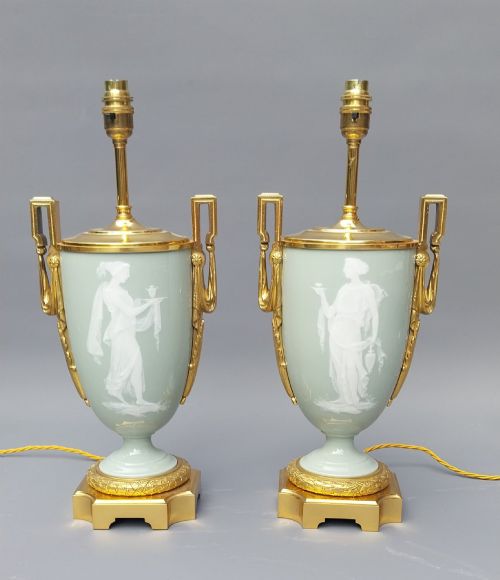
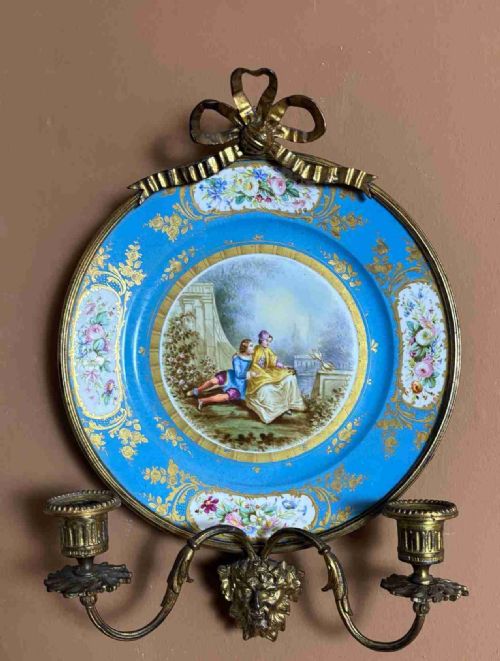
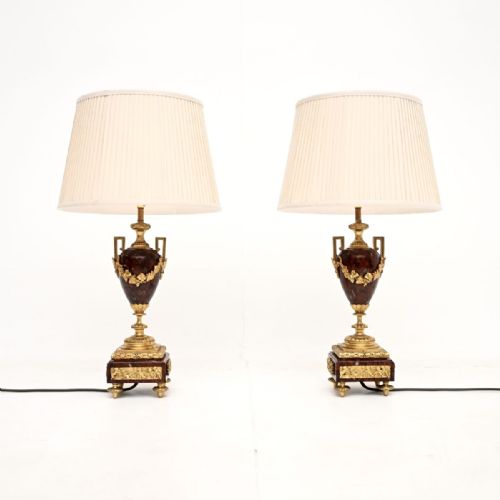
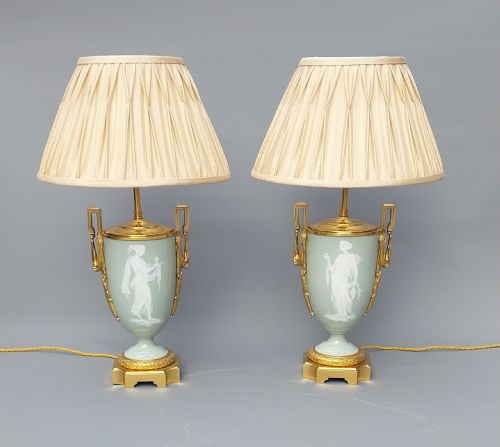
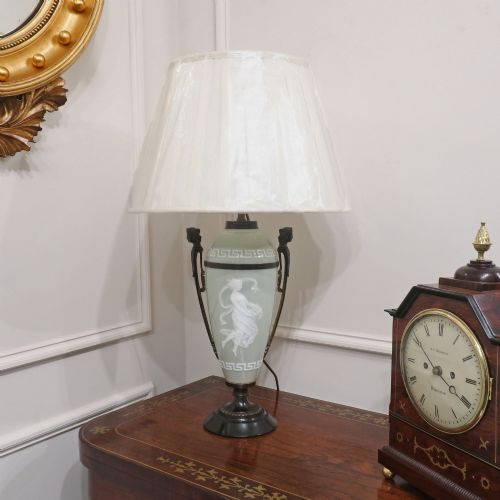
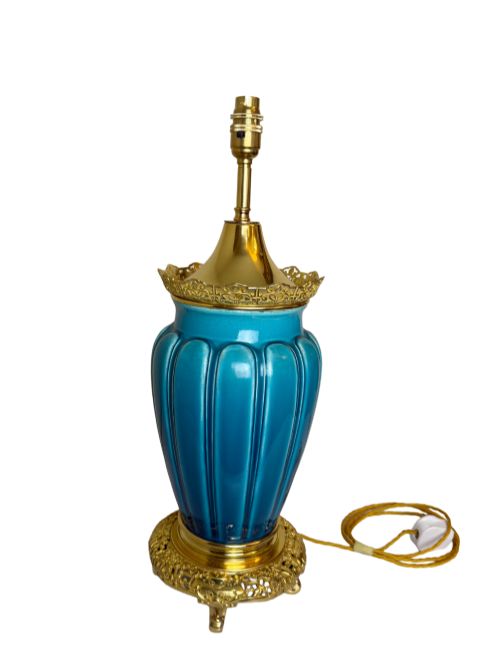
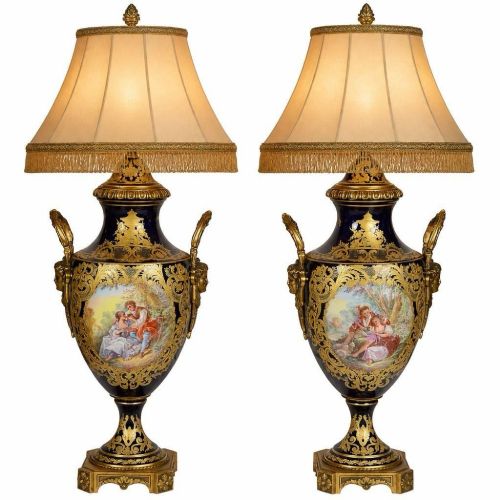
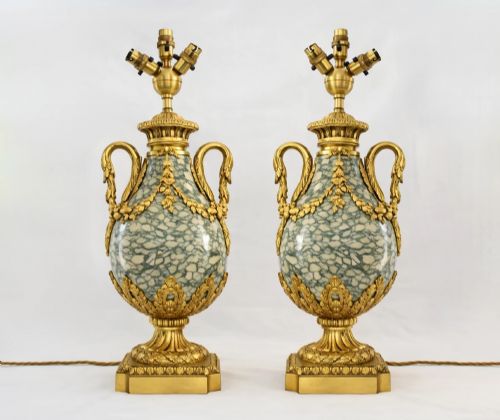
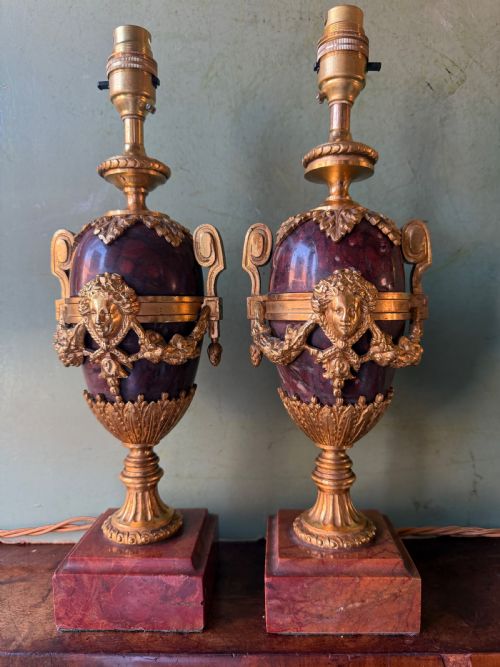
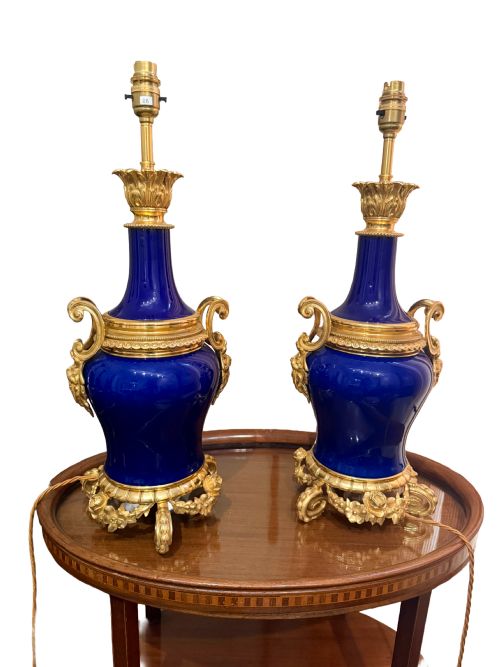
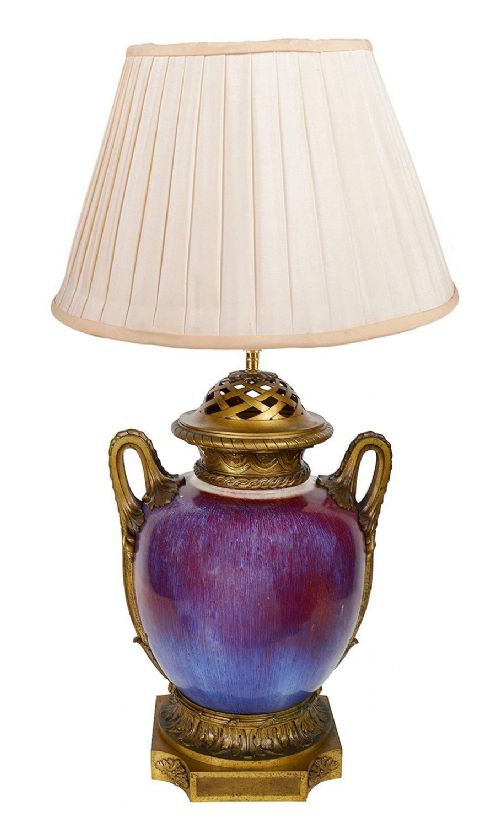
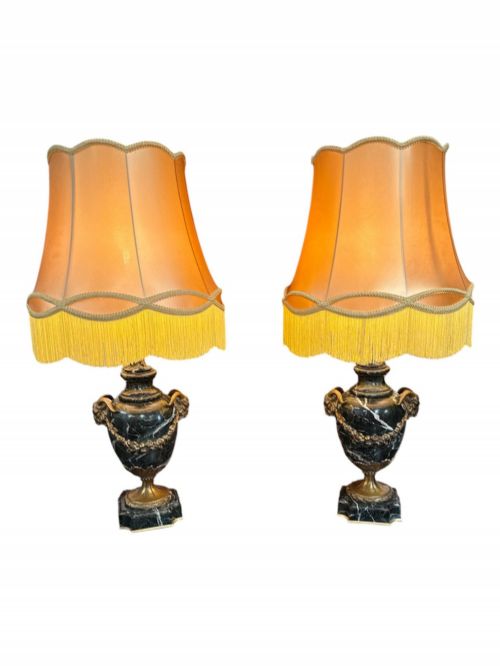
These pieces of bronze mount light combine cast metalwork with porcelain, marble, and glass.
Bronze Mount Light
A bronze mount light combines cast metal mounts with bodies formed from porcelain, marble, glass, or pottery. When you search for bronze mount light, you encounter table lamps, wall sconces, candelabra, and ceiling lights from the eighteenth, nineteenth, and early twentieth centuries.
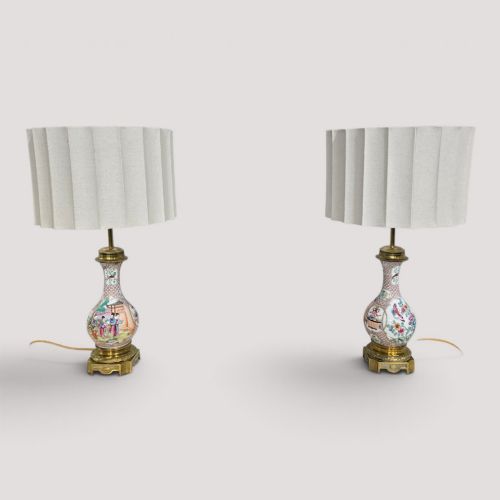
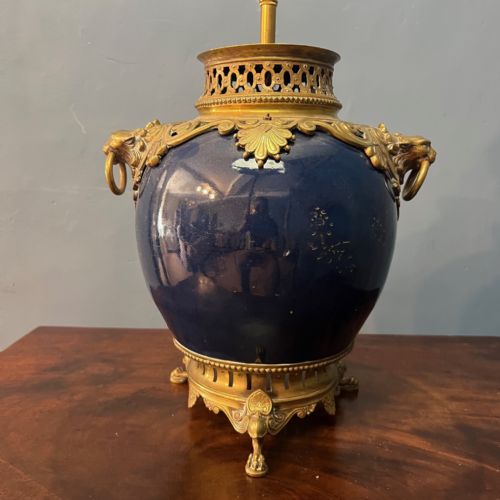
The most common items on this page are nineteenth-century French porcelain and marble vases adapted as table lamps, alongside wall lights and candelabra. Many pieces pair Chinese celadon, turquoise, or sang de boueuf porcelain with European gilt bronze or ormolu mounts.
Makers and workshops across France and Britain took imported Asian porcelain or classical European stone and mounted them with metal fittings. These objects served to illuminate salons and dining rooms while displaying decorative materials.
How they were made
Foundries cast bronze and brass using traditional methods before hand-chiselling the metal surfaces and applying mercury gilt or ormolu finishes. Stonework such as rouge marble, white marble, and alabaster was turned on lathes and polished by hand.
Pottery bodies include hard-paste porcelain, pâte-sur-pâte, and cloisonné, often incorporating hand-painted decoration or moulded figural scenes. Metal mounts were secured to the ceramic or stone bodies using threaded rods, pins, and plaster cores.
Bronze Mount Light Retail Price Guide 2026
Typical asking prices for bronze mount light among the pieces listed under this phrase on Sellingantiques today, from the lower quarter to the upper quarter. They describe what is for sale here now, not the wider market.
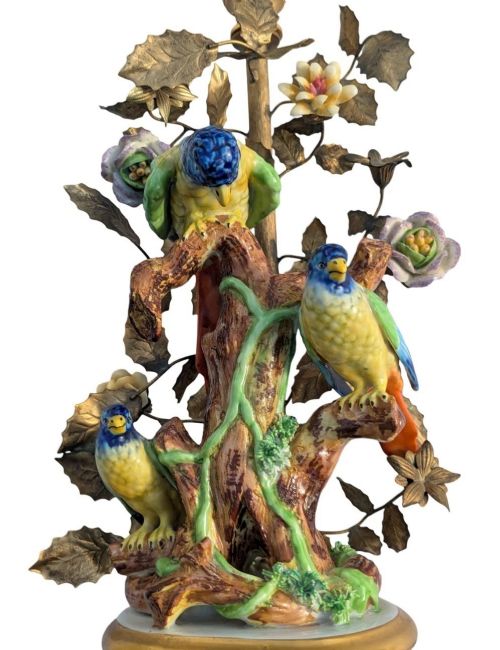
Several nineteenth-century pairs feature porcelain birds perched inside ormolu candelabra branches, watching the room below.
What varies in quality
The crispness of the bronze chasing separates standard work from exceptional examples, as sharper tool marks create greater depth in acanthus leaves and scrollwork. Heavier gauge metal and deeper fire-gilding denote superior production standards.
The integration between the mount and the vase determines the structural harmony of the piece. Top-tier examples feature custom-cast mounts that follow the exact contours of the porcelain or marble without gaps.
Liberty·Gien
The Bronze Mount Light Glossary
- Ormolu
- Gilt bronze produced by applying a mercury and gold amalgam to cast bronze before heating. This technique creates a durable golden finish with a warm matte texture.
- Pâte-sur-pâte
- A ceramic technique where wet porcelain slip is built up in successive layers on a contrasting body to create low-relief cameos. This method requires great skill from the ceramic artist.
- Cassolette
- A decorative vase with a reversible lid that functions either as a closed vessel or a candle holder. These objects often incorporate classical mounts.
- Cloisonné
- Enamelling work where metal wires form small cells on a bronze base, which are then filled with coloured paste and fired. The surface is subsequently ground smooth and polished.
Bronze Mount Light: Frequently Asked Questions
What is a bronze mount light?
A bronze mount light is a decorative lighting fixture or lamp that incorporates cast bronze, brass, or ormolu mounts onto a body of porcelain, marble, crystal, or glass. These pieces range from converted nineteenth-century vases to dedicated candelabra and wall sconces.
They bring mixed media craftsmanship into interior spaces, uniting Asian or European ceramics with neoclassical metalwork.
How do I live with bronze mount lighting?
These pieces suit period and modern interiors alike, functioning as focal points on sideboards, desks, or console tables. Their reflective metal surfaces and colourful porcelain bodies add warmth and texture to a room.
Pair them with silk or fabric shades that complement the tones of the ceramic or marble body.
How do I date these pieces?
Dating relies on stylistic clues, such as the neoclassical motifs of the Louis XVI revival or the heavier proportions of late nineteenth-century production. The construction of the wiring channels, mounts, and base plates also indicates the era of manufacture.
Marks on the base or interior porcelain often point to specific French or Chinese periods.