




Bronze Military Figurine
A bronze military figurine captures history in metal, offering collectors tactile pieces of past campaigns and military heritage for the desk or shelf.
Bronze Military Figurine
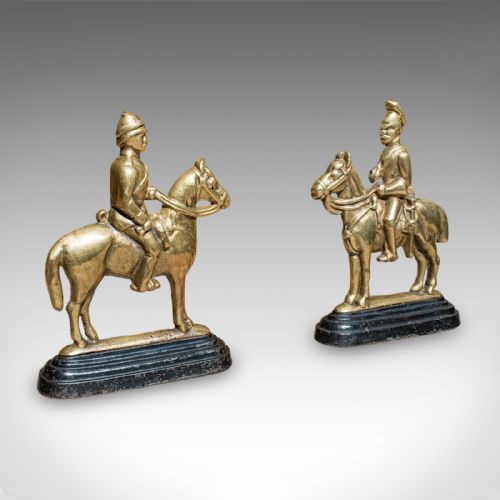
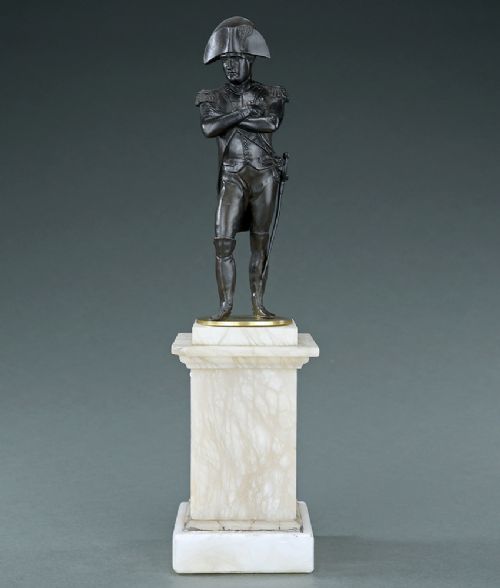
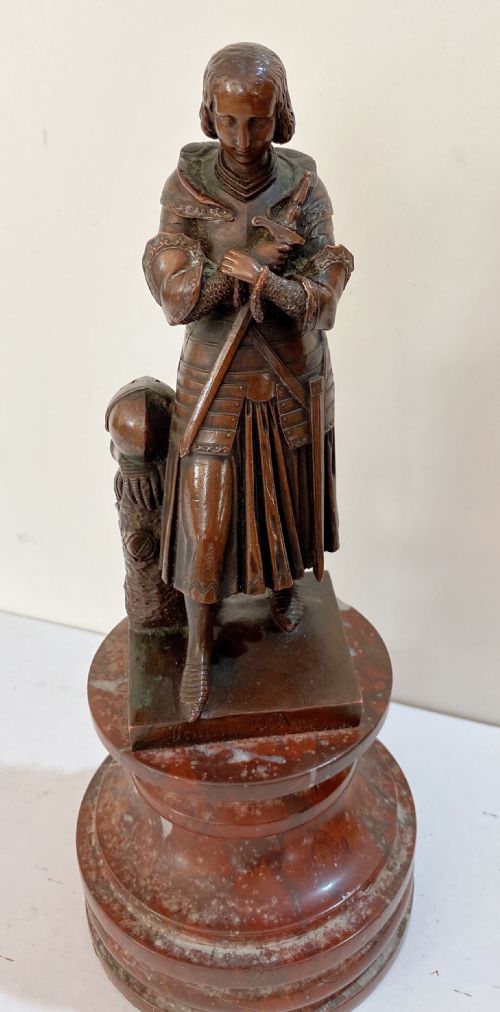
When buyers search for a bronze military figurine, they encounter small-scale sculptures and bookends depicting historical figures, soldiers, and cavalry riders. These pieces span the nineteenth century and the early twentieth century, showing notable subjects such as Napoleon Bonaparte, Joan of Arc, Saladin, and Russian policemen.
The objects take several distinct forms, including freestanding cabinet statues, mounted bookends, and automobile car mascots. French workshops produced many of the standing figures, while English and Austrian makers supplied specific functional items like book rests.
French Empire and Victorian historicism dominate the aesthetic of these works. Collectors will find both naturalistic portrayals of ordinary troops and heroic representations of notable commanders on horseback.
Materials and Manufacture
Foundries utilised traditional casting methods to shape molten metal into complex military uniforms and facial expressions. The resulting forms received either a dark patinated bronze finish or meticulous cold-painted polychrome decoration.
Many of the nineteenth-century figures are mounted directly onto heavy marble bases to provide stability. Subsidiary materials such as brass and cast metal also appear alongside pure bronze in the broader selection.
Bronze Military Figurine Retail Price Guide 2026
Typical asking prices for bronze military figurine among the pieces listed under this phrase on Sellingantiques today, from the lower quarter to the upper quarter. They describe what is for sale here now, not the wider market.
St. Petersburg policemen and tobacconist figures stand ready alongside emperors, proving that tiny metal trousers demand just as much sculptural devotion.
Markers of Quality
The depth and preservation of the original patina or cold-painted surface dictate the visual impact of the piece. Heavier gauge metal and substantial integral mounting add structural integrity that elevates certain figures above standard commercial work.
Emile Guillemin·E.H. Dumaige·Fabergé·C. Anfrie
The Bronze Military Figurine Glossary
- Patinated bronze
- Bronze that has been treated with chemical solutions to produce a specific surface colour, typically shades of brown or green. This layer protects the underlying metal and defines the shadows of the sculpture.
- Cold-painted bronze
- A technique where paint is applied to a cold bronze object without subsequent kiln firing. This finish is delicate and highly prized when found intact on small figures.
- Car mascot
- A sculptural ornament mounted on the radiator cap of an automobile during the early twentieth century. These figures were cast in bronze or other metals to withstand outdoor use.
- Bookends
- A pair of heavy objects used to support the ends of a row of books. In military pieces, these often feature mounted horse riders or standing soldiers.
- Spelter
- An alloy of zinc and lead used as a less expensive alternative to bronze. It was frequently painted to simulate genuine bronze finishes in nineteenth-century decorative pieces.
Bronze Military Figurine: Frequently Asked Questions
How do I clean a bronze military figurine?
Dust the surface gently with a soft, dry brush to prevent the accumulation of grit in the crevices of the uniform.
Avoid using water, chemical polishes, or abrasive cloths, as these treatments will strip away the historical patina.
Where were most of these figures made?
The majority originate from French foundries, alongside notable examples produced in Austria and Russia.
French makers specialised in classical and Napoleonic subjects, while Austrian workshops produced naturalistic polychrome figures.
Are these figures solid bronze?
Many examples are cast in solid bronze, though some larger or utilitarian items utilise hollow casting methods to reduce weight.
Alternative base metals like spelter also occur in the wider selection of nineteenth-century military figures.
How can I tell the age of a piece?
Dating relies on the style of the military uniform, the founding techniques, and associated signatures or foundry marks.
Stylistic cues such as Victorian historicism or French Empire design further anchor the period of production.