

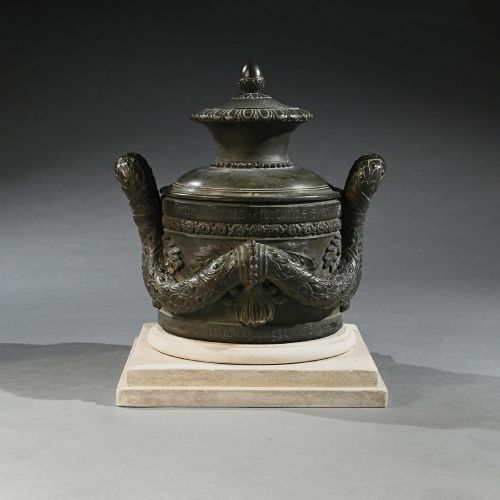
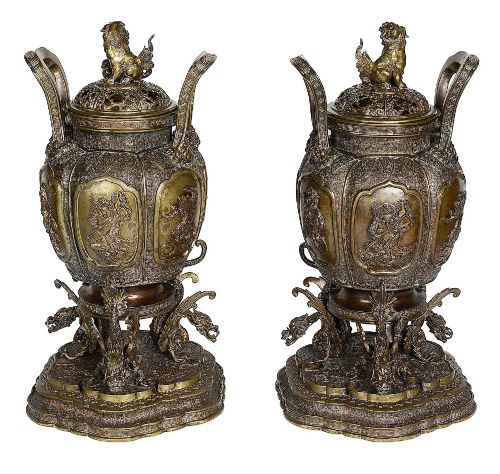


Bronze Lidded Vessel
A bronze lidded vessel brings weight and historic craftsmanship to a room, offering a functional object shaped by centuries of metalwork traditions.
Bronze Lidded Vessel
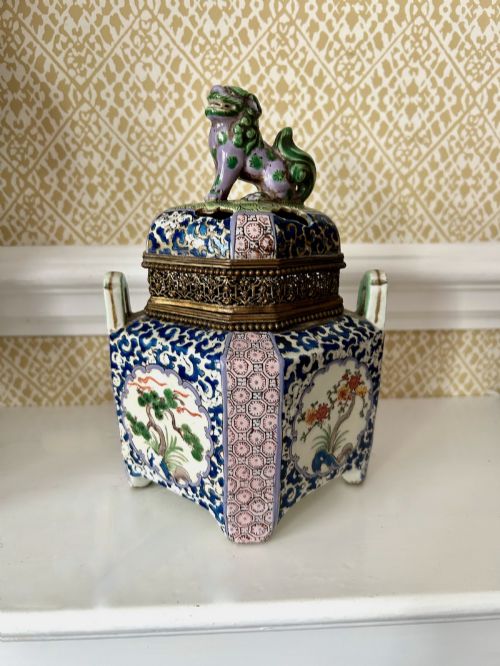
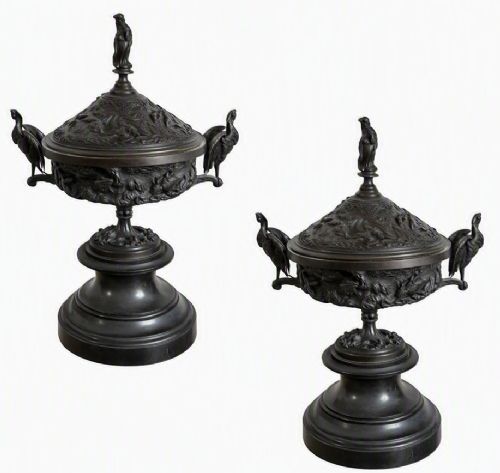
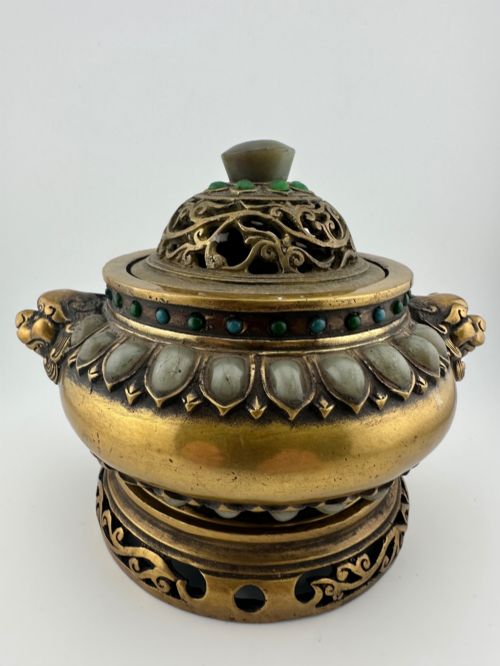
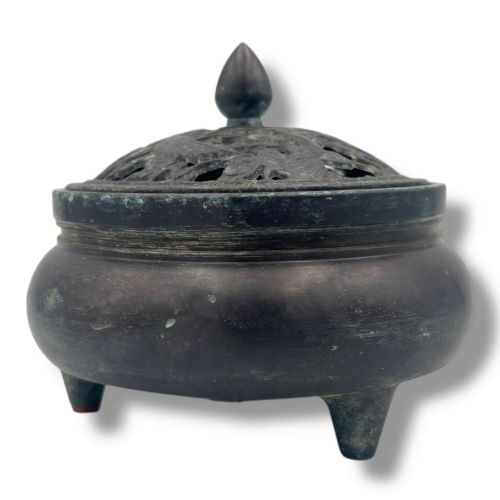
When you search for a bronze lidded vessel, you encounter a diverse group of objects spanning 18th Century, 19th Century, and 1900 periods. These pieces take forms such as incense burners, sake kettles, ginger jars, and decorative urns from European and Asian origins.
The Chinese and Japanese examples frequently display Qing Dynasty or Edo and Meiji periods, utilising bronze alongside enamel and hardstone inlay. European pieces lean towards French Napoleon III and Neoclassical styles, incorporating champleve or marble bases.
Materials and construction
The primary construction relies on cast bronze or gilt bronze, often shaped into tripod censers, urns, or kettles. Artisans combined metal casting with intricate cloisonne enamel work, hardstone inlays, and jade or qilin finials.
Japanese pieces from Kyoto incorporate silver or feature cloisonne lids, while French and Italian works utilise champleve enamel or rest upon rouge griotte marble bases.
Bronze Lidded Vessel Retail Price Guide 2026
Typical asking prices for bronze lidded vessel among the pieces listed under this phrase on Sellingantiques today, from the lower quarter to the upper quarter. They describe what is for sale here now, not the wider market.
One robust Chinese censer tips the scales at six kilograms, proving that bronze lidded vessels can double as unexpected weightlifting equipment.
Markers of quality
Quality rests in the crispness of the casting, the precision of the lid fit, and the complexity of surface decoration such as champleve enamel or hardstone inlay. The handling of details, including animal finials and cast dragon or phoenix motifs, separates standard items from finer examples.
The integration of mixed materials, like silver accents on Japanese metalwork or marked bases on Chinese censers, demonstrates the skill of the maker and elevates the standing of the piece.
Kibundo·Auguste Cain
The Bronze Lidded Vessel Glossary
- Censer
- A vessel designed for burning incense, frequently featuring a tripod base and a pierced cover to release smoke.
- Cloisonne
- An enamel technique where metal wire forms compartments on a bronze surface, which are then filled with coloured paste and fired.
- Champleve
- An enamelling method where troughs are gouged into the bronze base and filled with enamel before firing.
- Finial
- A decorative ornament that crowns the lid of a vessel, often carved as an animal or mythical beast.
Bronze Lidded Vessel: Frequently Asked Questions
What were bronze lidded vessels used for?
Many of these pieces served practical functions, such as burning incense in Chinese censers or heating liquid in Japanese sake kettles. Others functioned purely as decorative urns, ginger jars, or grand tour souvenirs.
Over time, their roles shifted from ritual or daily utility to ornamental display objects prized for their metalwork and design.
How do I date a bronze lidded vessel?
Dating relies on stylistic clues, regional manufacturing techniques, and occasional reign marks or workshop signatures. Pieces from the Edo or Meiji periods carry distinct Japanese aesthetic markers, while 19th Century French items often reflect Neoclassical or Napoleon III tastes.
Comparing the casting style and enamel application to documented examples helps narrow down the period of origin.
How should I clean a bronze vessel?
Maintenance requires minimal intervention to preserve the natural patina accumulated over the centuries. Dusting with a soft, dry cloth is usually sufficient for regular upkeep.
Avoid chemical polishes or water, as harsh substances can damage delicate enamel work, gilt bronze surfaces, or hardstone inlays.
Are these pieces heavy?
Weight varies considerably depending on the size and thickness of the metal casting. While smaller desktop censers and kettles are relatively light, larger examples can weigh several kilograms due to solid bronze construction.
Checking the scale of the object ensures you have a suitable surface to support its weight safely.