



Bronze Handled Urns
These bronze handled urns span diverse global traditions, bringing sculptural weight and classical proportion to nineteenth-century interiors.
Bronze Handled Urns
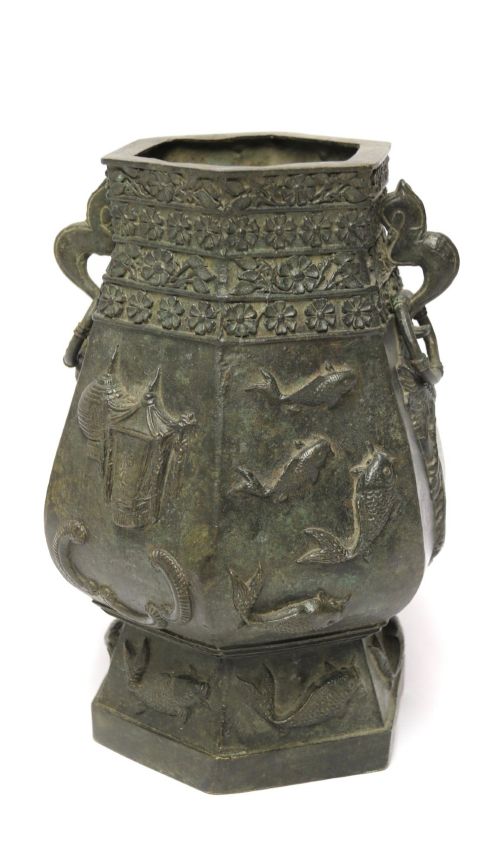
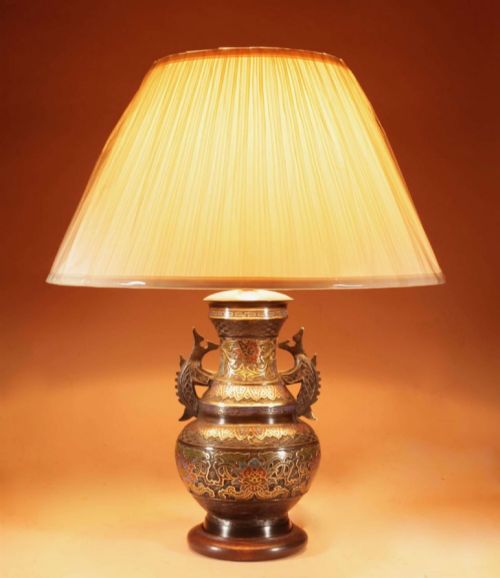
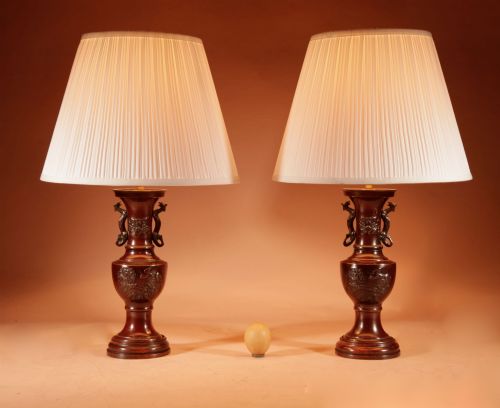
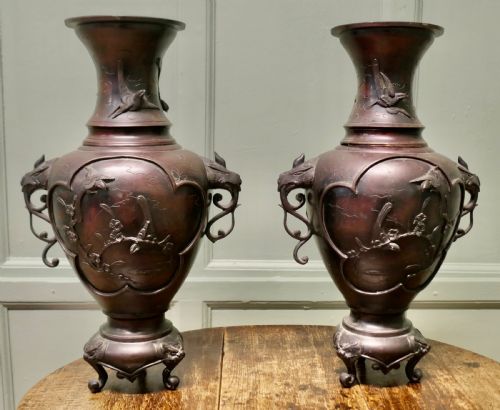
When searching for bronze handled urns, collectors encounter vessels spanning nineteenth-century European revival styles alongside Meiji period Japanese bronzes. These objects range from heavy table lamps and lidded vessels to decorative garden forms and ritualistic bowls.
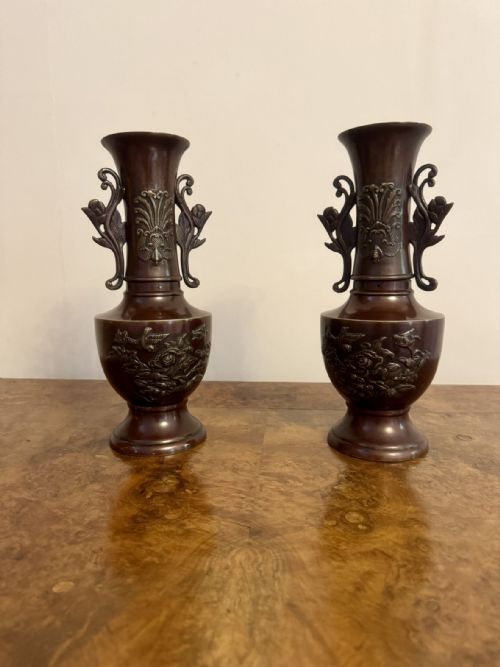
The pieces appearing most frequently combine cast bronze bodies with distinctive handles shaped as animals, birds, or classical scrolls. Many function as vases, ewers, or converted lighting fixtures originating from diverse decorative arts traditions.
Materials and Construction
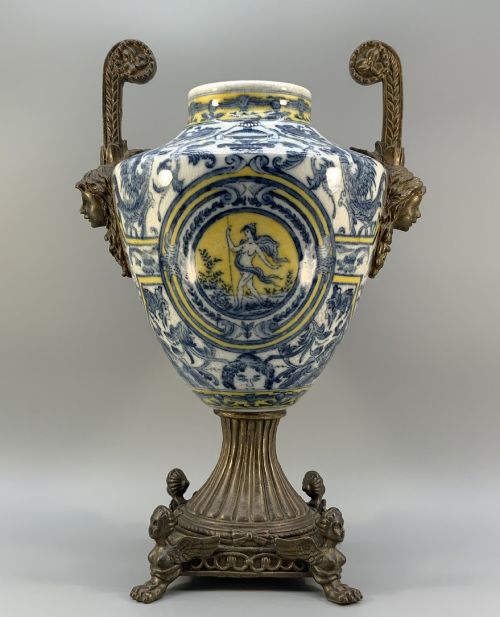
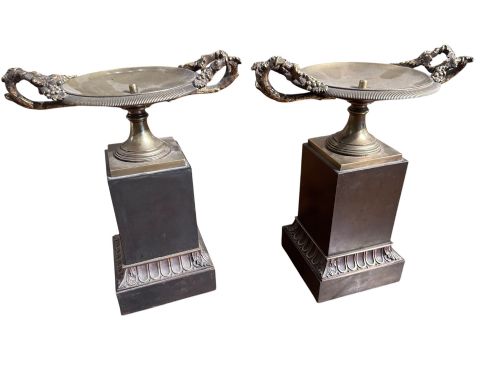
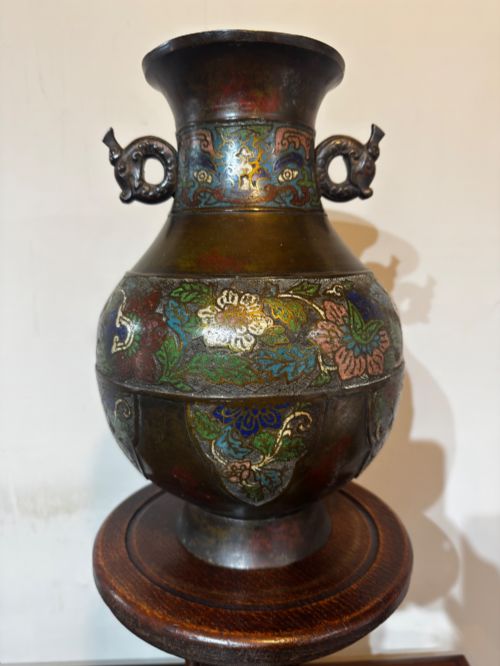
Maker utilise traditional casting methods in bronze, often incorporating contrasting materials such as marble bases, ormolu mounts, and champlevé enamel decoration. Surfaces frequently display intricate inlay work, applied patination, or gilt highlights applied over the core metal.
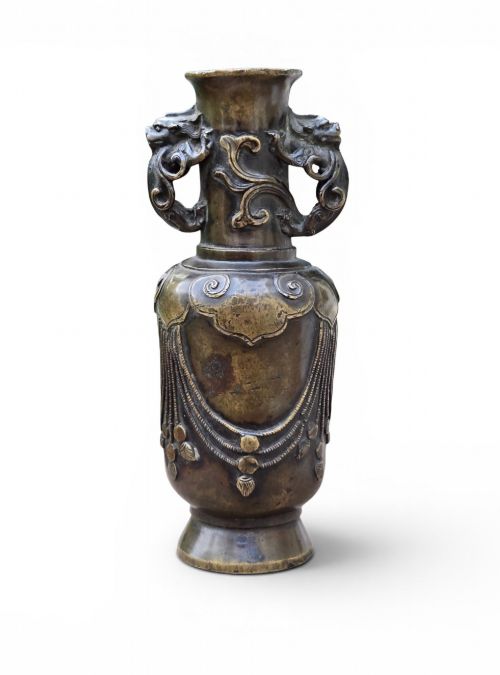
Handles and finials are cast separately and securely joined to the main body, ranging from simple loop formations to elaborate animal figures and dragons. Stonework elements like marble provide stable weighting for taller vessels and lamp conversions.
Bronze Handled Urns Retail Price Guide 2026
Typical asking prices for bronze handled urns among the pieces listed under this phrase on Sellingantiques today, from the lower quarter to the upper quarter. They describe what is for sale here now, not the wider market.
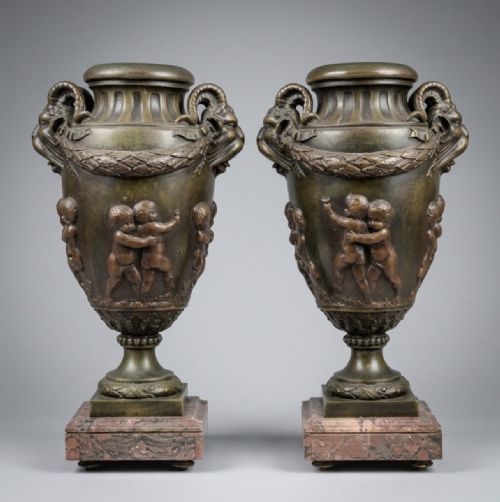
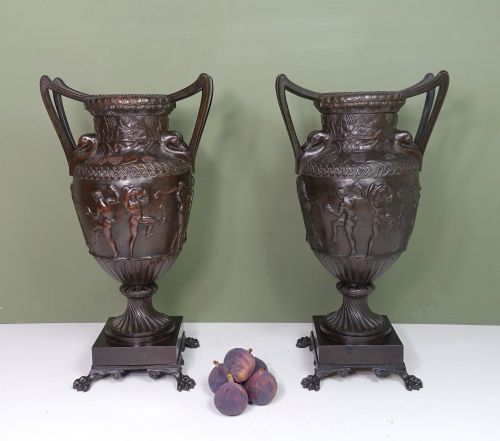
Look closely at the handles, where stubborn goats, fierce dragons, and elegant egrets occasionally stand guard over the vessel rim.
Evaluating Bronze Handled Urns
Quality rests upon the crispness of the casting detail, particularly visible in hair, feathers, and decorative surface patterns. Sharply defined chasing and deliberate patination separate superior studio work from standard commercial production.
Proportion and material integrity dictate overall value, with integrated mounts and balanced handles demonstrating superior craftsmanship. The depth of enamel work and the weight of the underlying bronze further distinguish exceptional examples.
The Bronze Handled Urns Glossary
- Champlevé
- An enamelling technique where troughs are dug into the bronze surface and filled with vitreous paste before firing. This method creates colourful geometric or floral patterns across the metal body.
- Ormolu
- Gilt bronze ornamentation applied to furniture, clocks, and decorative vessels during the eighteenth and nineteenth centuries. The technique involves applying a fine layer of gold amalgam to shaped bronze.
- Meiji
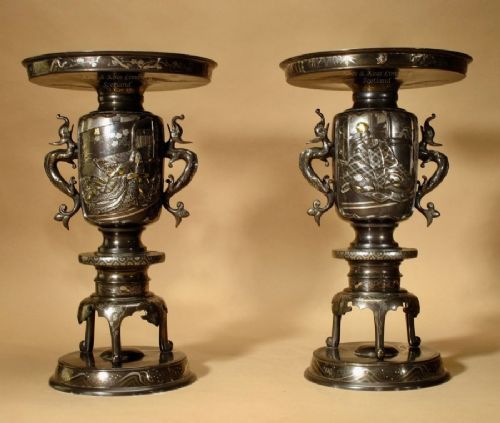
- The period of Japanese history lasting from 1868 to 1912, noted for opening trade with the West and producing highly detailed bronzes. Makers during this era created sophisticated vases and incense burners for international export.
- Archaistic
- A design approach that emulates the ancient ritual vessels of early Chinese dynasties. These pieces borrow forms and surface motifs from antiquity while utilising later manufacturing techniques.
Bronze Handled Urns: Frequently Asked Questions
What periods do these urns represent?
The pieces primarily date from the nineteenth century, reflecting Victorian tastes alongside Meiji period Japanese craftsmanship. European interpretations draw heavily on Neoclassical and Renaissance revival movements.
Asian pieces from this era often incorporate traditional casting methods handed down through generations of regional metalworkers. This overlap creates a diverse mix of cultural influences within the same period.
How were these vessels used originally?
Many functioned as decorative display pieces, flower holders, or incense burners in domestic and ceremonial settings. Grand Tour souvenirs served as educational ornaments for affluent travellers.
Others held liquids or served as architectural accents on mantelpieces and tables. Later conversions often transformed these vessels into functional table lamps.
How do I care for bronze surfaces?
Maintain the metal by dusting gently with a soft, dry cloth to prevent the accumulation of abrasive particles. Avoid commercial cleaning liquids that strip historical patination.
Keep pieces away from direct moisture and fluctuating heat sources to protect integrated marble or enamel elements. Proper placement preserves the original finish of the bronze.
Are these pieces heavy?
Solid bronze construction gives these vessels substantial weight, often ranging across several kilograms depending on size. Marble bases add further heft to ensure stability.
Larger forms and lidded urns require careful handling during relocation. The heavy metal gauge ensures durability across centuries of use.