
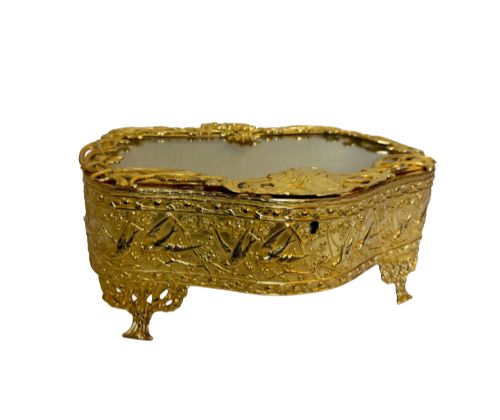
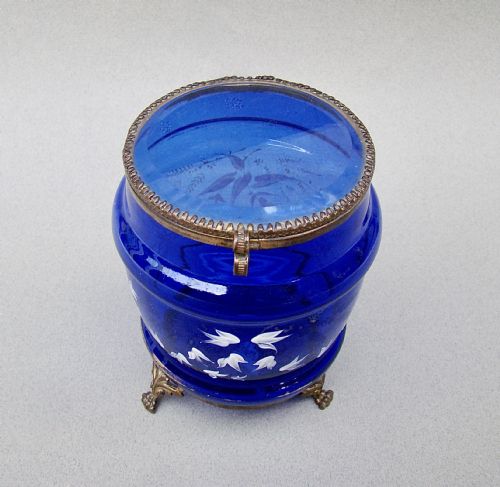
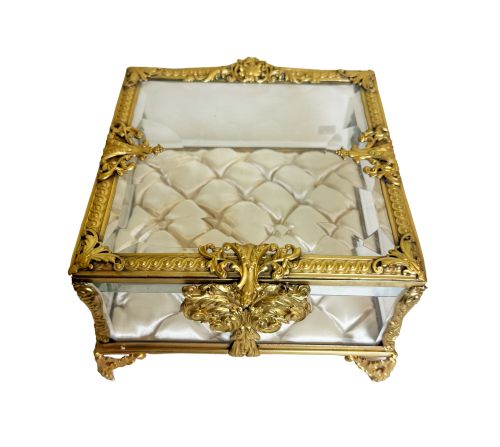


Bronze Glass Trinket Box
A bronze glass trinket box holds your small keepsakes in style, offering a heavy metal frame and clear or coloured panes that catch the light.
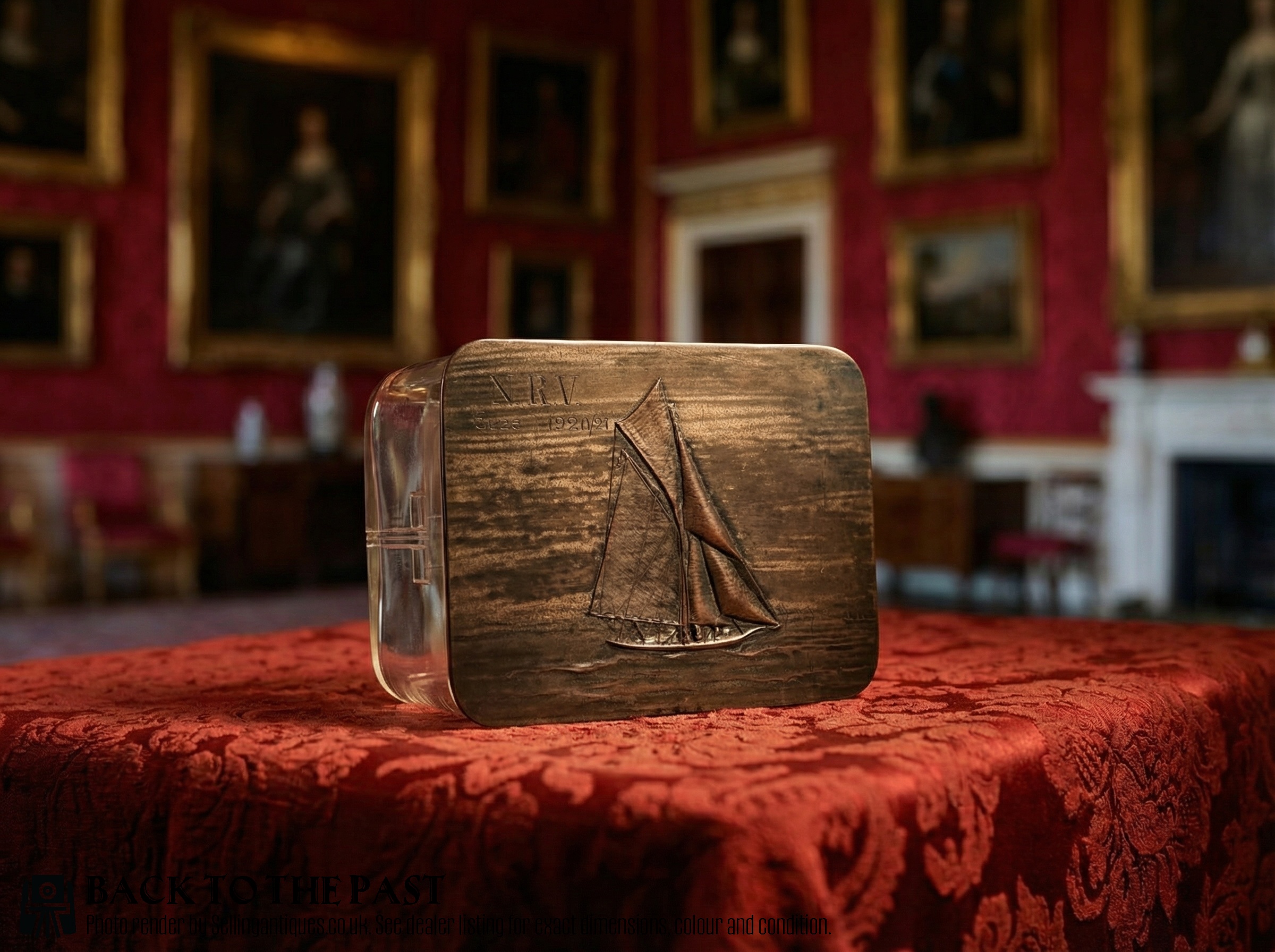
Bronze Glass Trinket Box
When you search for a bronze glass trinket box, you are looking at small decorative containers designed to hold jewellery, trinkets, and precious keepsakes on a dressing table or desk. These pieces typically combine a sturdy metal framework with glass panels, offering a glimpse of the contents held safely inside.
On this page, the pieces you are most likely to meet span the nineteenth and early twentieth centuries, featuring distinct decorative styles such as French Napoleon III, Art Nouveau, and Art Deco. They appear in various forms, including caskets, rectangular boxes, and novelty shapes like miniature carriages.
The origins of these items lean heavily toward French workshops, where makers utilised gilt bronze, ormolu, and cut crystal to produce ornate desktop accessories. Whether you encounter a simple bevelled glass casket or an elaborate presentation box, each item reflects the craftsmanship of past eras.
How they were made
Makers constructed these boxes by joining heavy cast bronze, ormolu, or gilt metal frames with glass panels, often utilising thick bevelled crystal or Bristol blue glass. The metal mounts were frequently cast with ornate floral, scrolling, or architectural details before being gilded or patinated.
Inside many of these caskets, lining materials such as silk provided a soft bed for jewellery and personal items. Some pieces incorporated hand-painted enamel elements or mounted decorative objects like gilt eagles onto the lids.
One exceptional box takes the form of a miniature coach and horses, bringing a touch of Regency novelty to the dressing table.
What varies in quality
The distinction between standard examples and the finest pieces lies in the crispness of the bronze casting and the thickness of the glass. Superior boxes feature deeply chased metal mounts with sharp relief, whereas lesser examples show softer, flatter cast details.
The quality of the glass also separates the tiers, with heavy bevelled crystal and fine Baccarat vessels sitting above simpler pressed panes. Additionally, the integration of silk linings and secure, well-fitted hinges marks out the more accomplished workshop productions.
W.M.F.·S Theeman·Baccarat
The Bronze Glass Trinket Box Glossary
- Ormolu
- Gilt bronze produced by applying a finely ground high-carat gold-mercury amalgam to a bronze object. This historic French technique gives the metal a rich, matte golden finish.
- Bevelled glass
- Glass panes featuring an edge cut at an angle thinner than the rest of the pane. This treatment catches the light and adds depth to the lid and sides of a box.
- Baccarat
- A renowned French crystal manufacturer known for producing high-clarity lead glass vessels. Pieces bearing this association command attention for their weight and optical purity.
- Palais Royal
- A style and origin associated with luxury novelty items sold near the historic Parisian palace. These often include miniature novelty caskets and carriage boxes.
- Napoleon III
- A French design period spanning the mid-to-late nineteenth century marked by eclectic revivals of past styles. Boxes from this era often display heavy ormolu mounts and opulent detailing.
Bronze Glass Trinket Box: Frequently Asked Questions
What were bronze glass boxes used for?
These containers served primarily as dressing table accessories for holding rings, brooches, and small personal valuables. People also placed them on mantelpieces and writing desks purely for decorative display.
Wealthy owners used them to secure delicate items while keeping them visible through the clear or tinted glass walls.
How do I date a bronze glass trinket box?
Dating relies on observing the stylistic cues of the metal mounts, such as flowing Art Nouveau plant motifs versus formal Napoleon III ornamentation. The construction methods of the bronze frame and the thickness of the glass also offer clues to the decade of manufacture.
Examining any signatures, stamps, or registry marks on the bronze helps pinpoint the maker and approximate period.
Are the glass panels usually original?
Most surviving boxes retain their original glass panels, particularly when bevelled or coloured crystal was utilised by the maker. Replacement panes sometimes occur due to accidental breakage over the decades.
Checking the fit within the bronze rebate and the consistency of wear helps determine if the glass has remained undisturbed since production.
How do I care for antique gilt bronze?
Gilt bronze requires gentle dusting with a soft, dry brush to prevent the accumulation of dirt in the recessed details of the casting. Avoid using chemical metal polishes, which can strip away the original gilding or ormolu surface.
Silk linings inside the boxes should be kept away from direct sunlight and moisture to preserve the fabric.