




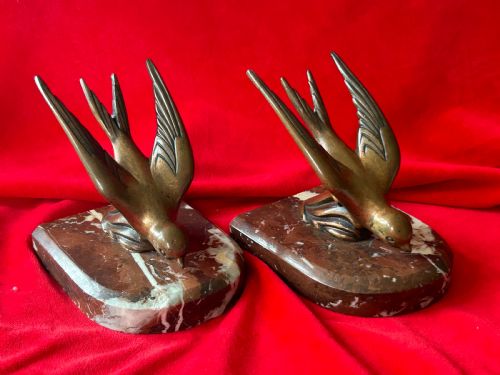
Bronze Figure Bookends
Bronze figure bookends anchor heavy volumes with classical models, animals and modernist dogs cast in enduring metal.
Bronze Figure Bookends
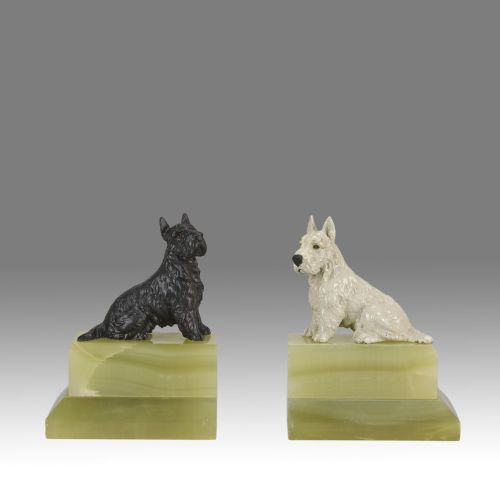
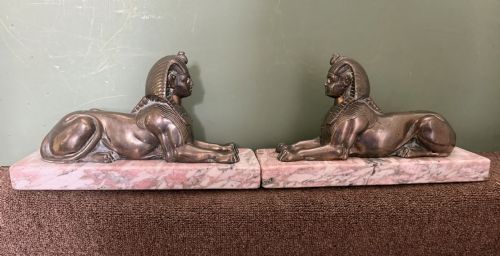
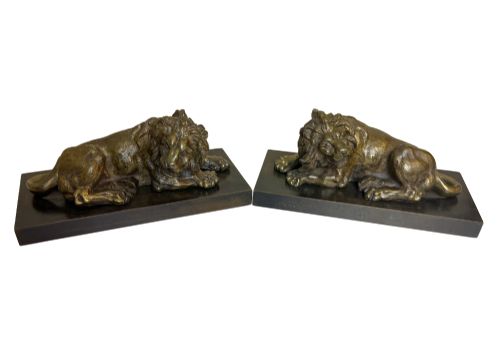
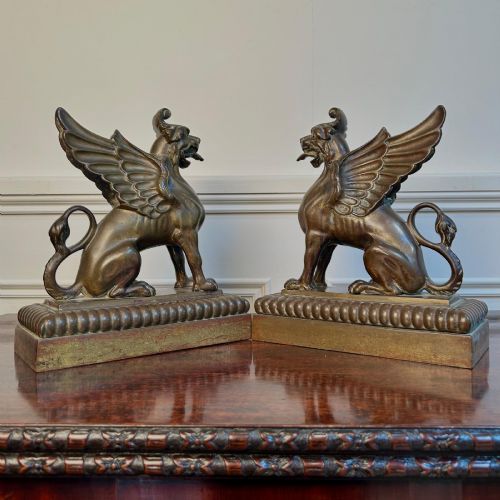
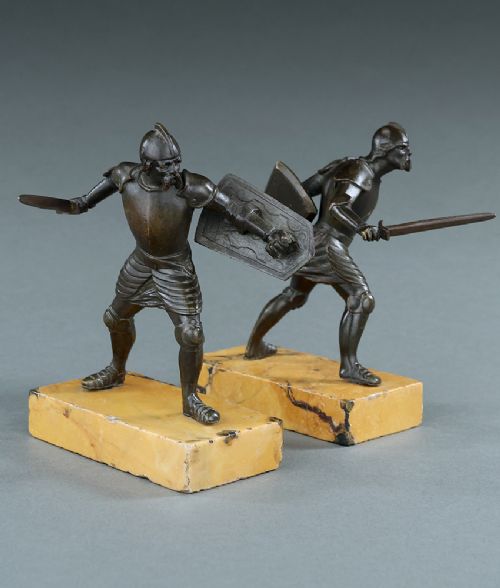
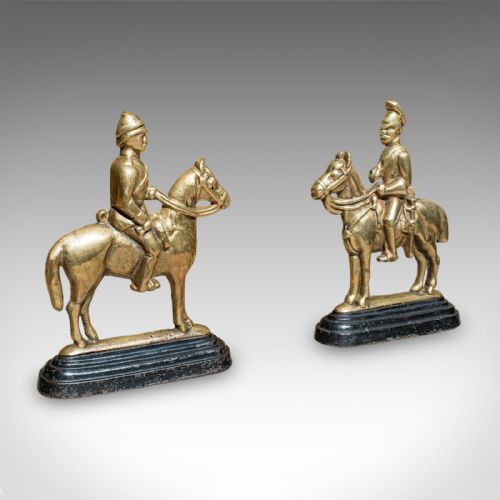
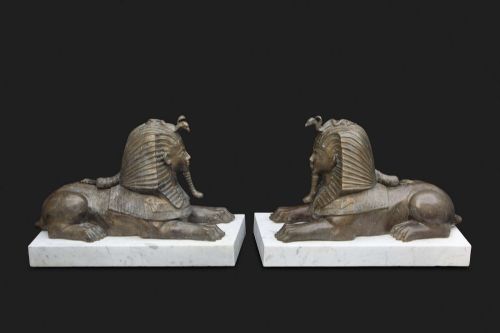
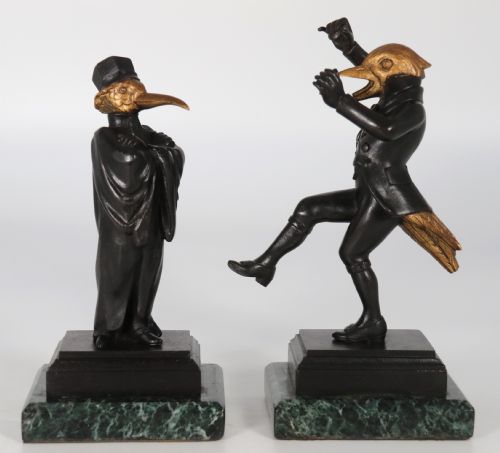
Bronze figure bookends combine decorative sculpture with functional weight to support collections of books on shelves and desks. When you search for bronze figure bookends, you encounter pairs modelled as lions, sphinxes, classical figures and dogs from periods spanning the Victorian era through the Art Deco years.
The most common versions on this page are matched pairs cast as animals, including resting lions, greyhounds, spaniels and squirrels, often mounted upon heavy bases of marble, onyx or alabaster. These sculptural objects serve both to steady volumes and to display the distinct aesthetic tastes of the nineteenth and twentieth centuries.
How they were made
These pieces rely on metal casting techniques, predominantly utilising solid bronze, patinated metal or spelter to shape the figures. Molten metal flows into moulds to capture intricate details of feathers, fur and classical drapery.
Many figures are mounted upon heavy architectural bases made from materials such as Carrara marble, olive wood or onyx to provide the necessary weight. Surface finishes include cold-painted pigments, silvering and fire gilding to enhance the visual depth of the metal.
Materials span natural stone bases like Carrara marble alongside patinated metal, silvered bronze and carved alabaster.
What varies in quality
K and O·Karl Hagenaur
The Bronze Figure Bookends Glossary
- Spelter
- An alloy of zinc and lead used as a less costly alternative to bronze. It takes patination well but lacks the heavy density of true bronze.
- Patinated metal
- Metal treated with chemicals to produce a decorative surface colour or aged finish. This protects the underlying material while adding visual character.
- Grand Tour
- A cultural journey undertaken by wealthy young Europeans in the eighteenth and nineteenth centuries. Souvenirs included small classical bronzes and architectural models.
- Cold-painted bronze
- A technique where paint is applied to a cold bronze surface without firing. It produces vibrant colours on small decorative sculptures.
- Gilt bronze
- Bronze coated with a thin layer of gold or gold amalgam. This finish provides a bright metallic lustre that resists tarnishing over time.
Bronze Figure Bookends: Frequently Asked Questions
Are these bookends heavy enough for large books?
Most of these pieces combine solid metal figures with dense bases of marble, onyx or stone. This construction provides substantial weight to keep heavy volumes upright.
Lighter versions cast in spelter or hollow metal rely on their wide bases to maintain stability on the shelf.
How do I care for antique bronze?
Dust the surface gently with a soft, dry cloth to prevent the accumulation of grit in recessed details. Avoid using liquid polishes or abrasive cleaners, which can strip the original patination.
Keep the pieces away from direct sunlight and damp environments to preserve the stability of both the metal and the stone bases.
What is the difference between bronze and spelter?
Bronze is a durable copper alloy that yields sharp casting details and develops a rich natural patina over time. It feels heavy and cold to the touch.
Spelter is a softer, zinc-based alloy that is lighter in weight and often shows a painted surface finish rather than a true chemical patina.
Why are animals common subjects?
Sculptors of the nineteenth and twentieth centuries drew inspiration from naturalism and classical mythology, making lions, dogs and birds popular motifs. These subjects offered strong sculptural silhouettes that suited the functional requirements of supporting books.
Animals also allowed makers to showcase their skill in rendering fur, feathers and muscular forms.