



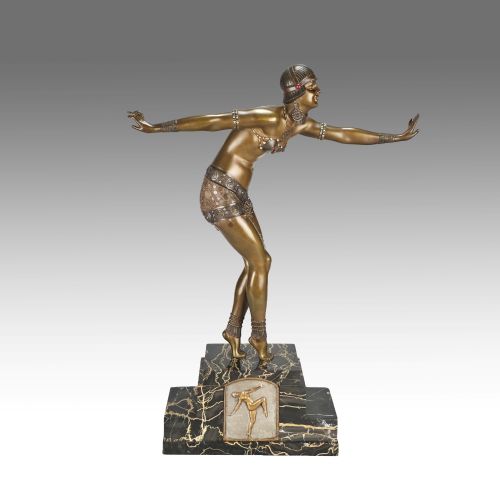


Bronze Female Dancer Sculpture
A bronze female dancer sculpture captures the kinetic energy and stylised elegance of early twentieth century movement.
Bronze Female Dancer Sculpture
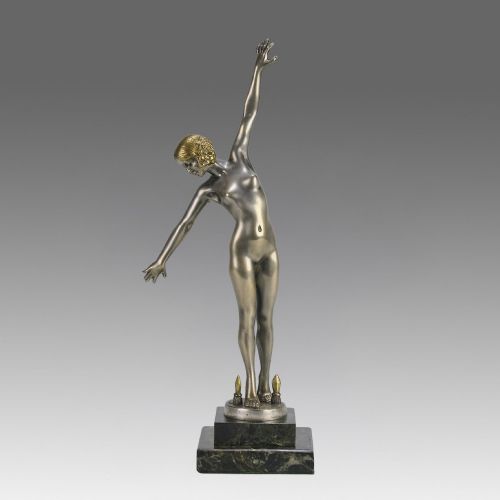
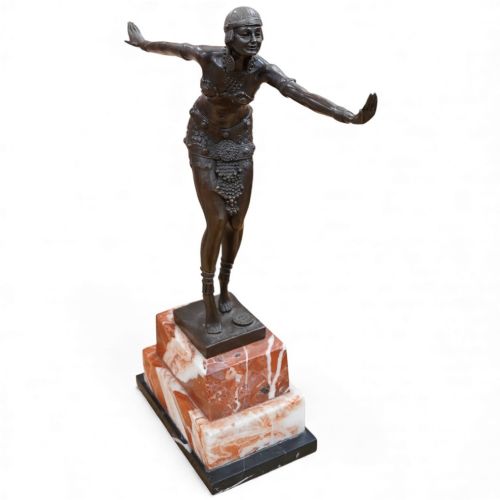
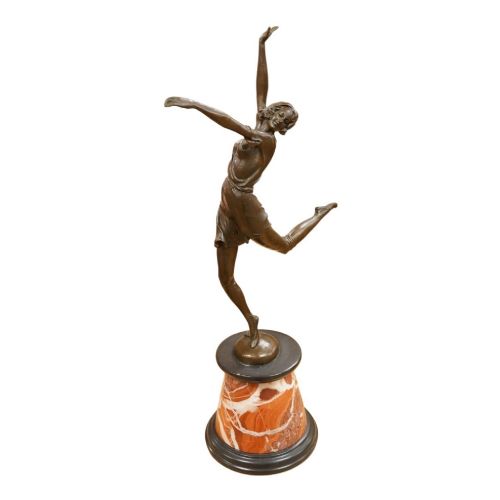
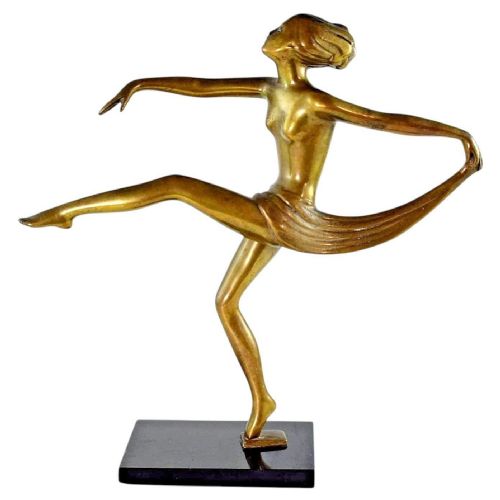
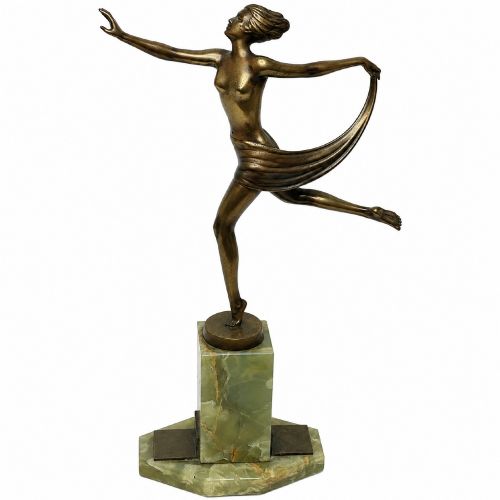
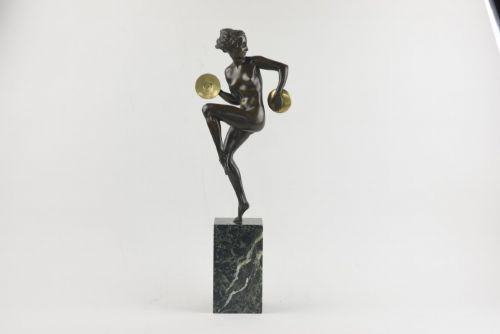
A bronze female dancer sculpture is typically an Art Deco or Art Nouveau creation depicting a woman in motion, originating largely from the 1920s and 1930s. These pieces often portray dancers from ballet, cabaret, or exotic traditions with dramatic gestures and outstretched arms.
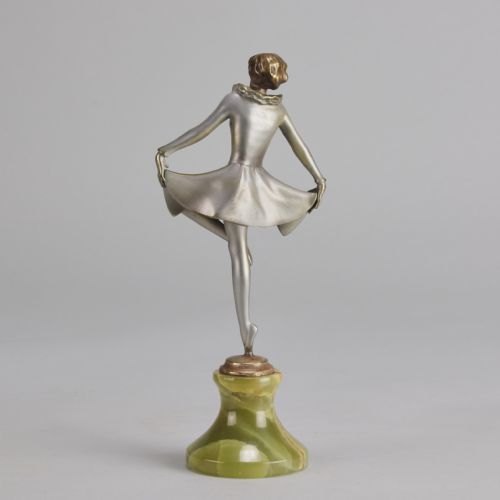
Most examples found on this page stand upon a heavy marble or onyx base, anchoring the slender figure above. The subject matter ranges from named dancers and theatrical roles to stylised interpretations of movement in patinated, silvered, or gilt metal.
How they were made
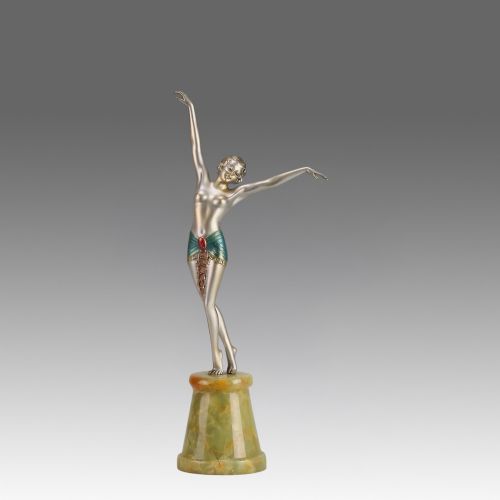
The primary material is cast bronze, frequently finished with cold-painting, silvering, or gilding to enhance the costume details of the dancer. Alternative versions utilise spelter, a zinc alloy, as a more accessible medium for figures produced during the period.
Many of the finest examples combine metalwork with carved bases of marble or onyx, and occasionally incorporate other materials such as wood. Cold-painted surfaces require meticulous hand-application of pigment directly onto the metal.
Bronze Female Dancer Sculpture Retail Price Guide 2026
Typical asking prices for bronze female dancer sculpture among the pieces listed under this phrase on Sellingantiques today, from the lower quarter to the upper quarter. They describe what is for sale here now, not the wider market.
Listings feature works spanning the 1900s, 1910s, 1920s, 1930s, and later than 1960, executed in bronze, spelter, marble, onyx, wood, and silvered or gilt finishes.
What varies in quality
The choice and execution of the base also dictate standard, where dense, polished marble or onyx complements the weight and balance of the figure above. Signed works by recognised modellers demonstrate superior artistic conception compared to unsigned or generic commercial productions.
Maurice Giraud-Rivière·D.H. Chiparus·Bruno Zach·Josef Lorenzl·Aurore Onu·Pierre Le Faguays·Paul Philippe·Eugène Désiré Piron·Rene Andre Varnier·Paul de Boulogne
The Bronze Female Dancer Sculpture Glossary
- Cold-painted
- A technique where paint is applied to unheated bronze and allowed to dry naturally. This method permits intricate polychrome detailing on garments and hair.
- Spelter
- A zinc alloy commonly utilised as an economical alternative to bronze. It accepts patination and paint well, though it is softer and lighter than genuine bronze.
- Chryselephantine
- A term describing sculptures combining metal with carved ivory or bone. This method highlights the contrast between the costume and the flesh.
- Patination
- The chemical treatment or natural weathering applied to the surface of bronze to alter its colour. A controlled patina adds depth and highlights sculptural contours.
- Chasing
- The manual refinement of a raw metal casting using small punches and chisels. Skilled chasing sharpens details lost during the initial moulding process.
Bronze Female Dancer Sculpture: Frequently Asked Questions
What periods do these dancer sculptures date from?
The majority of these pieces date from the 1920s and 1930s, aligning with the height of the Art Deco movement. Earlier examples from the turn of the century and the Art Nouveau period also appear.
Production methods and stylistic choices shifted across these decades, moving from ornate floral motifs towards geometric and stylised representations of the human form.
How do I distinguish bronze from spelter?
Bronze is heavier, denser, and colder to the touch than spelter, which is a softer zinc alloy. Examining the underside or base often reveals the paler grey metal beneath if the surface finish has worn.
Genuine bronze also takes a finer, sharper chisel mark during the chasing process, whereas spelter castings can sometimes appear slightly softer in detail.
Where should I display a heavy marble base sculpture?
These figures require a sturdy, level surface such as a heavy sideboard, mantelpiece, or dedicated pedestal. Because the combination of metal and stone creates considerable weight, placement away from high-traffic edges is essential.
Positioning the piece where side lighting can catch the patination or cold-painted details enhances the sculptural depth.
Are all dancer sculptures signed by the artist?
Many fine examples carry the signature or foundry mark of the modeller, inscribed directly into the bronze or onto the base. However, a significant number of period figures and spelter editions remain unsigned.
Unsigned works can still demonstrate exceptional craftsmanship and artistic merit without bearing an attribution.