




Bronze Equestrian Statuette
A bronze equestrian statuette captures the dynamic energy of horse and rider or animal form in miniature, offering collectors miniature mastery.
Bronze Equestrian Statuette
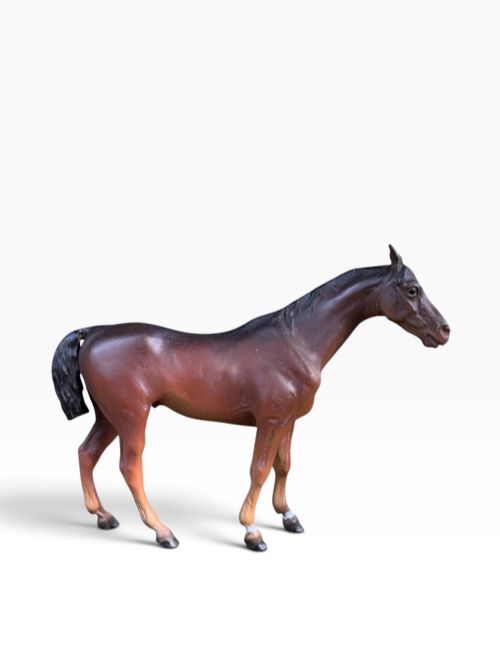
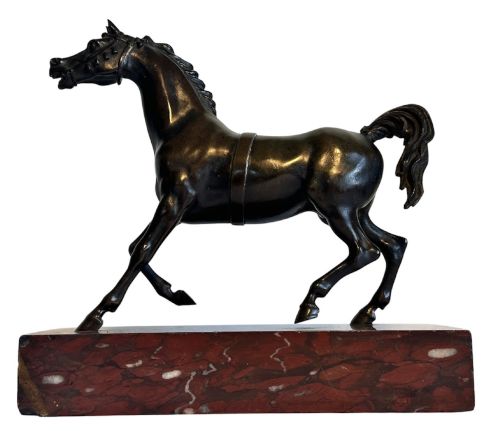
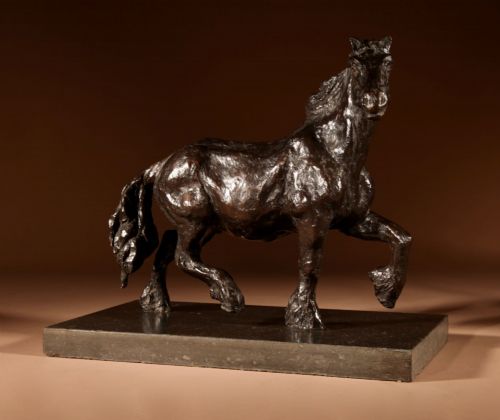
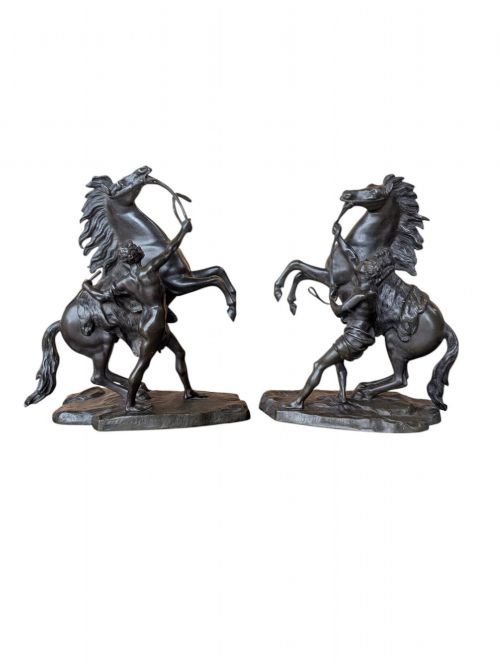
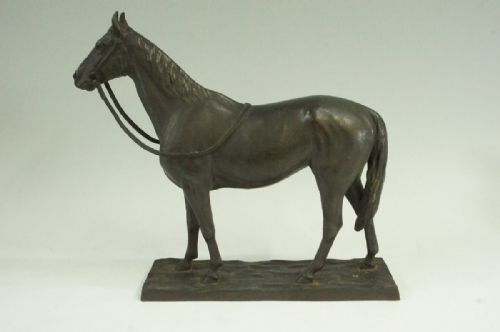
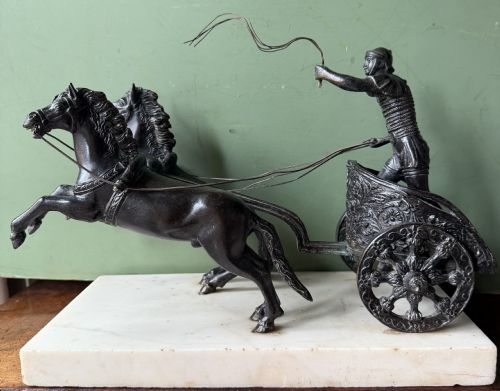
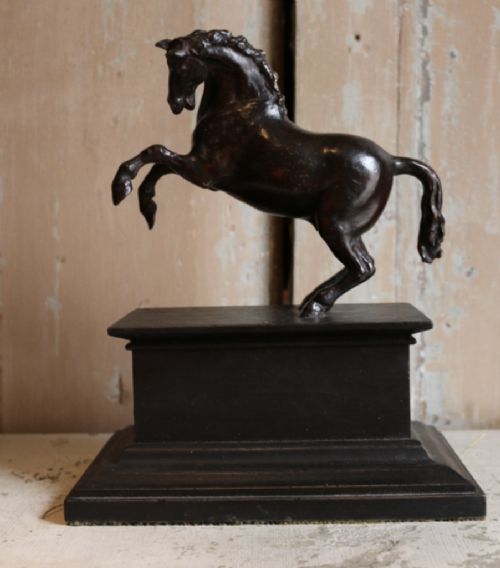
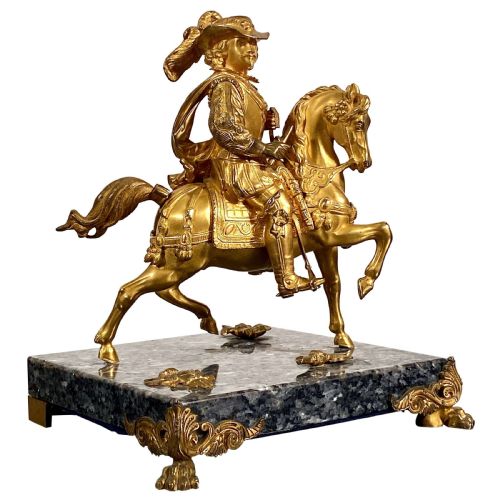
A bronze equestrian statuette represents horses and riders, ranging from 17th-century studies to 19th-century realists and 20th-century Art Deco interpretations. These pieces appear in various forms, including single animal figures, charioteers, historical figures on horseback, and functional table lighters.
Originating across Europe and Asia, the selection spans Austrian cold-painted works, Italian Grand Tour souvenirs, French models, and Japanese Meiji period sculptures. They are most commonly encountered mounted on marble, stone, or wood bases, utilising patinated, gilded, or painted finishes.
Evaluating quality and execution
Quality rests upon the crispness of the casting and the fidelity of the anatomical modelling in both horse and rider. Superior examples display life and movement, capturing muscle tension and expression rather than static form.
The sophistication of the secondary materials, such as finely veined marble bases or the delicate application of cold paint, separates standard foundry work from master output. Signature marks and foundry stamps further elevate the standing of a piece.
Listings feature periods from the 17th century through the Victorian era and Art Deco movement, utilising bronze, marble, and wood.
Franz Bergman·Bruno Zach·Luigi Secchi·Kunio Itô·Renee Sintenis
The Bronze Equestrian Statuette Glossary
- Animalier
- A nineteenth-century artistic movement focusing on the realistic portrayal of animals. Sculptors in this style studied anatomy closely to capture creatures in motion.
- Cold-painted bronze
- A technique where paint is applied to a cold bronze object, typically using oil-based paints. This finish requires careful preservation to prevent flaking.
- Grand Tour
- A traditional trip of Europe undertaken by upper-class young European men of the 18th and 19th centuries. Souvenirs included miniature bronzes of classical monuments and sculptures.
- Ormolu
- Gilding technique of applying finely ground, high-carat gold-mercury amalgam to an object of bronze. The process creates a rich, durable golden surface.
- Patination
- The process by which a bronze develops a surface sheen or colour through oxidation, age, or chemical treatment. Artists often accelerate this to enhance depth.
Bronze Equestrian Statuette: Frequently Asked Questions
How do I clean my bronze equestrian statuette?
Dust gently with a soft, dry brush to prevent the accumulation of particles in crevices. Avoid commercial metal polishes, which can strip historic patinas and damage cold-painted surfaces.
Apply a microcrystalline wax sparingly if protection is required, buffing it out completely with a clean cloth. Keep the piece away from direct sunlight and moisture to preserve the finish.
What is an Animalier bronze?
An Animalier bronze depicts animals in naturalistic poses, capturing them either at rest or in vigorous motion. These sculptures gained immense popularity during the nineteenth century across Europe.
Artists focused heavily on accurate anatomical study, often observing subjects in menageries. This genre includes horses, hounds, and wild beasts rendered with high fidelity.
How do I identify a Grand Tour souvenir?
Grand Tour bronzes typically replicate famous classical sculptures or architectural ruins encountered by travellers in Italy. They often feature integral or mounted bases of marble or stone.
These pieces were produced in the eighteenth and nineteenth centuries to commemorate European travels. Their size made them portable enough for travellers to transport home.
What does cold-painted mean?
Cold-painting involves applying unfired paint directly onto the surface of a bronze casting. This technique was particularly favored by Viennese workshops in the late nineteenth and early twentieth centuries.
Because the paint is not fired in a kiln, it sits on the metal surface and is susceptible to wear. Surviving examples with intact paint are particularly prized by collectors.