

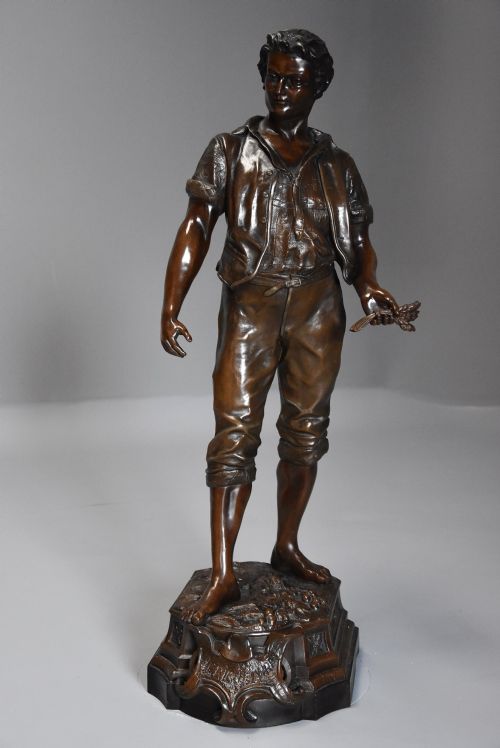
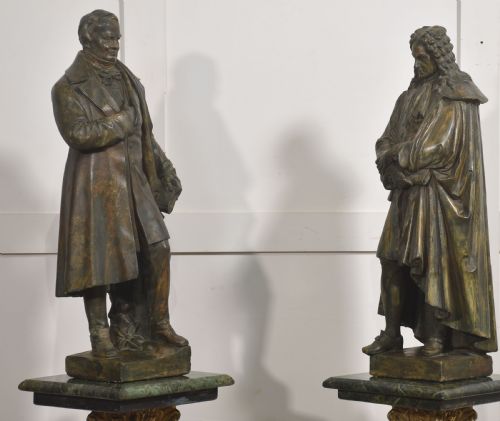
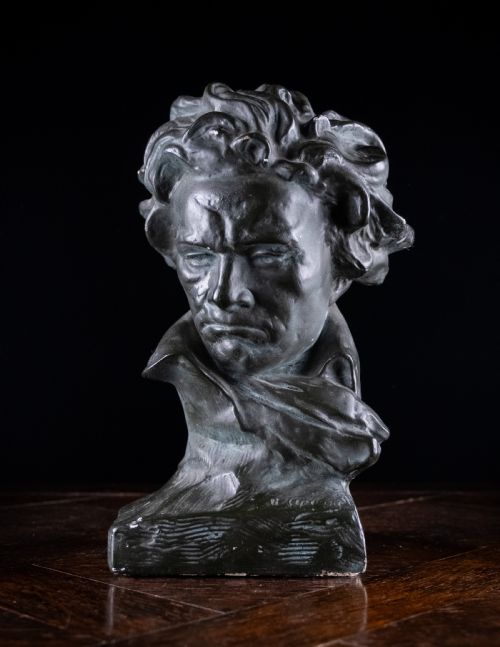

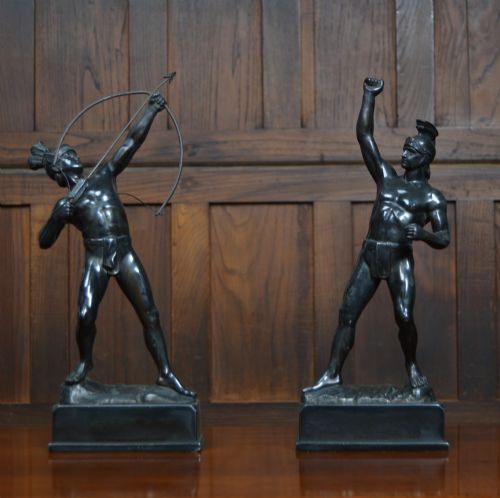


Bronze Effect Sculpture
A bronze effect sculpture gives the weight and presence of cast metal through alternative materials like spelter, painted plaster and patinated chalk.
Bronze Effect Sculpture
A bronze effect sculpture captures the appearance of traditional metalwork using accessible materials, offering decorative impact without the weight or cost of solid bronze.
The pieces grouped under the search phrase bronze effect sculpture span the nineteenth century and the twentieth century, encompassing Victorian academic realism, Art Nouveau and Art Deco styles.
Spelter figures dominate the selections, frequently mounted on marble bases or adapted as table lamps and floor lamps for domestic interiors.
Materials and construction
Makers utilised spelter, plaster, terracotta and chalk as primary moulding substances, applying surface patination, bronze finishes or paint to simulate aged metal.
Many figures rely on slip casting and surface bronzing techniques to achieve fine detail on figures, busts and sculptural lamp bases.
Bronze Effect Sculpture Retail Price Guide 2026
Typical asking prices for bronze effect sculpture among the pieces listed under this phrase on Sellingantiques today, from the lower quarter to the upper quarter. They describe what is for sale here now, not the wider market.
Listings feature materials including spelter, painted plaster, terracotta, chalk and glass alongside bronze finishes.
Judging quality
Quality rests upon the crispness of the casting and the preservation of the original patinated surface finish.
Superior works demonstrate careful modelling in the drapery and facial expressions, alongside stable integration with secondary materials such as marble bases.
F.Milliot·Dopmeier·Friedrich Goldscheider·Chiparus
The Bronze Effect Sculpture Glossary
- Spelter
- A zinc alloy commonly used as an economical alternative to bronze for decorative figures. It accepts patination and metallic paint finishes readily.
- Patination
- The surface treatment or artificial ageing applied to the material to imitate the appearance of oxidized bronze. This finish varies from dark brown to green tones.
- Slip cast
- A manufacturing method where liquid clay or plaster is poured into a mould to create hollow sculptural forms. This technique permits consistent replication of detailed subjects.
- Regency
- An English design period spanning the early nineteenth century characterised by classical revival motifs. Pieces from this era often draw inspiration from ancient Greece and Rome.
Bronze Effect Sculpture: Frequently Asked Questions
What is a bronze effect sculpture made from?
These sculptures are primarily cast from spelter, plaster, terracotta or chalk rather than solid bronze. Makers applied specialised surface treatments and metallic paints to achieve an authentic metal appearance.
Such materials allowed workshops to produce affordable decorative figures and lamps during the nineteenth and twentieth centuries.
How do I identify Art Nouveau examples?
Art Nouveau pieces feature fluid, organic lines inspired by natural forms, often depicting flowing hair and classical female figures. These works frequently date from the late nineteenth century to the early twentieth century.
Look for sinuous drapery and stylized floral motifs that define the aesthetic of the period.
Are these sculptures heavy?
While spelter and terracotta possess substantial weight, they are generally lighter than solid cast bronze figures of equivalent size. Many examples are mounted on heavy marble bases for stability.
This makes them suitable for placement on standard tabletops and mantelpieces without requiring reinforced support.
How were these figures used originally?
Many of these objects served as purely decorative mantel ornaments, busts or figural groups in domestic interiors. Others were functional, incorporating lamp fittings and torchere shades to provide illumination.
Sculptors and manufacturers adapted classical and contemporary subjects to suit the decorative tastes of Victorian and Art Deco homes.