





Bronze Desk Candelabra
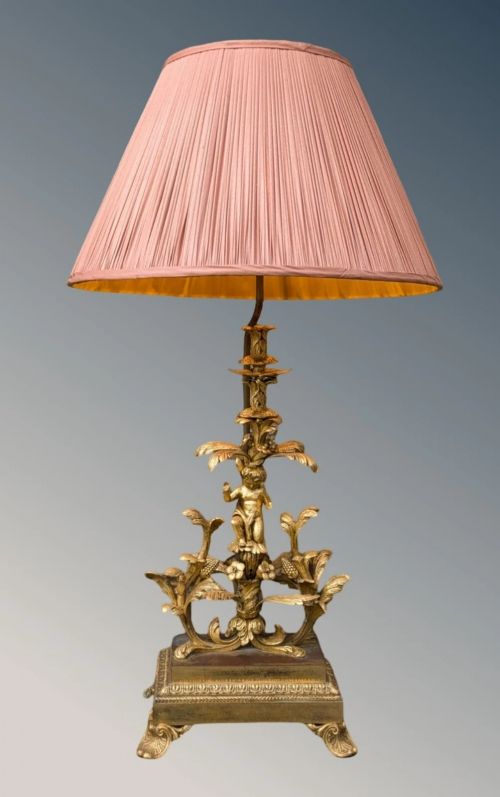
These bronze desk candelabra bring weight and warm metal tones to a workspace, offering period illumination converted from branching lights or paired candlesticks.
Bronze Desk Candelabra
When you search for bronze desk candelabra, you encounter heavy metal lighting fixtures and garniture pieces designed for nineteenth-century writing tables and libraries. These objects originate largely from French and English workshops during the Victorian, Regency, and Edwardian eras, spanning neoclassical to rococo revival styles.
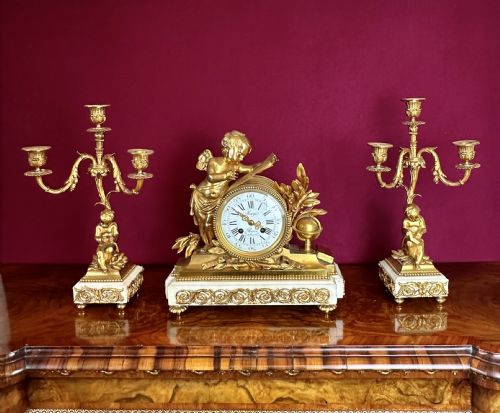
The selection on this page consists predominantly of table lamps converted from earlier candelabra, alongside clock garnitures and paired candlesticks. You find patinated and gilt bronze frequently, often mounted on marble bases or paired with cherubs and putti figures.
How they were made
Maker-metalworkers cast bronze through traditional methods before finishing the surfaces with fire gilding, known as ormolu, or dark patination. Parcel-gilt details highlight raised cast elements like foliage and classical figures.
Many surviving examples incorporate marble plinths and enamel dials, while later adaptations involve wiring candle-branches for electric table lighting.
Bronze Desk Candelabra Retail Price Guide 2026
Typical asking prices for bronze desk candelabra among the pieces listed under this phrase on Sellingantiques today, from the lower quarter to the upper quarter. They describe what is for sale here now, not the wider market.
Nineteenth-century desk candelabra often feature watchful cherubs holding candles, ensuring your library paperwork is supervised by winged infants.
What varies in quality
Weight and structural integrity also separate standard production from high-end commissions, particularly in the density of the cast bronze and the quality of the underlying marble bases.
Raingo Fres Paris·Japy Freres
The Bronze Desk Candelabra Glossary
- Ormolu
- Gilt bronze created by applying a mixture of gold and mercury to a bronze base and heating it. This technique produces a distinctive soft, golden finish found on nineteenth-century French pieces.
- Garniture
- A set of matching decorative objects, typically comprising a central clock flanked by two matching candelabra or vases. These sets dominated Victorian mantelpieces and large desks.
- Patinated Bronze
- Bronze treated with chemical solutions to produce a darkened surface colour rather than a bright metal polish. This finish emphasises sculptural form over reflective shine.
- Putti
- Depictions of plump, winged male toddlers, often styled as cherubs in nineteenth-century decorative metalwork. They frequently appear supporting candle branches on desk lamps.
- Clock Set
- A grouping of a mantel clock and matching side pieces such as candlesticks or candelabra. They share stylistic motifs and material treatments.
Bronze Desk Candelabra: Frequently Asked Questions
How are candelabra converted to lamps?
Makers run internal wiring through the original central column or hollow branches of the bronze fixture. This allows the piece to accept modern lamp fittings while retaining its antique appearance.
Conversion methods vary depending on the age of the piece and the wiring standards used during the twentieth century.
What is a clock garniture?
A clock garniture is a matched set containing a central clock accompanied by two side pieces, such as candelabra or vases. These ensembles were designed to sit together on large surfaces like desks or mantelpieces.
Each component shares identical bronze casting styles, patination, and decorative motifs from the same period.
How do I clean gilt bronze?
Dust gilt bronze gently with a soft, dry brush to prevent the accumulation of dirt in the chased crevices. Avoid chemical polishes, as abrasive cleaners strip the delicate ormolu surface.
Professional conservation is recommended if the metal requires deeper cleaning to remove stubborn residue.
Are these pieces French or English?
Many of these items originate from French workshops in Paris, reflecting styles like Louis XVI revival and French Empire. English makers also produced similar desk accessories during the Regency and Victorian periods.
Stylistic cues such as cast motifs and foundational markings help indicate the probable country of origin.