

Bronze Crystal Ceiling Light
A bronze crystal ceiling light brings together cast metalwork and sparkling glass to illuminate a room with traditional elegance.
Bronze Crystal Ceiling Light
When searching for a bronze crystal ceiling light, buyers encounter a selection of overhead fixtures designed to distribute illumination across a room. These objects combine metal structures with glass or crystal elements to catch and reflect light.
The pieces appearing on this page originate predominantly from various periods spanning the nineteenth and early twentieth centuries. Many examples reflect stylistic influences associated with French design, including Empire, Rococo, and Louis Revival forms.
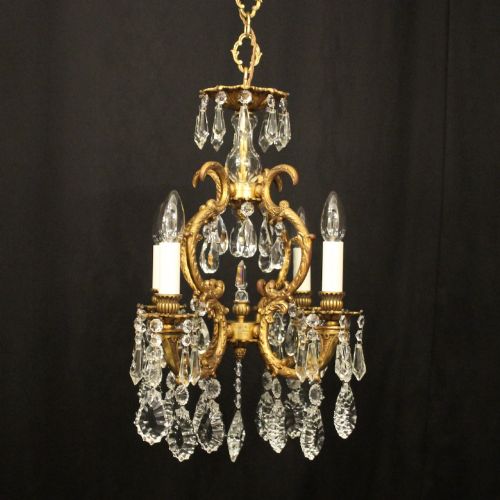
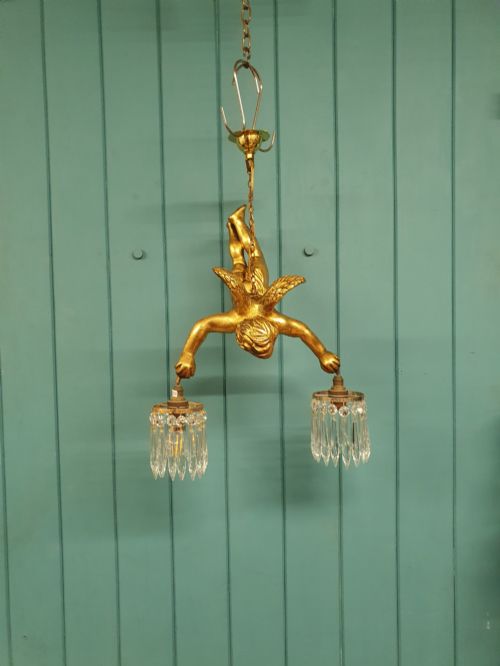
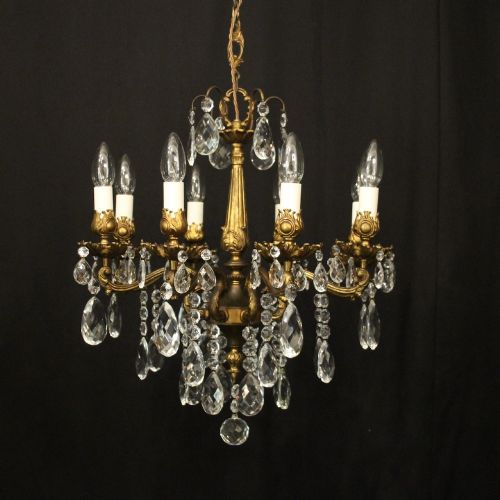
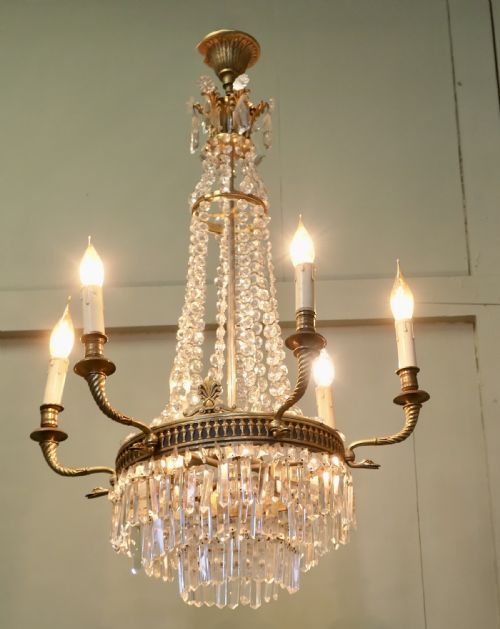
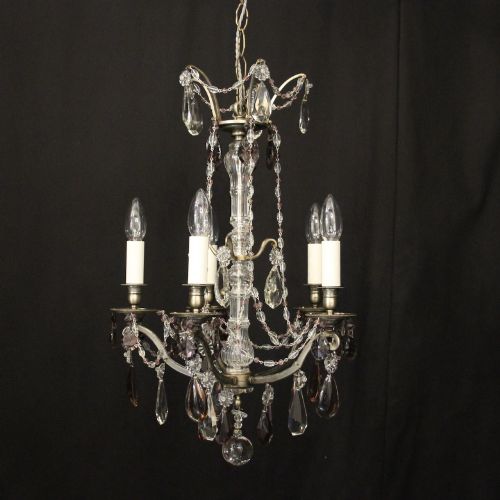
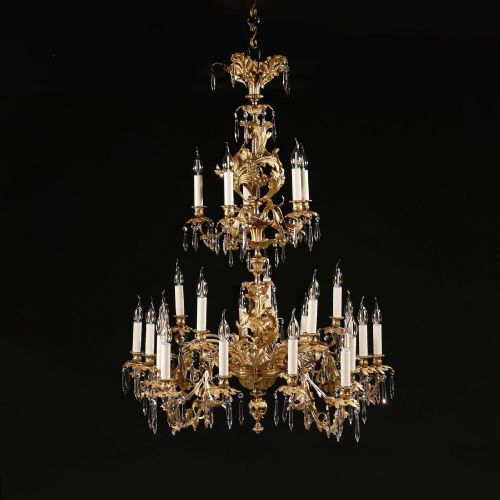
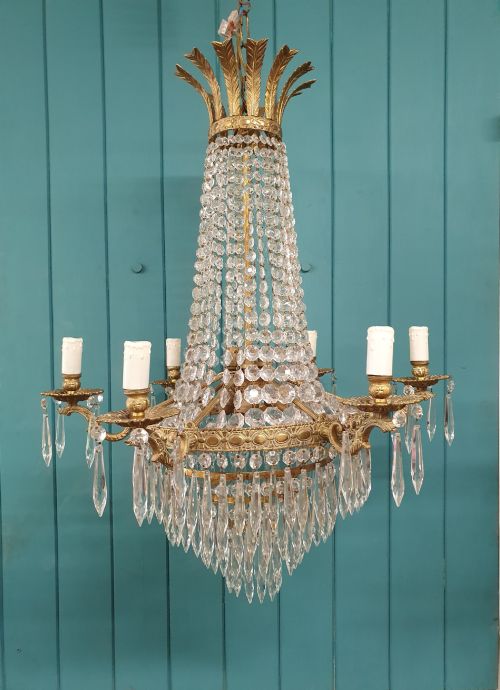
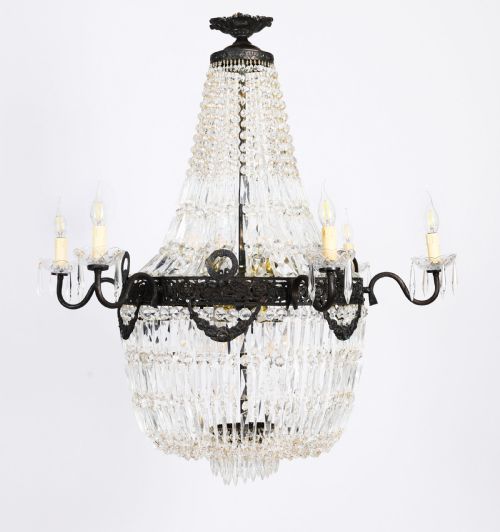
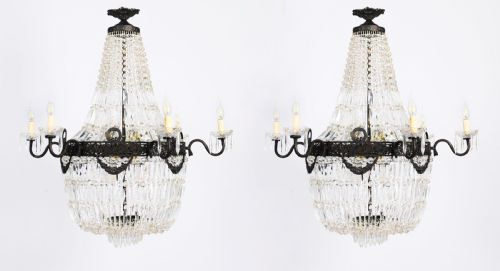
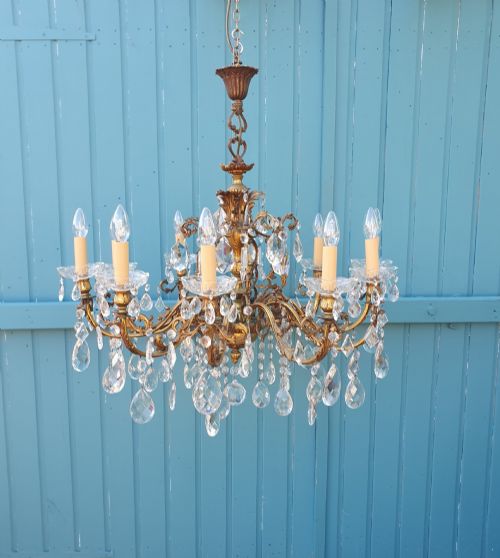
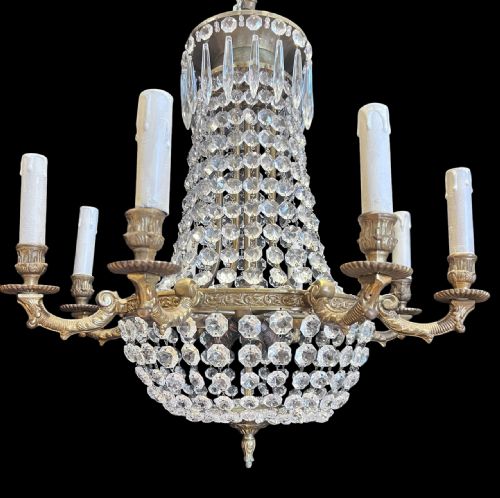
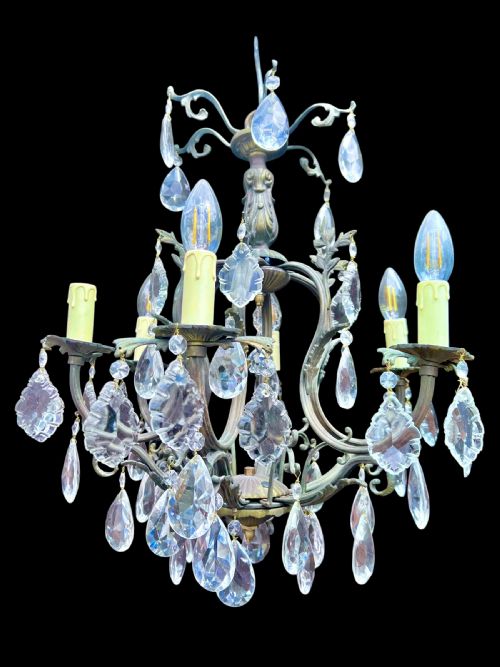
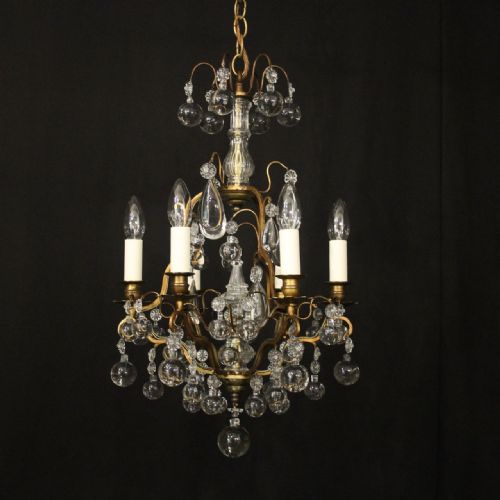
Common formats include multi-arm chandeliers, tent and waterfall arrangements, and pendant lights hung with cut glass. These configurations range from modest single-light fixtures to large multi-bulb installations suited for principal reception rooms.
How they were made
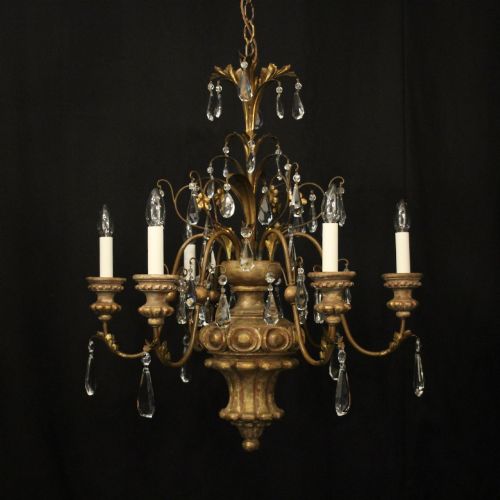
The construction of these fixtures relies on metalwork techniques such as casting and gilding applied to bronze, brass, or gilt metal frames. Artisans shaped these structural components to support the weight of the glass elements while providing decorative detail along the arms and crown.
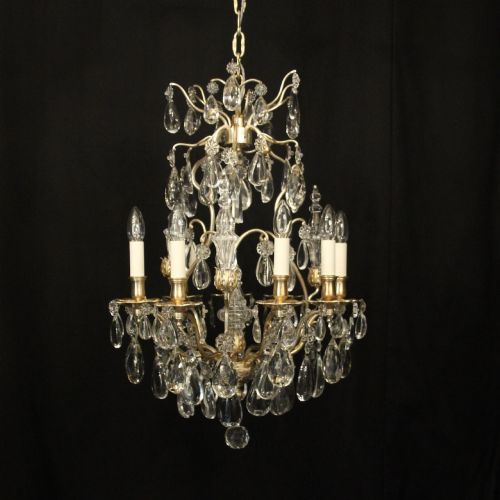
Pendants, drops, and beads consist of glass or crystal shaped by hand-cutting and polishing to increase light refraction. These components are typically linked together with wire or pins and suspended from the central frame in cascading patterns like tents and waterfalls.
Several chandeliers come decorated with glass grapes, apples, and pears dangling amongst the crystal drops.
What varies in quality
The standard of a fixture is determined largely by the depth of detail in the metal casting and the clarity of the glass elements. Superior examples feature crisp definition in the chased or gilded bronze work alongside heavy, sharp-edged cut crystal that refracts light cleanly.
Design complexity and structural proportion also distinguish different grades of work. Elaborate multi-tiered forms with integrated decorative motifs demonstrate a higher level of craftsmanship than simpler, standard production models.
The Bronze Crystal Ceiling Light Glossary
- Tent and waterfall
- A lighting configuration where upper glass drops form a canopy or tent shape above a lower cascading display of crystals.
- Gilt bronze
- Metalwork treated with a gold-coloured finish or mercury gilding to give a bright, reflective surface.
- Cut glass
- Glass that has been faceted on a wheel to produce sharp edges and increased brilliance when illuminated.
- Empire style
- A neoclassical design movement characterised by symmetry, classical motifs, and formal grandeur.
Bronze Crystal Ceiling Light: Frequently Asked Questions
Where should I hang a bronze crystal ceiling light?
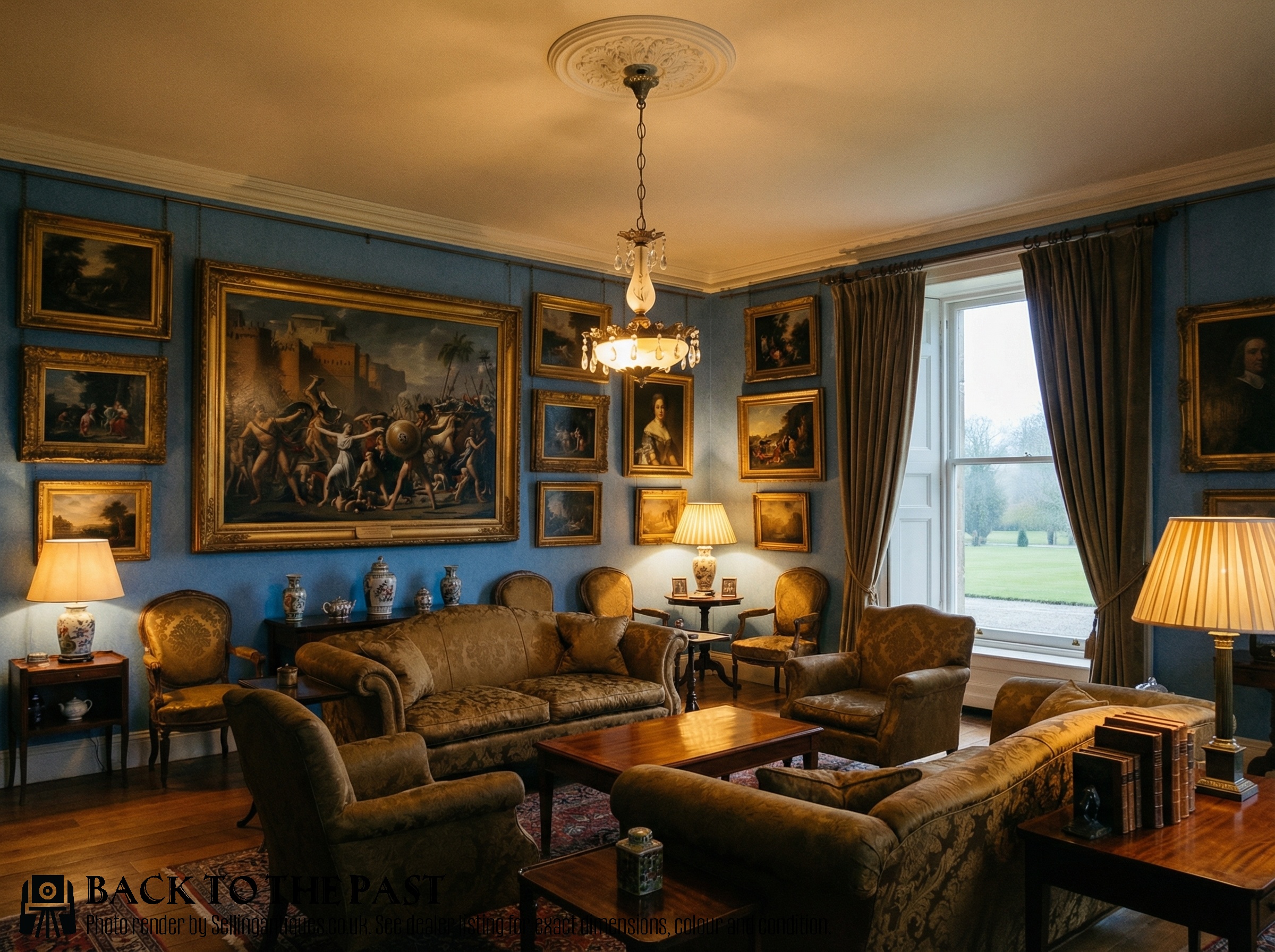
These fixtures suit dining rooms, living spaces, and hallways where sufficient ceiling height allows the fixture to hang without obstruction. Their decorative presence works well as a central focal point in rooms furnished with traditional or period pieces.
Ensure the scale of the lighting matches the dimensions of the room and the height of the ceiling. Large multi-arm arrangements require adequate clearance below, while smaller single-light pendants fit more compact spaces.
How do I identify the period of a chandelier?
Dating relies on stylistic clues within the metalwork and the specific configuration of the glass drops. Pieces from the nineteenth century often display heavier cast bronze frames and specific revival aesthetics, while early twentieth-century examples frequently utilise gilt brass or lighter constructions.
Examining the wiring methods, joining techniques, and types of cut crystal provides further evidence of age. Comparing the decorative motifs against documented period styles helps narrow down the decade of manufacture.
How are these historic lights cleaned safely?
Maintenance involves removing dust regularly with a soft brush and cleaning the glass components with a mild solution suitable for crystal. Care must be taken around fragile metal finishes and historic wiring during the process.
Many glass drops can be detached individually for thorough washing and drying before reattachment. Maintaining the metalwork requires avoiding abrasive cleaners that might damage the original gilding or bronze surface.