



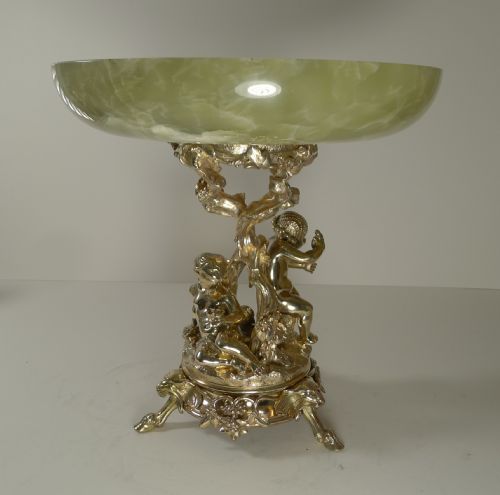


Bronze Bowl on Stand
A bronze bowl on stand is a decorative vessel elevated on a footing, prized for its sculptural presence and utility on tables and sideboards.
Bronze Bowl on Stand
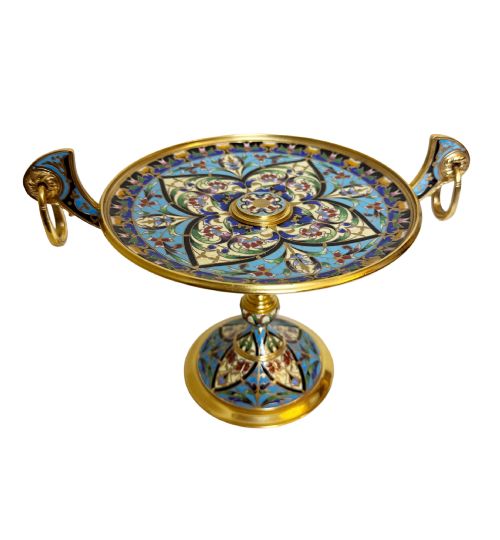
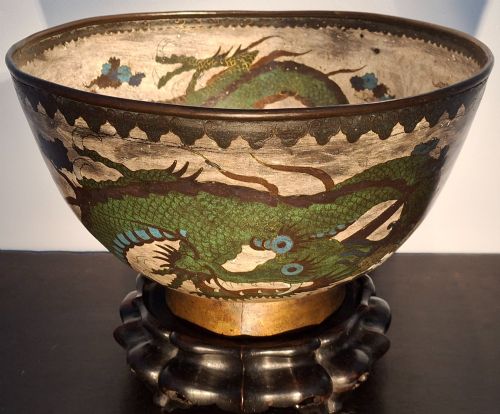
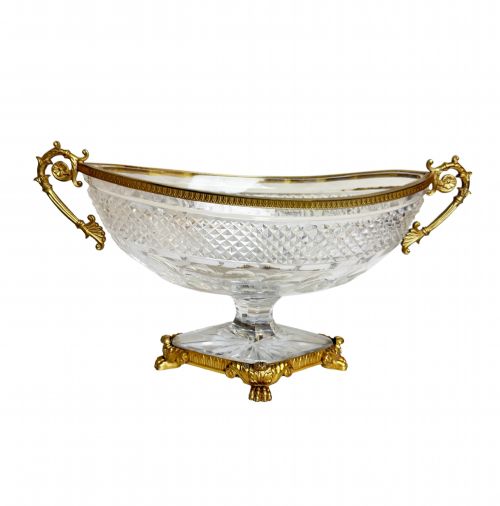
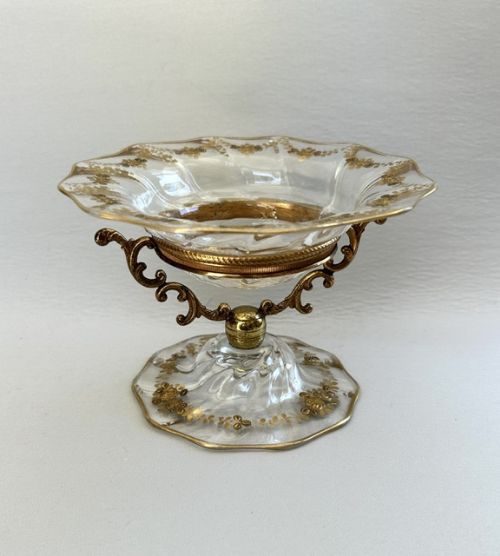
A bronze bowl on stand is primarily represented on this page by nineteenth-century French centrepieces, tazzas, and comports, alongside Chinese archaistic censers and Japanese cloisonné enamel vessels. These pieces combine metal bowls with integral or matching supports, drawing from periods such as the French Empire, Napoleon III, and the Qing Dynasty. Buyers will frequently encounter French ormolu and gilt bronze works alongside Asian cloisonne enamel and champleve designs.
Forms vary from shallow tazzas and footed bowls to heavy ritual censers and large centrepieces paired with crystal, porcelain, or mother-of-pearl dishes. The Japanese Edo period and Japonisme influences also contribute distinct aesthetic approaches to the standard vessel on a stand format.
How they were made
Construction relies heavily on casting bronze, gilt bronze, or ormolu, often paired with contrasting elements such as cut crystal, wood, glass, or mother-of-pearl. Makers utilised techniques like cloisonne and champleve enamel to decorate the metal surfaces with intricate patterns.
Supports and stands are cast separately and fastened to the main bowl, requiring precise metalworking to ensure stability across heavy pieces like massive Chinese ritual censers and French nineteenth-century centrepieces.
Bronze Bowl on Stand Retail Price Guide 2026
Typical asking prices for bronze bowl on stand among the pieces listed under this phrase on Sellingantiques today, from the lower quarter to the upper quarter. They describe what is for sale here now, not the wider market.
Listings feature materials including gilt bronze, cloisonne enamel, ormolu, cut crystal, wood, glass, and mother-of-pearl.
What varies in quality
Quality rests in the crispness of the bronze casting and the depth of the gilding or ormolu finish. Heavy, well-balanced stands and intact enamel work distinguish superior examples from simpler productions.
The integration between the bowl and its stand indicates the maker's skill, particularly in pieces combining mixed media like crystal, mother-of-pearl, or porcelain with metal mounts.
Christofle·Louis Pierre Malpass
The Bronze Bowl on Stand Glossary
- Tazza
- A shallow bowl or cup mounted on a stem and foot, commonly used as a centrepiece or decorative dish. These objects often display intricate cast ornamentation.
- Ormolu
- Gilded bronze, where finely ground high-carat gold is applied to a bronze base using a mercury amalgamation technique. This finish provides a warm, durable lustre.
- Cloisonne
- An enamelwork technique where thin metal wires are soldered to a metal body to form compartments filled with enamel paste and fired. The resulting surface shows vibrant coloured designs.
- Champleve
- An enamelling technique where troughs or cells are carved into the metal surface and filled with enamel before firing. It creates bold patterns distinct from wired cloisonne.
- Centrepiece
- A large, ornamental vessel placed in the middle of a dining table or furnishing, frequently executed in gilt bronze, crystal, or porcelain.
Bronze Bowl on Stand: Frequently Asked Questions
What is a bronze bowl on stand used for?
These vessels functioned historically as centrepieces, ritual objects, or decorative displays on dining tables and cabinets.
Today, they serve primarily as standalone decorative art objects that anchor a room's aesthetic.
How do I identify French empire period pieces?
French Empire pieces typically exhibit classical motifs, heavy gilt bronze casting, and formal symmetry.
They often draw inspiration from ancient Roman and Greek design vocabularies.
Are the stands attached to the bowls?
Many stands are integral parts of the casting, while others are separate matching bases designed specifically for the bowl.
In pieces like tazzas and comports, the foot is usually a permanent structural element.
How do I care for gilt bronze and enamel?
Gilt bronze and enamel require gentle dusting with a soft, dry cloth to preserve the surface finish.
Harsh chemical cleaners and abrasive cloths must be avoided to prevent stripping the gilding or damaging the enamel.