


Bronze Athletic Figure Statue
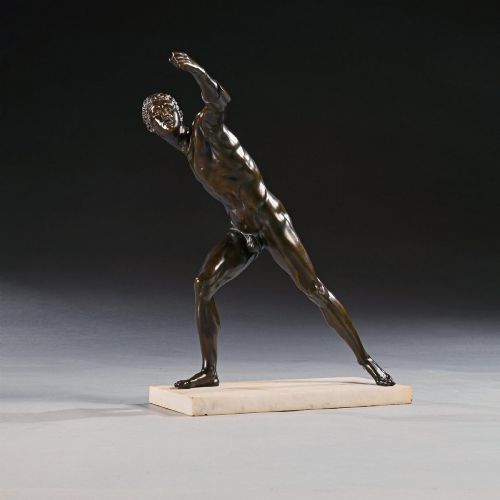
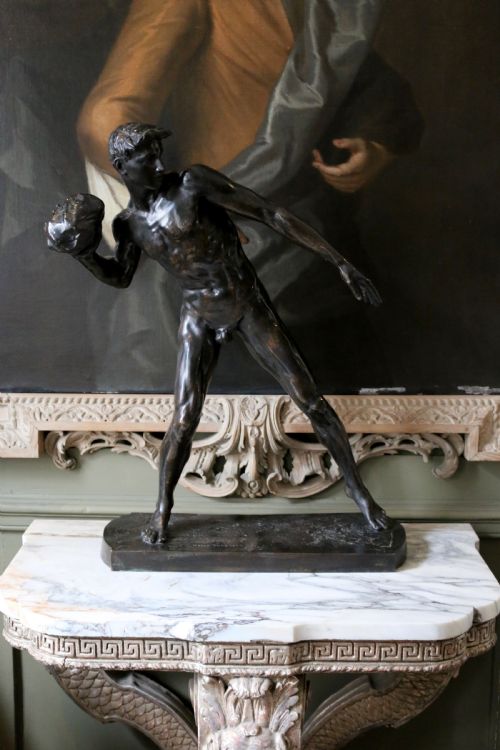
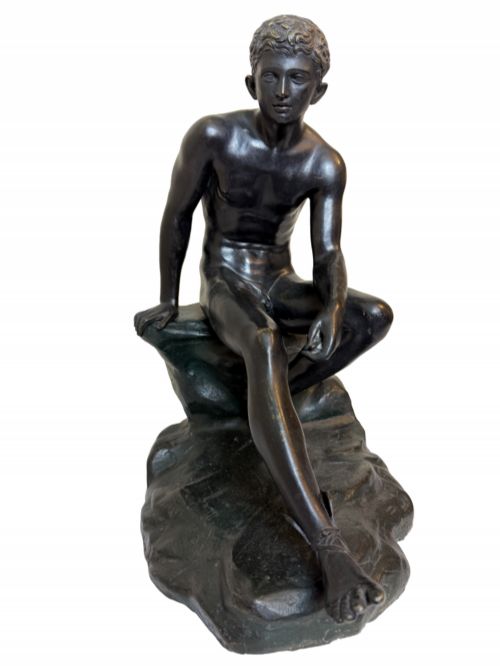
These bronze athletic figure statue examples capture human strength and classical form, offering a sculptural centrepiece for any desk or mantel.
Bronze Athletic Figure Statue
A bronze athletic figure statue represents the human form in motion or repose, drawing heavily on classical mythology and historical sports. Buyers searching this phrase encounter nineteenth-century Grand Tour reductions alongside twentieth-century Art Deco interpretations of tennis players, wrestlers, and runners.
The nineteenth-century examples often revisit classical antiquities such as the Borghese Gladiator or the Discobolus, cast in patinated bronze and mounted on marble bases. Victorian New Sculpture and Classical Revival pieces reflect a nineteenth-century fascination with anatomical precision and heroic scale.
Later twentieth-century works shift towards the clean lines of Art Deco, depicting rugby players, ice skaters, and power lifters with stylised vigour. These pieces bridge the gap between classical tradition and modern sporting dynamism.
How They Were Made
The makers of these sculptures relied primarily on traditional lost-wax casting or sand casting to capture fine anatomical detail. Metal alloys were cast, chased, and finished with patinas ranging from deep brown to gilt and silvered surfaces.
Many figures are mounted upon heavy stone plinths, utilising materials such as Rosso Levanto marble and plain marble to provide structural stability and visual contrast. Base materials occasionally include wood or alternative metals like spelter for secondary elements.
Materials paired with these sculptures include Rosso Levanto marble, standard marble, wood, and spelter across various Victorian and Art Deco forms.
What Varies in Quality
The quality and depth of the patination significantly affect the visual impact of the metal. Original patinas applied with subtlety retain their tonal variation, whereas later or heavy-handed re-finishing can obscure the nuance of the underlying bronze.
Hamo Thornycroft·Desire Grisard·Rudolf Küchler·Claire Colinet·Bruno Zach·Eden Antony Paul Noel
The Bronze Athletic Figure Statue Glossary
- Patina
- A thin layer that develops on bronze over time, or one applied artificially through chemical means to colour the metal surface. It protects the material and defines the tonal quality of the sculpture.
- Grand Tour
- A cultural journey undertaken by wealthy Europeans in the nineteenth century, resulting in the acquisition of small-scale bronze copies of classical antiquities. These souvenir sculptures replicate famous museum pieces.
- Lost-wax casting
- A metal casting method where a molten alloy is poured into a mould that has been created by melting away a wax model. This technique allows for intricate detail in complex sculptural forms.
- Spelter
- An alloy of zinc and copper used as a cheaper alternative to bronze in manufacturing decorative figures. It is softer and generally lighter than true bronze.
Bronze Athletic Figure Statue: Frequently Asked Questions
What is a Grand Tour bronze?
A Grand Tour bronze is a nineteenth-century miniature copy of a famous classical sculpture, purchased by travellers visiting European cultural sites. These pieces brought classical antiquity into private Victorian homes.
They served as portable displays of classical learning and taste, often depicting famous gladiators or mythological athletes.
How do I care for a bronze statue?
Bronze requires minimal maintenance beyond occasional dusting with a soft, dry cloth to prevent the accumulation of grit. Avoid using water, household cleaners, or polishes that might strip the original patina.
Keeping the sculpture away from damp environments and direct heat sources preserves the stability of both the metal and any attached marble base.
How do I tell bronze from spelter?
Bronze is heavier, denser, and generally cooler to the touch than spelter, with a resonant ring when lightly tapped. Spelter is a softer zinc alloy that often shows a greyish metal underneath worn spots in the surface finish.
Magnification can reveal casting seams and the grain structure characteristic of the respective metal.
Where were these figures displayed?
In the nineteenth and early twentieth centuries, athletic figures were displayed on library desks, antechamber mantelpieces, and dedicated sculpture pedestals. They demonstrated the owner's appreciation for classical ideals and physical culture.
Today, they function well as focal points on sideboards, bookshelves, or dedicated display tables in studies.