

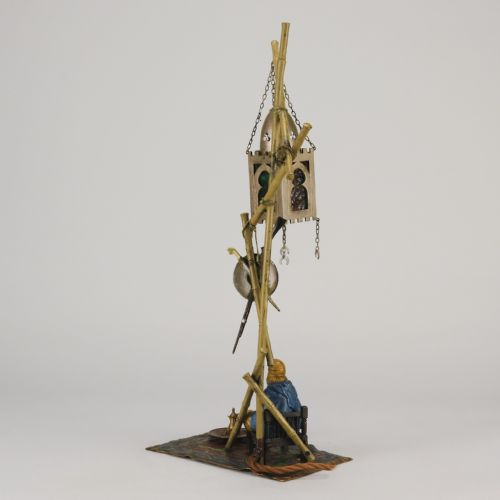


Bronze Arab Figure
A bronze arab figure captures the romanticism of the nineteenth and early twentieth centuries through detailed metalwork and patination.
Bronze Arab Figure
A bronze arab figure embodies the nineteenth-century European fascination with North African and Middle Eastern subjects, often rendered as sculptural groups, table lamps, and mantel clocks. These works typically depict merchants, falconers, musicians, and horsemen engaged in daily scenes.
Buyers on this page most frequently encounter nineteenth-century and early twentieth-century examples produced by European foundries and Austrian workshops. Forms range from small tabletop figurines to larger statues and functional items like lamps.
The aesthetic is rooted in Orientalism and Animalier traditions, reflecting contemporary travel and exploration. Pieces often feature subjects mounted on camels or horses, or seated within architectural or tent settings.
How They Were Made
These pieces are created through metal casting, primarily utilising bronze and cast metal, sometimes combined with marble, glass, and polychrome enamel. The resulting forms are finished with patination or detailed hand-applied paint.
Cold-painted bronze technique involves applying non-fired polychrome paint directly onto the cold metal surface after casting. This method allows for vibrant colouration on garments and accessories, characteristic of Austrian foundry work from the period.
Bronze Arab Figure Retail Price Guide 2026
Typical asking prices for bronze arab figure among the pieces listed under this phrase on Sellingantiques today, from the lower quarter to the upper quarter. They describe what is for sale here now, not the wider market.
The selection includes functional objects such as mantel clocks and table lamps alongside standalone sculptures.
What Varies in Quality
The standard of ciselure - the post-casting chasing and detailing work on the metal surface - separates standard foundry output from masterworks. Sharpness in facial expressions, textile patterns, and harness details indicates superior craftsmanship.
Original surface finishes, particularly the preservation of cold-painted polychrome enamel or rich patination, heavily influence the character of the piece. Crisp signatures from noted modellers and founders add distinction to the casting.
Franz Bergman·P. J. Mene·Arthur Waagen·Guillot·Louis Hottoot
The Bronze Arab Figure Glossary
- Cold-Painted Bronze
- A technique where polychrome paint is applied to cold cast bronze without firing. This method was widely used by Austrian foundries to create colourful figurative works.
- Orientalism
- An artistic movement focusing on Middle Eastern and North African subjects. Artists during the nineteenth century interpreted these themes through European perspectives.
- Animalier
- A nineteenth-century artistic style dedicated to the realistic portrayal of animals. Sculptures in this tradition frequently paired human figures with horses or camels.
- Patination
- The natural or chemical alteration of the bronze surface over time. A rich patina enhances the depth and texture of sculptural details.
- Polychrome Enamel
- A vitreous coating applied in multiple colours for decoration. It provides durable colouration on metallic surfaces and decorative accessories.
Bronze Arab Figure: Frequently Asked Questions
How do I clean a bronze arab figure?
Dust gently with a soft, dry brush to prevent accumulation in crevices.
Avoid chemical polishes or water, as these can strip the original patina or cold-painted finish.
Are these figures solid bronze?
Most pieces are cast from bronze or cast metal using traditional foundry methods.
Some examples incorporate other materials such as marble bases or glass elements.
Where were these pieces made?
The majority originate from European workshops and foundries active during the nineteenth and early twentieth centuries.
Austrian studios specialised in cold-painted varieties, while French foundries produced many of the classical patinated bronzes.
How do I identify the maker?
Look for foundry stamps, foundry marks, or artist signatures inscribed directly into the base or side of the metal.
Stylistic traits and colour application can also point toward specific workshops.