

Bronze and Crystal Pendant
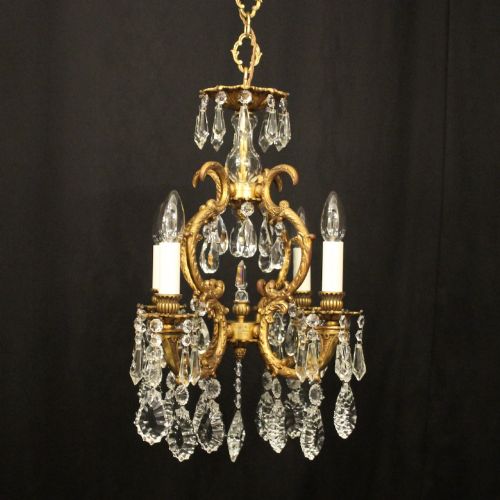
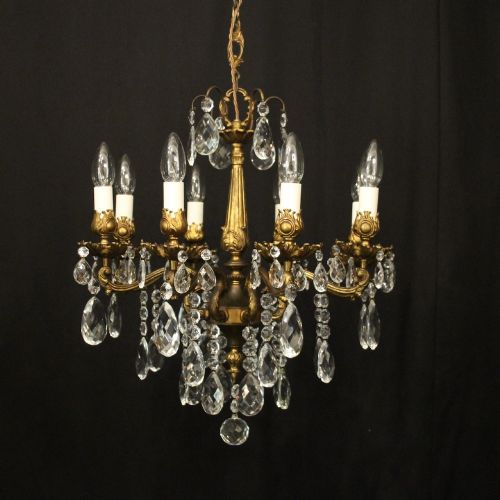
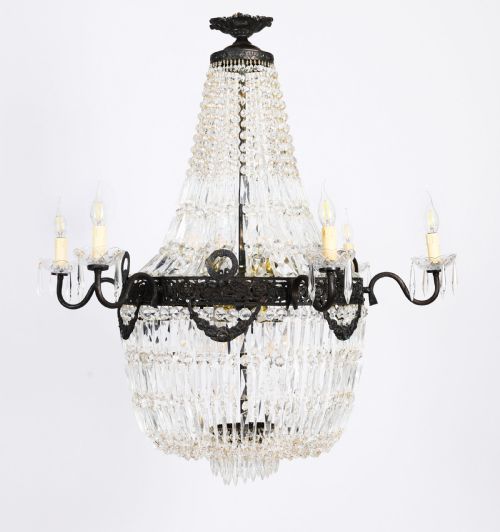
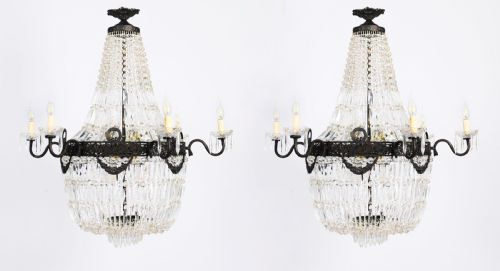
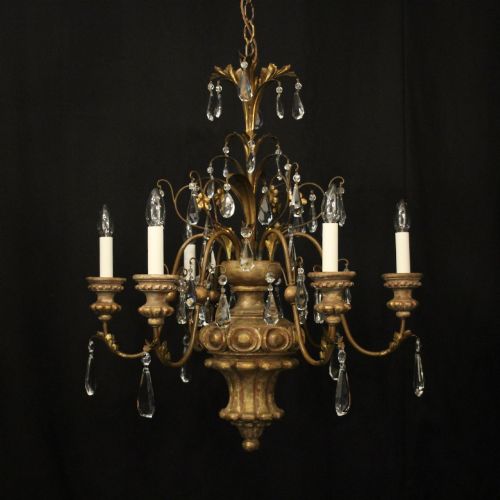
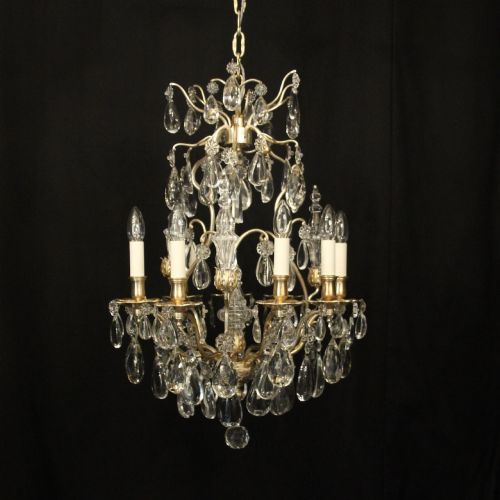
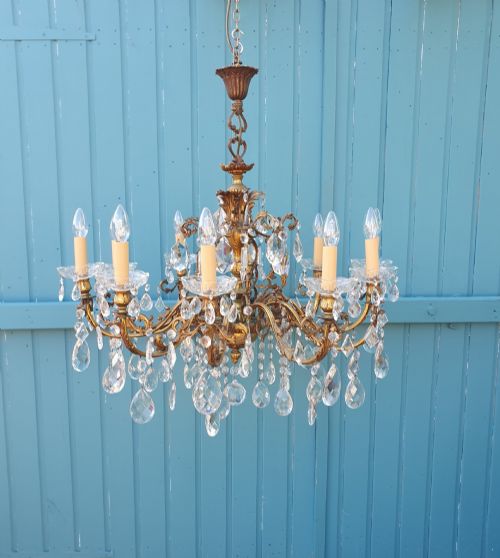
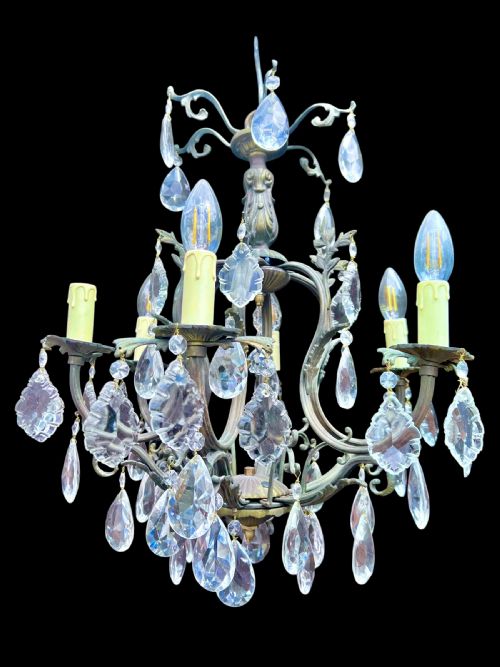
These bronze and crystal pendant pieces combine cast metal frameworks with hanging glass prisms to cast layered illumination across a room.
Bronze and Crystal Pendant
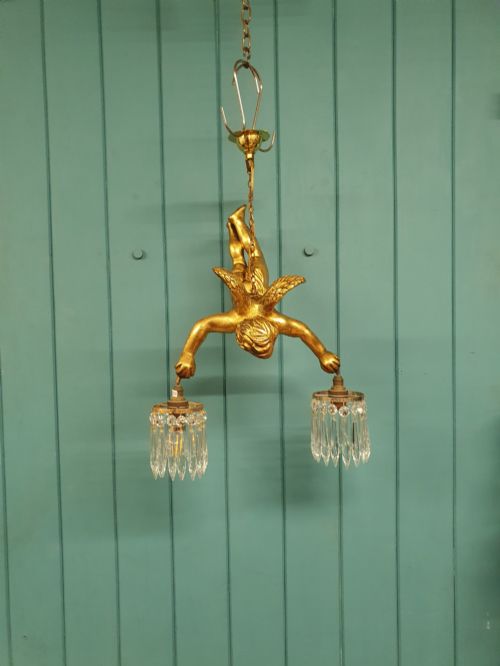
A bronze and crystal pendant typically takes the form of a chandelier, ceiling light, or wall sconce designed to suspend from above. You will most frequently encounter pieces originating from French workshops spanning the nineteenth century through the early decades of the twentieth century. These designs incorporate styles such as French Empire, Louis Revival, and Rococo, bringing ornate metalwork and glass components together.
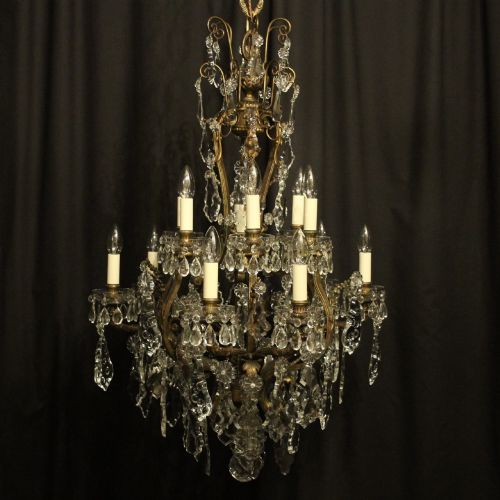
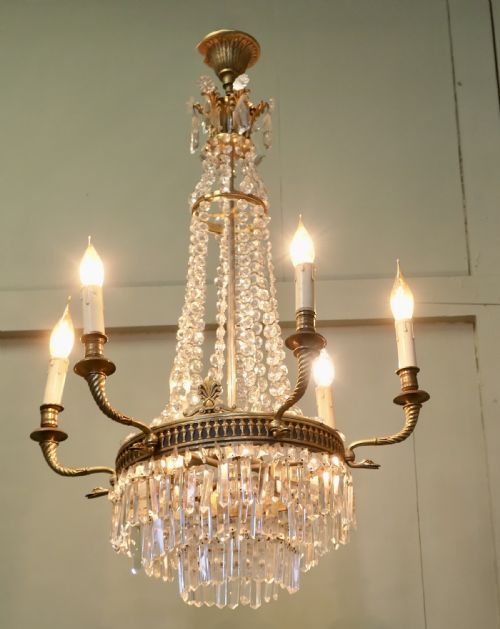
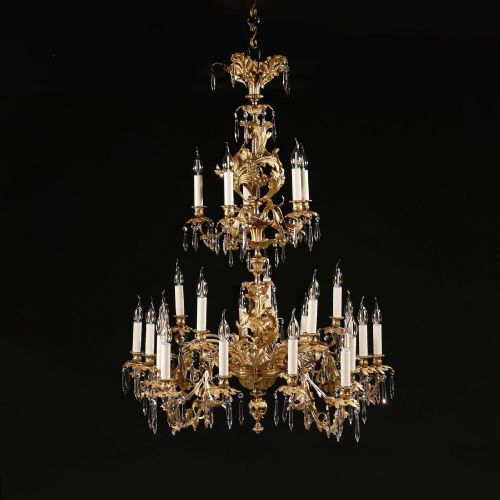
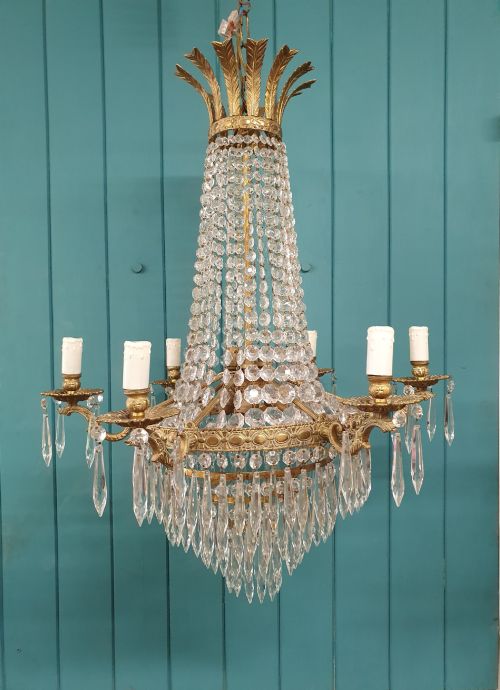
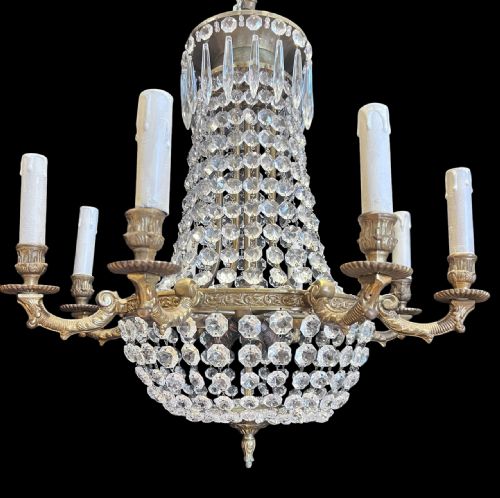
The configurations range from single-light basket fixtures to large multi-arm chandeliers holding twenty-five lights or more. Many examples employ tent and waterfall arrangements where strings of cut crystals cascade from a crown down to the main bronze or brass frame. Wall lights and smaller pendant options also appear, providing similar decorative qualities on a reduced scale.
Dating these fixtures relies on observing the combination of metal casting techniques and glass cutting styles. Pieces from the Victorian era and the 1800s often display heavier cast bronze and hand-cut glass drops, whilst items from 1910, 1920, and 1930 lean towards lighter gilt brass frames and machine-cut crystal prisms. French provincial and chateau aesthetics dominate the visual record.
Materials and construction methods
The structural framework relies on cast bronze, gilt bronze, brass, or iron to support the weight of the assembly. Artisans cast these metals into decorative arms, bands, and backplates, frequently applying a gilt or silvered surface finish to enhance reflection. Iron appears in specific rustic or branch-form variations.
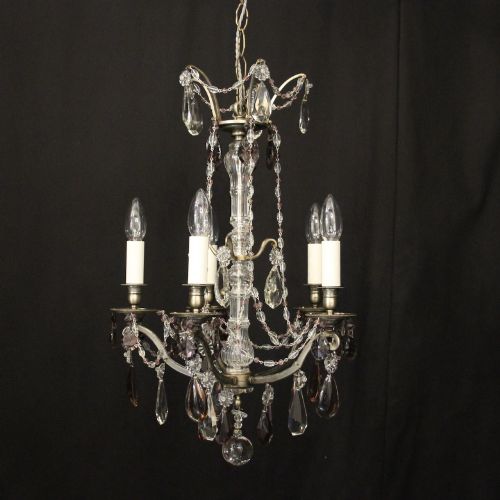
Hanging elements consist of cut crystal, cut glass, and amber or mauve glass fruits shaped as grapes, apples, and pears. Workers linked these glass components using small wire pins, draping them in tent formations or suspending them beneath the metal tiers to refract light from the internal candles or electric bulbs.
Certain chandeliers feature glass fruits including mauve grapes, apples, and pears dangling among the crystals.
Distinctions in craftsmanship and material grade
The definition in the metalwork separates standard production from superior output. Finely chased bronze and heavy gilt cast components display crisp leaf decoration and sculptural detail, whereas simpler brass frames rely on basic stamping and smoother surfaces.
The glass elements create another distinction based on clarity and cut. Higher grade pieces utilise heavy cut crystal with sharp facets that catch the light effectively, while simpler items incorporate moulded glass drops with softer edges and lesser refractive qualities.
The Bronze and Crystal Pendant Glossary
- Gilt bronze
- Bronze that has been coated with a thin layer of gold or a gold-coloured alloy. This finish provides a bright, reflective surface that does not tarnish easily.
- Tent chandelier
- A lighting fixture featuring an upper crown from which strings of crystals drape outward to form a tent shape. This configuration directs the eye along the tiered glass drops.
- Waterfall chandelier
- A design where crystal strands cascade downwards from the main frame in a flowing arrangement. It creates a dense curtain of glass around the lights.
- Spelter
- A zinc alloy used as a substitute for bronze in casting decorative figures and mounts. It takes gilding well but is lighter and softer than bronze.
Bronze and Crystal Pendant: Frequently Asked Questions
How do I hang a heavy bronze chandelier safely?
Suspension requires locating a structural ceiling joist or installing a heavy-duty ceiling brace capable of supporting the combined weight of the metal frame and crystal drops.
Professional electrical installation is recommended to secure the fixture's weight-bearing canopy and connect the internal wiring safely.
What is the difference between cut glass and crystal?
Crystal contains lead oxide which increases its weight, clarity, and refractive index, allowing it to scatter light into prismatic colours more effectively than standard glass.
Cut glass lacks this lead content, resulting in a slightly lighter weight and softer facet edges when shaped by the cutter.
How should I clean the crystal pendants?
Cleaning involves wiping individual crystal drops with a solution of warm water and mild dish soap while they remain attached, or removing them entirely for a thorough soak.
Drying each piece with a lint-free cloth prevents water spots and restores maximum sparkle to the faceted surfaces.
Are these lights converted for electricity?
Many surviving fixtures have been adapted from original candle power to hold electric lamp holders during the twentieth century.
Checking the internal wiring ensures the electrical components meet current safety standards while preserving the exterior metal and glass structure.