





Brocot Clock
These brocot clock pieces are precision timepieces defined by visible escapements and heavy cases of brass, slate, or ormolu, which collectors buy for their complex French engineering.
Brocot Clock
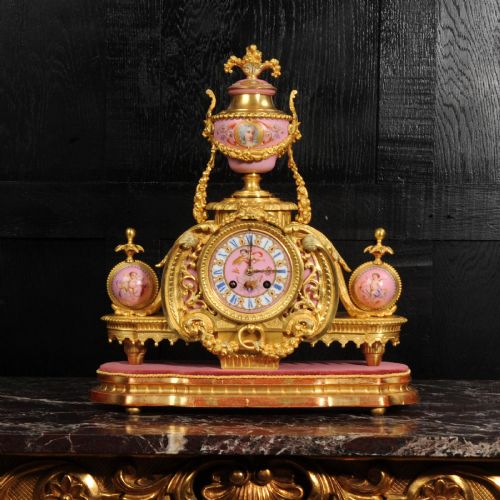
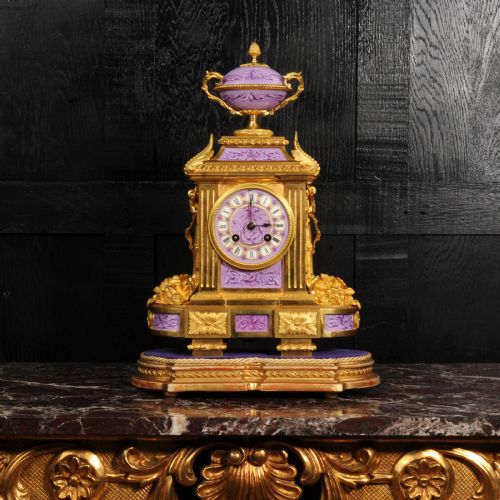
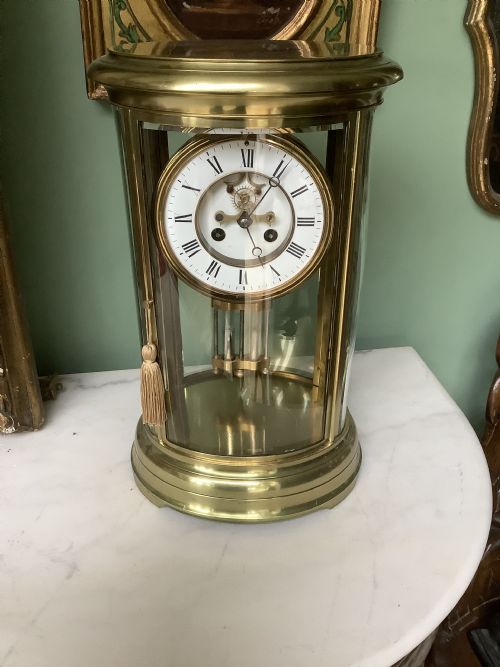
The most common examples you will encounter are four glass clocks and architectural marble pieces, often paired with porcelain dials or enamel chapter rings. These mantel clocks range from compact domestic timepieces to larger striking models featuring specialised escapements.
French makers of the nineteenth century dominated this output, producing both standard striking movements and complex examples with perpetual calendars or ships wheel pendulums. The casing materials shift from polished slate to gilt bronze and ormolu, reflecting the varied aesthetic demands of the period.
Materials and construction
Cases rely on heavy structural materials including slate, marble, brass, and gilt bronze, often assembled with glazed glass panels to permit all round visibility of the mechanism. Ormolu and porcelain plaques provide decorative contrast to the metallic frames.
Dial construction typically involves white enamel with painted numerals, fitted behind protective glass bezels, while the internal gear trains utilise brass wheels and steel pinions driven by coiled springs or hanging weights.
Brocot Clock Retail Price Guide 2026
Typical asking prices for brocot clock among the pieces listed under this phrase on Sellingantiques today, from the lower quarter to the upper quarter. They describe what is for sale here now, not the wider market.
Period examples span the nineteenth century, including Victorian designs, French second empire pieces, and third republic output.
Quality variations in brocot clock pieces
Quality separates through the complexity of the internal movement, where standard timepieces differ from examples featuring perpetual calendars, equation of time complications, or extended duration gear trains. The precision of the visible escapement and the crispness of the casting on the gilt bronze or ormolu mounts dictate the upper tier of production.
Materials dictate weight and presence, with solid slate, marble, and heavy architectural bronze cases holding higher status than simpler brass frames. The integration of painted Sèvres porcelain panels and undamaged enamel dials preserves the original decorative intent of the maker.
Achille Brocot·Achille Brocot and Delettrez·Brocot
The Brocot Clock Glossary
- Brocot escapement
- A visible pin-pallet escapement invented by Louis Achille Brocot that allows precise regulation of the pendulum directly from the dial. This mechanism distinguishes many nineteenth century French timepieces.
- Four glass clock
- A mantel clock enclosed by four bevelled glass panels in a brass or gilt bronze frame, exposing the entire movement and mercury or spring suspended pendulum to view.
- Ormolu
- Gilded bronze cast and chased to achieve a bright gold finish, frequently utilised for decorative mounts on nineteenth century French clock cases.
- Slate
- A fine-grained metamorphic rock cut and polished to form heavy, dark architectural clock cases popular during the Victorian period.
- Perpetual calendar
- A mechanical complication that automatically adjusts for the varying lengths of months and leap years, found in advanced nineteenth century movements.
Brocot Clock: Frequently Asked Questions
How do I wind a brocot clock?
Wind the movement using the matching key inserted into the winding squares on the dial face, turning gently until resistance stops the spring.
Take care not to overwind the mainspring, as this can damage the internal gearing and compromise the timekeeping accuracy of the mechanism.
What is a four glass clock?
A four glass clock is a mantel clock encased in a brass or gilt bronze frame fitted with bevelled glass panels on the front, back, and sides.
This design allows unobstructed views of the mechanical movement and the swinging pendulum from multiple angles within a room.
How do I set the time on a brocot clock?
Move the minute hand carefully in a clockwise direction around the enamel dial until it reaches the correct time.
Avoid moving the hands anticlockwise past the striking points to prevent jamming the internal rack and snail striking mechanism.
Where should I place a heavy slate clock?
Position the clock on a sturdy, level mantelpiece or furniture surface that can safely support considerable weight without sagging.
Ensure the surface is completely flat so the pendulum hangs plumb and the clock beats in an even rhythm.