

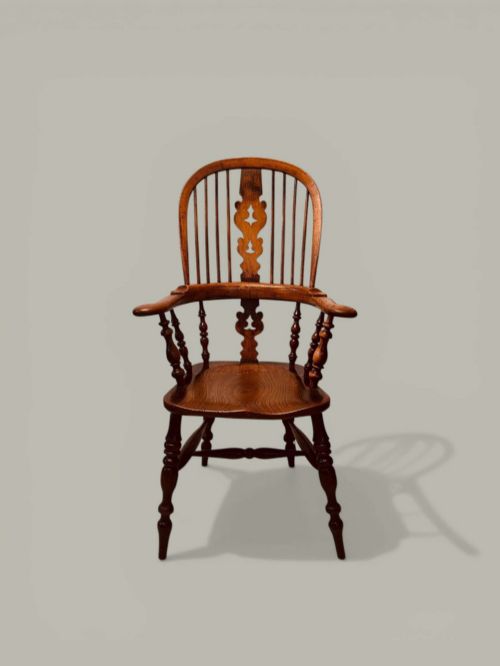
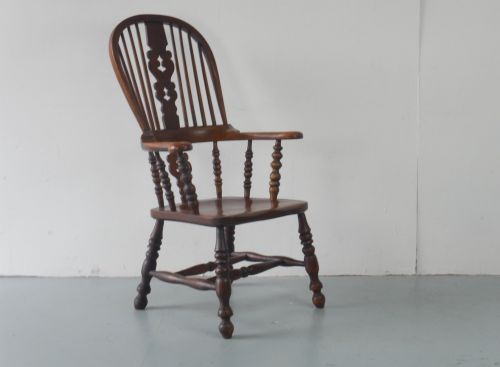
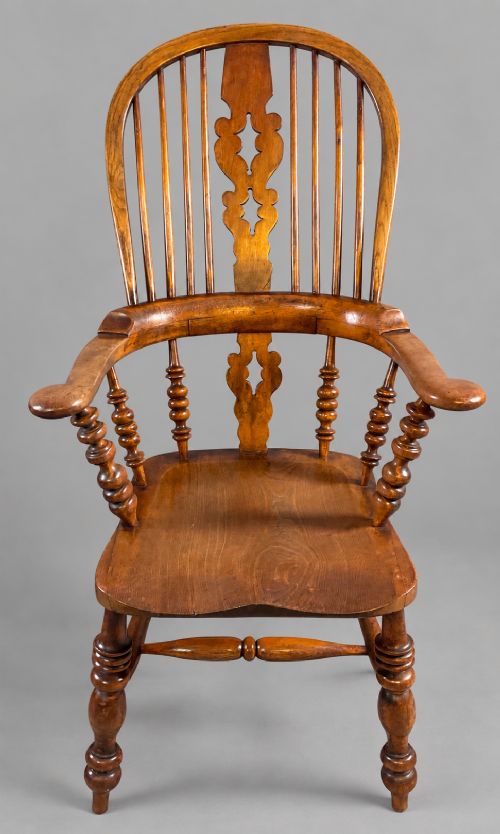


Broad Arm Wooden Seat
A broad arm wooden seat offers an enduring anchor for the room, built for comfort with its generous resting ledge.
Broad Arm Wooden Seat
A broad arm wooden seat takes the form of a Windsor armchair, originating in English country vernacular traditions. The most common version met on this page is the nineteenth-century Windsor armchair, built during the Victorian period with a characteristic wide arm paddle.
Makers shaped these armchairs with high backs or low profiles, grounding them in domestic spaces as sturdy seating. Elm, yew, ash, and beech form the structural backbone of these vernacular pieces, often combining timbers within a single frame.
How They Were Made
Craftsmen turned native hardwoods on lathes to form the spindles and legs, locking them into solid plank seats through traditional boring and wedging techniques. Elm provided a stable, splitting-resistant timber for the saddle-shaped seats, while yew and ash lent themselves to steam-bent bows and slender structural spindles.
Constructors balanced rigid frames with resilient timbers like beech and oak, securing the arm supports directly into the heavy wooden seats. These construction methods distributed weight evenly across the timber components without requiring modern adhesives.
Broad Arm Wooden Seat Retail Price Guide 2026
Typical asking prices for broad arm wooden seat among the pieces listed under this phrase on Sellingantiques today, from the lower quarter to the upper quarter. They describe what is for sale here now, not the wider market.
Listings feature nineteenth-century and Victorian pieces exclusively in elm, yew, ash, oak, and beech.
What Varies in Quality
The sophistication of the timber figure and the harmony of mixed woods dictate the standing of a broad arm wooden seat. Yew wood examples with intense grain patterns and rich natural patination sit above simpler utilitarian ash and elm variants.
Proportion and the sweep of the bentwood arm dictate the visual weight of the armchair. Finely turned spindles and deeply sculpted seats separate standard workshop production from exceptional vernacular output.
The Broad Arm Wooden Seat Glossary
- Windsor armchair
- A wooden seat constructed with a solid plank saddle and spindles socketed directly into the base rather than a traditional framed upholstery skeleton. These chairs evolved through regional English country styles.
- Broad arm
- An extended flat paddle fitted to the side of a Windsor chair to provide a writing surface or resting space. This generous timber projection defines the vernacular subtype.
- Vernacular
- Objects designed by regional makers following local functional traditions rather than formal academic design rules. These pieces utilise available native timbers.
- Saddle seat
- A wooden plank scooped and carved into a concave profile to fit the human body. This shaping prevents sliding and adds comfort to a rigid seat.
Broad Arm Wooden Seat: Frequently Asked Questions
What is a broad arm wooden seat?
A broad arm wooden seat is a nineteenth-century Windsor armchair featuring an oversized flat armrest designed for writing or resting. These vernacular pieces originated in English country workshops.
Built from native timbers like yew, elm, and ash, they combine turned spindles with solid plank seats.
How do I care for a wooden Windsor chair?
Keep the timber away from direct heat sources and sudden temperature shifts to prevent the wood from drying out or splitting. Natural beeswax polish helps maintain the finish and feeds the historic grain.
Avoid heavy chemical cleaners that strip the patinated surface built up over generations.
How old is my Windsor armchair?
Most examples date from the nineteenth century and the Victorian period, identifiable by timber choice and turning style. Yew wood and ash combinations often point to regional English country production.
Tool marks underneath the seat and the wear patterns on the timber reveal clues about the age of manufacture.
Are these chairs comfortable to use daily?
The sculpted saddle seats and supportive spindle backs provide surprising ergonomic comfort for daily sitting. The wide armrest adds a practical resting place for arms or a book.
Their solid wooden construction makes them sturdy enough for regular use in a living space or study.