





British Wildlife Art
British wildlife art captures the natural world through oil paintings, watercolours and etchings spanning the Victorian era to the mid-twentieth century.
British Wildlife Art
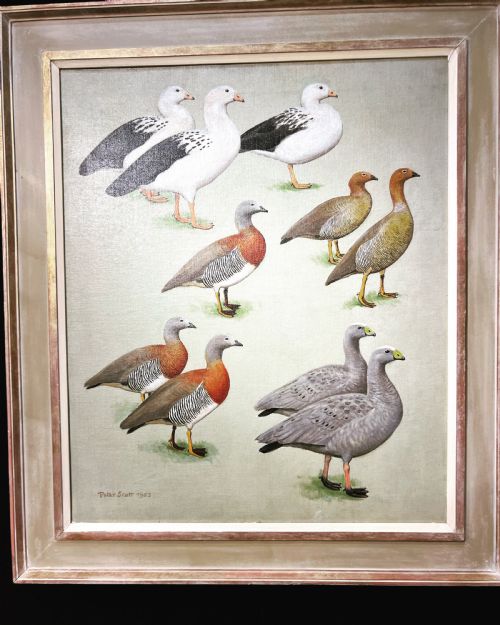
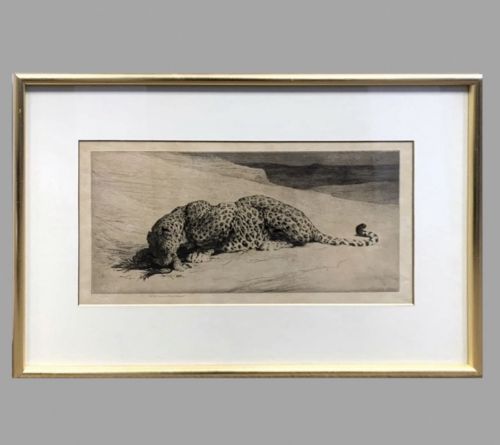
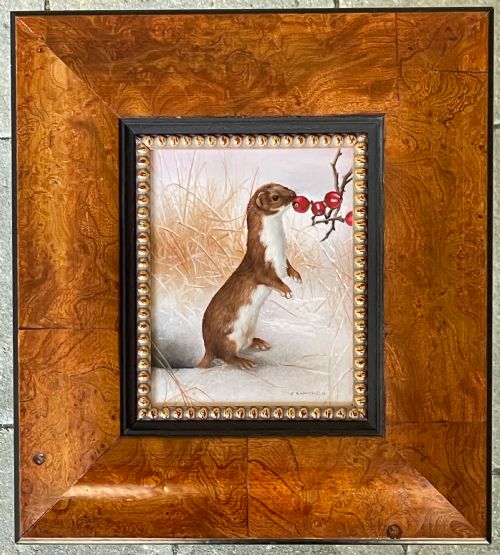
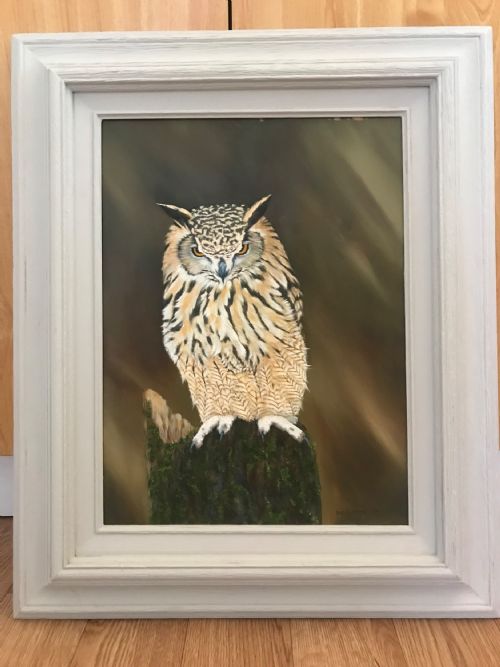
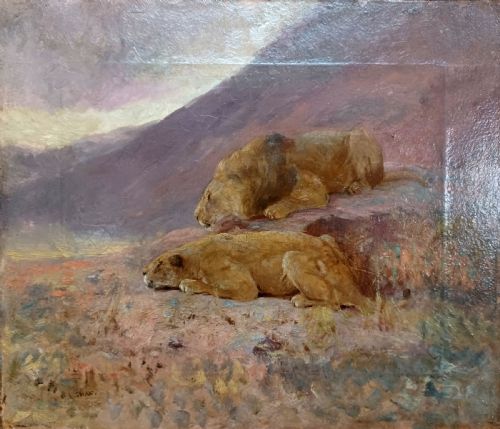
British wildlife art encompasses depictions of animals, birds and landscapes created by artists working within traditions such as British Naturalism, Victorian Animalier and Modern British styles. These pieces range from detailed studies of individual birds to expansive scenes of deer and hunting subjects in natural habitats.
The works appearing here are most commonly oil paintings on canvas or panel, watercolours on paper, and signed etchings. Dating from the nineteenth century through to the 1960s, these creations reflect changing approaches to observing and recording native and exotic fauna over time.
Buyers encounter subjects varying from songbirds and waterfowl to large predatory cats and game animals. The forms include framed prints, pastel and gouache works, and substantial oil paintings suited to wall display.
Materials and Technique
The works rely upon traditional artist materials including oil paint applied to canvas and wood panels, watercolour and gouache on paper, and printed ink on paper for etchings. Frames often incorporate gilt wood and gold leaf to complement the imagery.
Techniques range from fine etching and signed artist proofs to fluid watercolour washes and textured oil applications. Artists utilised panel supports and canvas stretched over frames, often securing signatures within the composition or on the margin of prints.
British Wildlife Art Retail Price Guide 2026
Typical asking prices for british wildlife art among the pieces listed under this phrase on Sellingantiques today, from the lower quarter to the upper quarter. They describe what is for sale here now, not the wider market.
Listings span the nineteenth century to the 1960s, featuring oil, watercolour, etching and gouache on canvas, paper and wood.
Factors of Quality
Quality rests upon the execution of the subject, the handling of the chosen medium - whether oil, watercolour or etching - and the reputation of the artist. Works demonstrating precise anatomical observation and atmospheric depth stand apart.
The condition of the paper, canvas or panel, alongside the preservation of the original framing, influences the standing of a piece. Signed limited editions and distinct artist proofs carry greater significance within the broader scope of these works.
Sir Peter Markham Scott·Herbert Dicksee·Carl Whitfield·Joseph Knight·Dame Elisabeth Frink·Charles F. Tunnicliffe·George Armfield·Cuthbert Edmund Swan·Thomas Blinks·Arthur Wardle·John Macallan Swan·Godfrey Douglas Giles·Archibald Thorburn
The British Wildlife Art Glossary
- Etching
- A printmaking process where lines are incised into a metal plate with acid before being inked and pressed onto paper. This technique allows for fine, detailed line work visible in many animal studies.
- Gouache
- An opaque water-based paint that provides solid, flat areas of colour and greater coverage than traditional watercolour. It often appears combined with pastel or watercolour in landscape and wildlife compositions.
- Panel
- A rigid support used for oil paintings instead of canvas, typically made from wood. Artists favoured panels for smaller studies and detailed bird paintings.
- Artist Proof
- An impression of a print taken before the final edition is produced, typically retained by the artist or marked for approval. These impressions often hold particular interest for collectors.
- British Naturalism
- An artistic movement focused on the direct observation and realistic portrayal of the natural world. This approach informs the accurate rendering of animals and habitats in nineteenth and twentieth-century works.
British Wildlife Art: Frequently Asked Questions
What periods do these artworks cover?
The selection spans from the nineteenth century through the Victorian period, Edwardian era, and into the mid-twentieth century around the 1950s and 1960s.
This broad timeline demonstrates the evolution of natural history illustration and wildlife painting across different artistic movements.
How should I care for watercolour and gouache works?
Works on paper require protection from direct sunlight to prevent fading of watercolours, gouaches and inks over time. Keeping them in stable indoor environments helps preserve the paper support and framing.
Glazing with appropriate glass also shields the delicate pigments and paper surfaces from airborne pollutants.
What mediums are used in these pieces?
Artists employed oil paint on canvas and panel, watercolour and gouache on paper, and printed ink for etchings. Some works also incorporate pastel and gold leaf detailing.
These materials define the visual character of each piece, from the texture of oil paint to the fine lines of an etching.
Are the prints signed?
Several listed works include signed etchings, artist proofs and signed game prints by prominent artists of the period. Signatures typically appear directly on the print margins or within the lower sections of the composition.
Checking individual listings confirms the presence of signatures or limited edition markings.