
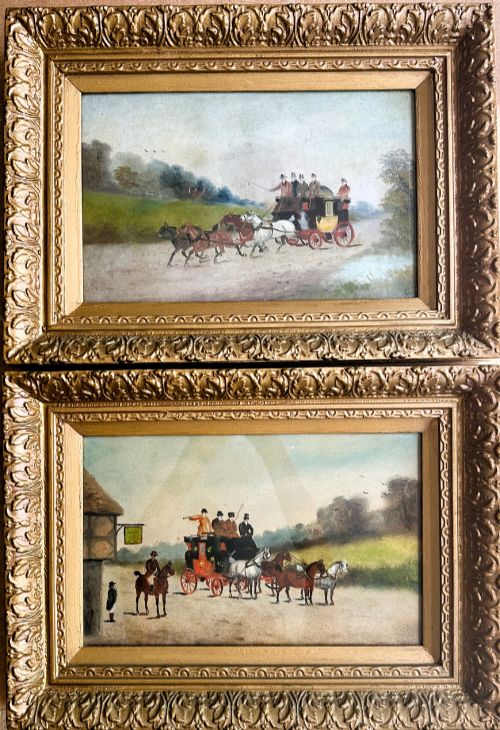


British Sporting Art Landscape
British sporting art landscape works capture horses, hounds and rural pursuits set within open fields and country views.
British Sporting Art Landscape
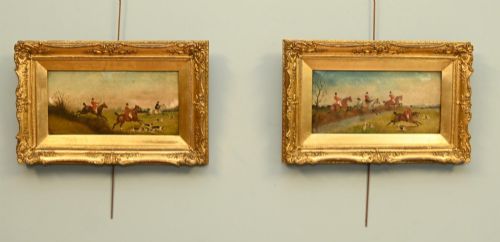
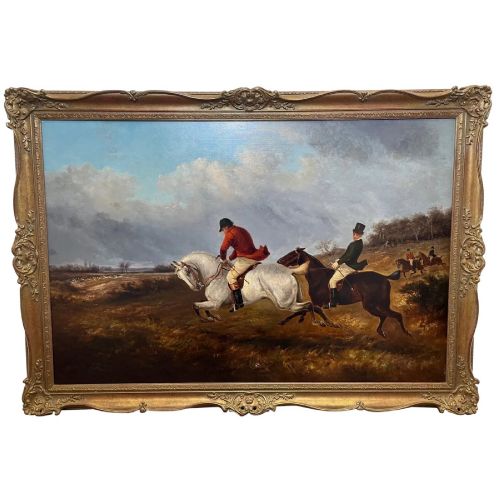
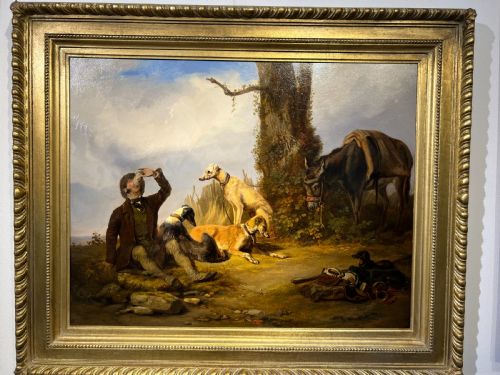
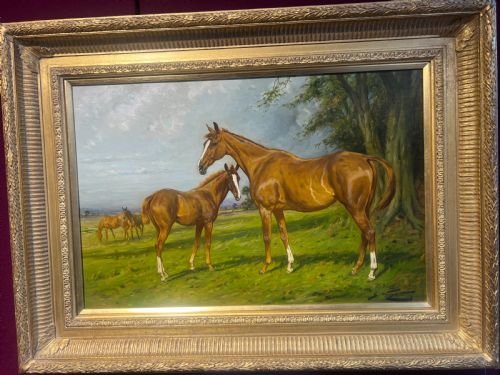
British sporting art landscape paintings bring together equestrian scenes, hunting packs and rural livestock against expansive country backdrops. These works span the nineteenth century through the Edwardian era up to the mid-twentieth century.
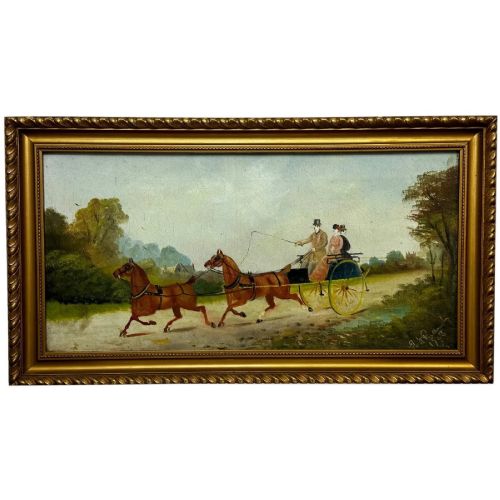
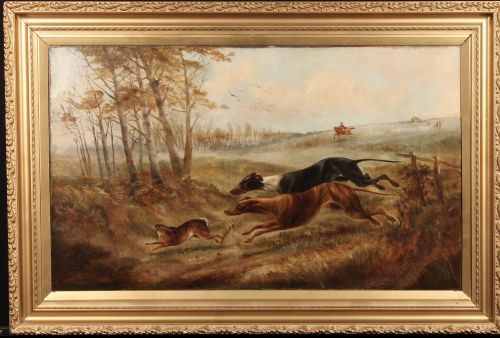
The compositions focus on horses, dogs and coaching scenes placed firmly within recognisable British fields, rivers and rural estates. Viewers frequently encounter depictions of fox hunting, coaching inns, farmyards and river valleys.
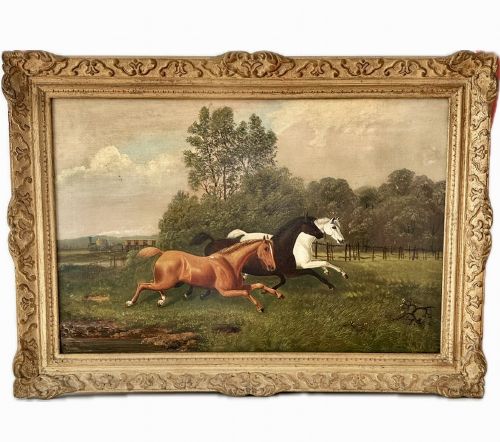
Makers in this field record the specifics of horses, hounds and rural workers with careful attention to anatomy and movement. The resulting pieces serve as historical records of country sports and rural life across different British reigns and periods.
Materials and Techniques
Painters utilise oil paint applied to canvas or wood panels, alongside watercolours worked on paper. These grounds support layered pigments that build depth in foliage, skies and animal coats.
Many works retain their original giltwood or gold leaf frames, which complement the tones of the landscape and the subject matter. The physical construction relies on traditional stretched canvas and sturdy timber frames characteristic of British framing traditions.
Several canvases record steam locomotives sharing the rural view with galloping horses.
Quality Variations
Superior works demonstrate a precise understanding of equine and canine anatomy combined with fluid handling of atmospheric landscape backgrounds. Weaker examples often rely on stiff figures or repetitive background foliage lacking individual character.
The ability of the artist to integrate horses and hounds naturally into an expansive rural view dictates the overall success of the composition. Stronger pieces balance the narrative action of the hunt or coaching scene with the specific light and mood of the surrounding countryside.
Philip H Rideout·Edmund Bristow·George Armfield·Thomas Smythe·Sir Edwin Henry Landseer·George Wright·Edward Priestley·John Emms·John Ferneley Senior·Arthur Wardle·John Sanderson Wells·William Barraud·Michael Lyne·John Atkinson·Thomas Ivester Lloyd·John Frederick Herring·Molly Maurice Latham·W E Barrington Browne·William Albert Clark·Sonia Mervyn·Godfrey Douglas Giles·Wilfred Bailey·Charles Ashmore·James Pollard
The British Sporting Art Landscape Glossary
- Oil on Canvas
- Pigment mixed with drying oil applied to a woven fabric support. This combination allows for rich blending of colours and lasting durability.
- Giltwood
- Timber carved and coated with gold leaf or metallic powder. It provides a bright decorative border that frames the painted landscape.
- Watercolour
- Pigment suspended in a water-soluble vehicle applied to paper. This medium creates translucent washes and swift preparatory sketches.
- Equestrian
- Pertaining to horses and horse riding. These subjects form a central pillar of traditional sporting compositions.
- Coaching Scene
- A depiction of horse-drawn mail coaches or carriages travelling through rural landscapes. These works record early transport networks and winter travel.
British Sporting Art Landscape: Frequently Asked Questions
What subjects appear in these paintings?
These works display horses, hounds, coaching parties and rural workers integrated into British country views. Common themes include fox hunting, coaching inns, river landscapes and farmyard scenes.
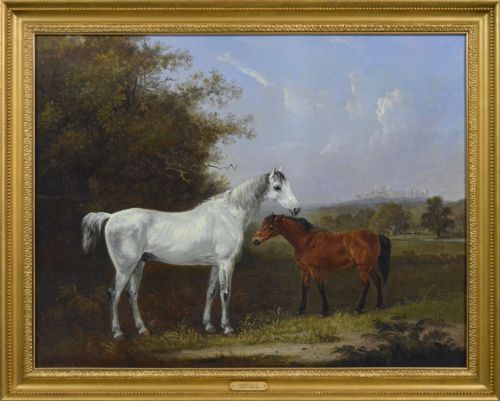
Animals appear both as working livestock and as cherished hunting dogs or mounts. The background landscapes provide local context ranging from Windsor Castle to Welsh valleys.
How do I date a sporting landscape?
Dating relies on clothing styles of figures, carriage designs, and the documented working periods of the artists. Nineteenth-century works often feature distinct tailcoats and top hats, while Edwardian pieces introduce early rail or motor elements alongside traditional coaches.
Frame styles and canvas stamps also offer clues to the decade of creation. Comparing the subject matter to known historical events helps narrow the timeframe further.
Where should I hang these artworks?
These paintings suit traditional studies, dining rooms or hallways where their rich earth tones complement wooden furniture. Direct sunlight should be avoided to protect the oil pigments and watercolours from fading over time.
Maintaining stable room humidity prevents the canvas from slackening or the wooden panels from warping. Proper picture lighting enhances the depth of the landscape and the detail of the animals.
Are watercolours as durable as oils?
Watercolours on paper require protective glass and acid-free mounts to guard against moisture and light damage. When framed correctly, they survive for centuries in stable indoor environments.
Oil paintings on canvas offer greater physical resilience against atmospheric changes but still benefit from occasional professional cleaning. Both mediums preserve the distinct touch of the artist.