



British Silver Dish
A British silver dish brings tangible craftsmanship to a room, ranging from Edwardian enamel work to mid-century modern design.
British Silver Dish
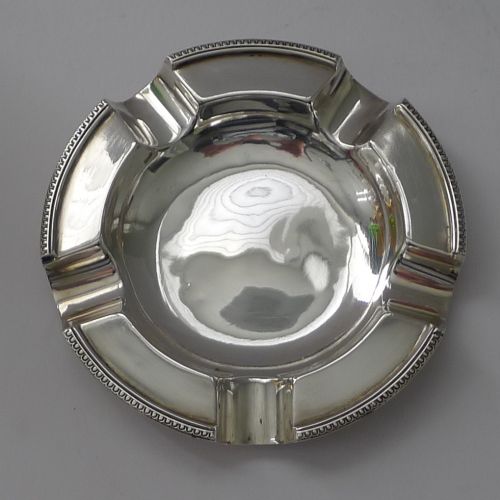
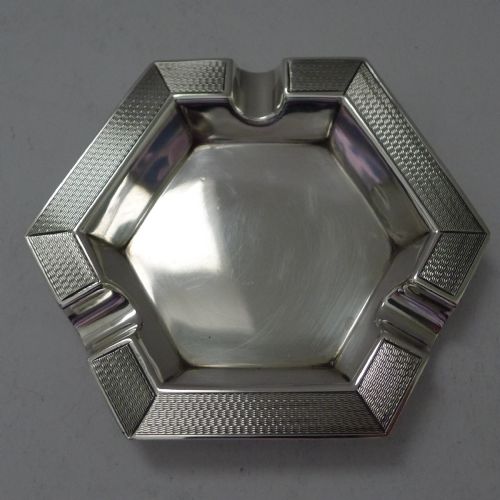
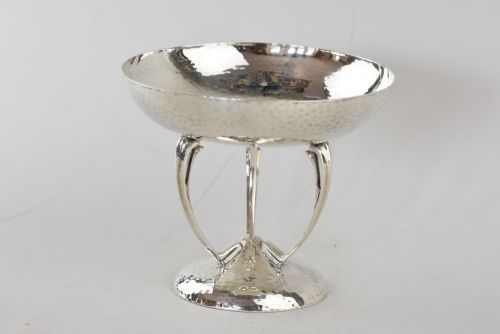
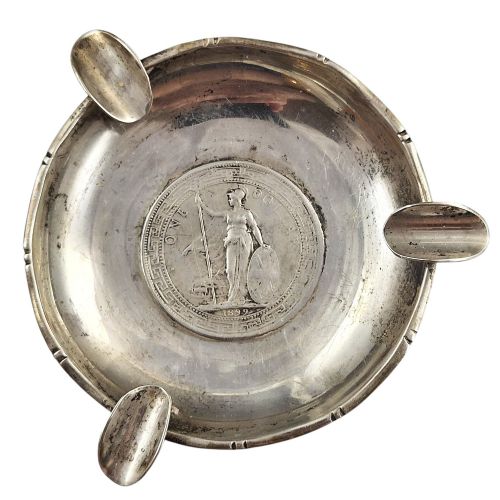
The pieces listed reflect diverse historical contexts, including Arts and Crafts tazzas, Chinese Export ashtrays, and George V dessert dishes fitted with glass liners. Solid silver and sterling silver dominate the physical evidence, occasionally accented with vitreous enamel, gilt, or integrated coins.
Materials and construction
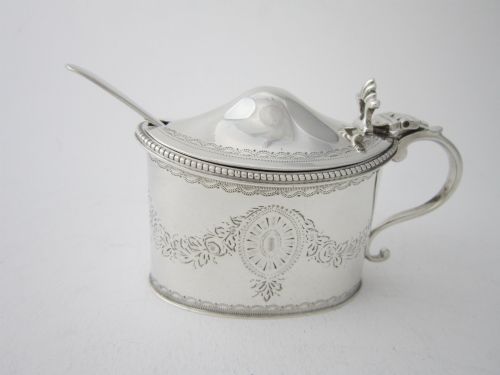
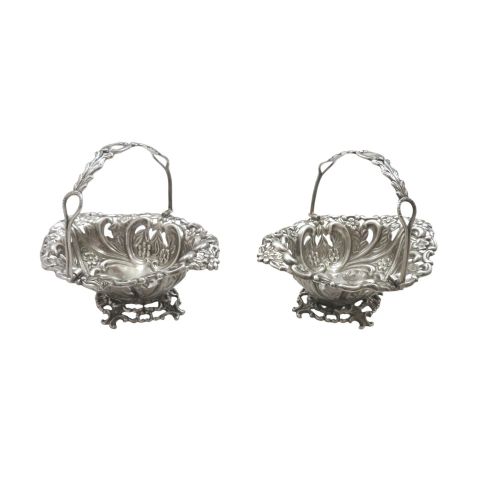
The construction of a british silver dish relies fundamentally on solid or sterling silver, shaped through traditional silversmithing techniques such as hand-hammering and casting. Workshops employed skilled artisans who utilised structural elements like three-legged supports, pierced galleries, and integrated swing handles.
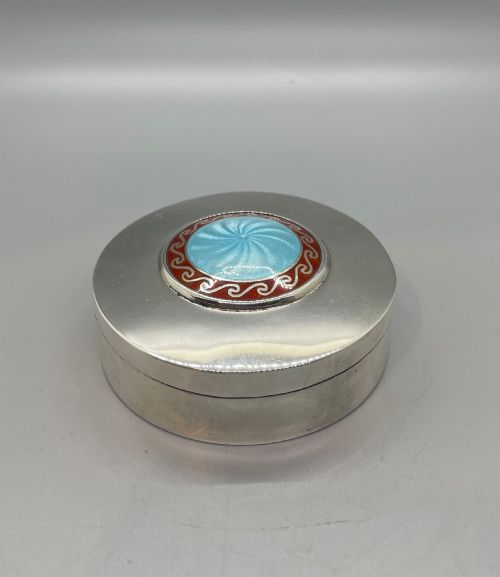
Surface decoration frequently involves specialist techniques including guilloche enamel applied over engine-turned bases, alongside crisp full hallmarks struck directly into the metal. Where glass liners or imported trade dollars are present, makers integrated disparate materials with secure bezels and fitted mounts.
British Silver Dish Retail Price Guide 2026
Typical asking prices for british silver dish among the pieces listed under this phrase on Sellingantiques today, from the lower quarter to the upper quarter. They describe what is for sale here now, not the wider market.
Materials in this selection include sterling silver, solid silver, vitreous enamel, gilt, and glass across Victorian and mid-century designs.
Evaluating quality and execution
Quality in a british silver dish rests upon the crispness of the maker's hand and the depth of the metalwork, distinguishing standard production items from ambitious studio pieces. Heavier gauge silver provides a substantial weight and structural integrity that resists distortion over time.
The refinement of secondary materials, such as the translucent smoothness of guilloche enamel or the precise fitting of removable glass liners, elevates the overall standard. Legibility of full hallmarks and the fidelity of decorative motifs further separate accomplished commissions from routine manufacturing.
Emile Viner·William Neale·Goldsmiths and Silversmiths Company·Lee Yee Hing·Viners·Theo Fennell
The British Silver Dish Glossary
- Sterling silver
- An alloy comprising ninety-two point five percent silver by mass, with the remainder typically copper, standard for British hallmarked plate.
- Guilloche enamel
- A decorative technique where intricate geometric patterns are engraved beneath translucent enamel layers.
- Tazza
- An elevated tabletop vessel or shallow bowl supported by a single central foot or column.
- Full hallmarks
- A complete stamped guarantee comprising the maker's mark, standard mark, town mark, and date letter.
British Silver Dish: Frequently Asked Questions
What periods do these dishes come from?
The available pieces span from the late Victorian era through the Edwardian period and the 1930s into the mid-twentieth century.
Each era contributes distinct stylistic markers, moving from ornate nineteenth-century baskets to streamlined Arts and Crafts and modernist forms.
How do I identify the maker?
Makers stamp their pieces with specific punch marks, often accompanied by town symbols and date letters required by British assay offices.
Consulting the full hallmarks stamped directly into the sterling silver reveals the exact workshop and year of production.
Were these dishes meant for food?
Many forms served specific culinary or domestic functions, such as sugar baskets with glass liners or dessert dishes meant for the dining table.
Other configurations, including card trays, ashtrays and trinket boxes, were designed for reception rooms and studies.
What materials are combined with the silver?
Selected pieces incorporate vitreous enamel, gilt highlights, cut glass liners, and occasionally historical currency like British Trade Dollars.
These contrasting materials enhance the visual texture and utility of the primary metalwork.