

British Rural Landscape Oil
When you search for a british rural landscape oil, you enter a pastoral tradition spanning the nineteenth and twentieth centuries that captures fields, rivers and quiet village life.
British Rural Landscape Oil
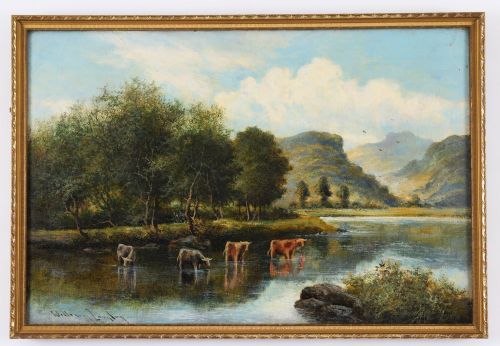
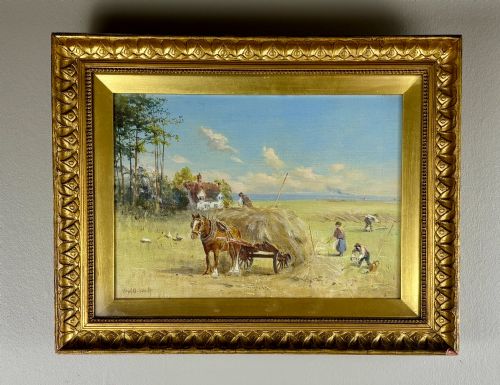
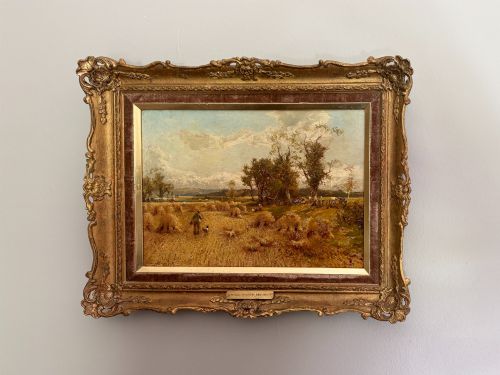
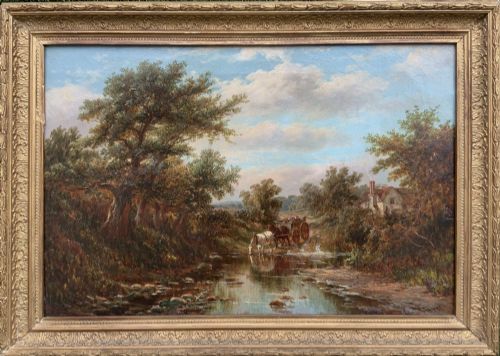
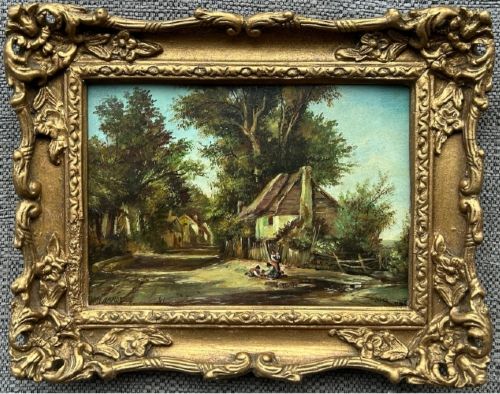
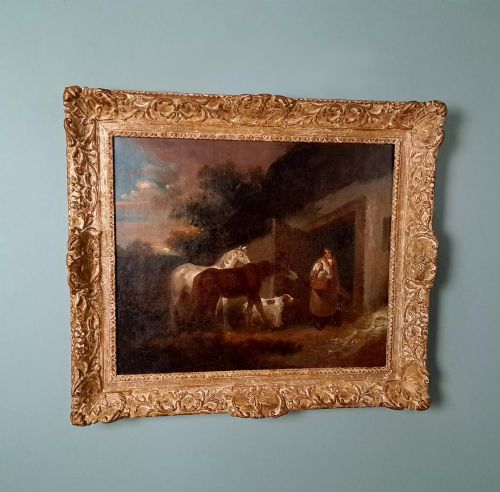
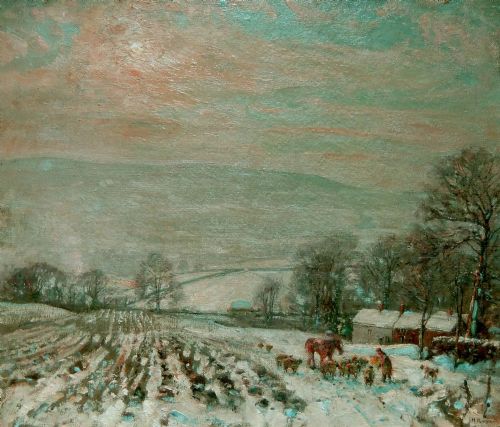
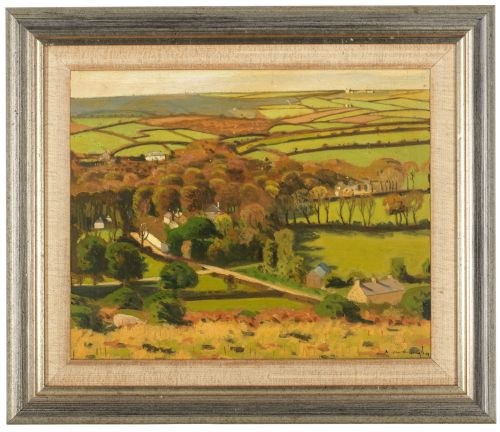
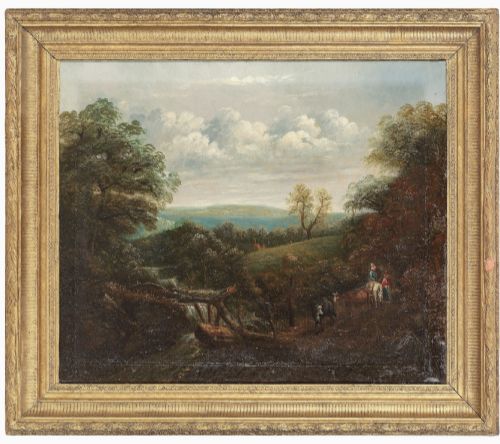
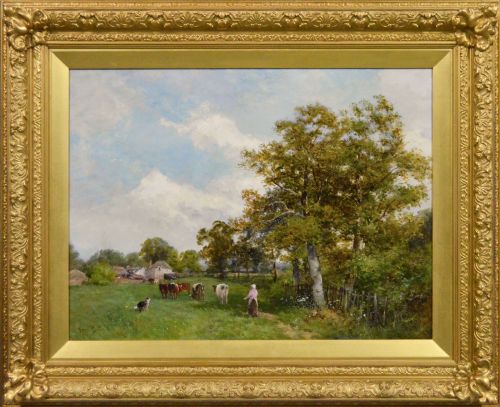
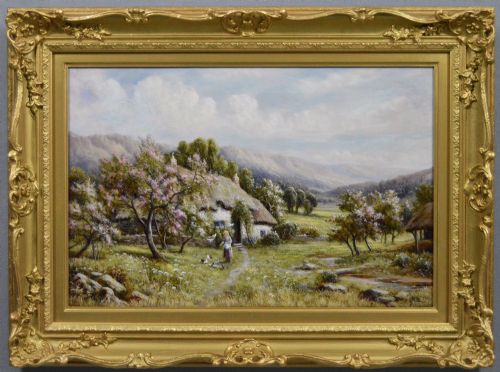
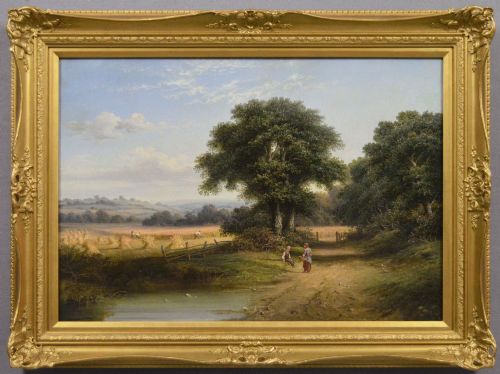
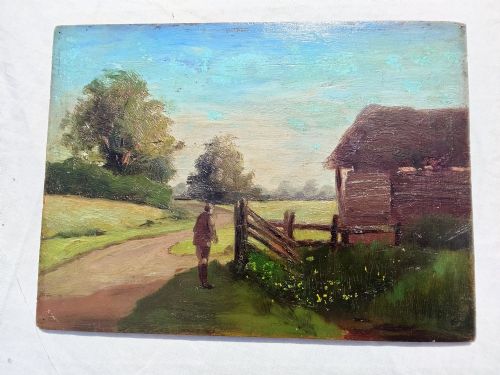
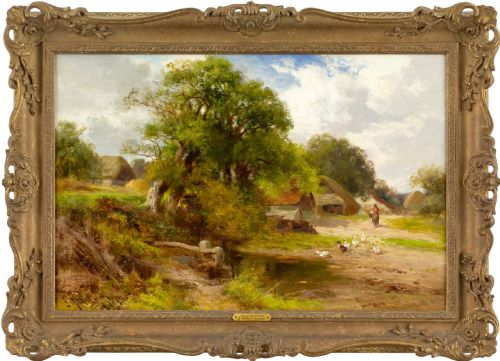
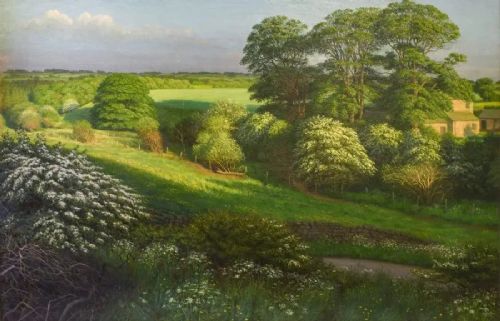
A british rural landscape oil depicts the countryside of Britain through the eyes of artists working from the Victorian era into the mid-twentieth century. The works on this page record harvest fields, riverbanks, farmyards, and thatched cottages set beneath open skies.
Most pieces date from the nineteenth century up through the nineteen-sixties, incorporating movements such as British Impressionism, the Norwich School, and Victorian Pastoral. These canvases and wooden panels capture specific regional views from Yorkshire, Cornwall, Kent, and Sussex, often featuring figures, sheep, cattle, or farm workers at daily tasks.
How they were made
Artists painted primarily with oil paint applied to stretched canvas or wooden board, occasionally utilising panels for smaller studies. Many works retain their original gilt wood framing, which complements the brushwork and tonal palette of the period.
Techniques range from the detailed realism of the Victorian era to the looser, lighter brushwork associated with British Impressionism and early twentieth-century plein air painting.
Several canvases feature stubborn farmyard geese and working ponies that clearly had zero intention of cooperating with the artist.
What varies in quality
Quality rests in the handling of light, atmospheric depth, and the confidence of the brushwork rather than the mere presence of a rural subject. Stronger compositions draw the eye naturally into the distance through careful tonal graduation and convincing rendering of skies and terrain.
Works by established regional painters or signed canvases carrying specific provenance often demonstrate a surer command of colour and narrative detail compared to anonymous pieces from the broader British School.
George Graham·William Howard Hardy·William Joseph Shayer Senior·Herbert Royle·Robert Morson Hughes·David Bates·Robert John Hammond·Walter Heath Williams·John Horace Hooper·Raymond Booth·Eric Brown·Ernest Higgins Rigg·Sydney Yates Johnson·William Greaves·Owen Bowen·Harry Freckleton·William Henry Mander·Reginald Grange Brundrit·Henry John Yeend King·William Sydney Cooper·Henry John Boddington·Frederick James Knowles·Frank Percy Wild·R Percy·FW Hinsley
The British Rural Landscape Oil Glossary
- Canvas
- The heavy woven fabric stretched across a wooden frame to form the primary surface for oil painting.
- Gilt wood
- Wood carved and covered with a thin layer of gold leaf, commonly used for period picture frames.
- Norwich School
- The first provincial art movement in Britain, focusing on local landscapes and rural scenes inspired by Dutch masters.
- British Impressionism
- A painting style emerging in the late nineteenth century that emphasised loose brushwork, light, and everyday rural subjects.
- Provenance
- The documented history of ownership that traces a painting from the artist's studio to the present collection.
British Rural Landscape Oil: Frequently Asked Questions
How do I date a landscape painting?
Dating relies on stylistic clues, clothing styles of any figures depicted, framing, and signature details where available. Canvas stamps and stretcher construction also offer reliable chronological markers.
Comparison with documented works by regional artists helps narrow the period of creation to a specific decade or art movement.
Were these painted outdoors?
Many nineteenth and twentieth-century artists worked plein air for initial sketches or smaller panel studies to capture direct natural light. Larger finished works were typically completed inside the studio using those field studies for reference.
The development of portable paint tubes in the nineteenth century greatly encouraged artists to work directly in the countryside.
What is the British School?
The term British School designates paintings created by British artists whose specific identities remain unknown or unrecorded. These works reflect the prevailing styles, techniques, and landscape traditions of their era.
Many high-quality regional landscapes carry only indistinct signatures or survive anonymously while still displaying the technical hallmarks of professional training.
How do I care for an oil painting?
Display oil paintings away from direct sunlight, high humidity, and rapid temperature fluctuations to protect both the canvas and the wooden support. Gentle dusting with a soft, dry brush keeps the surface clear without harming the paint.
Avoid using water or chemical cleaners on the paint surface or the gilt frame, leaving deeper conservation work to trained professionals.