



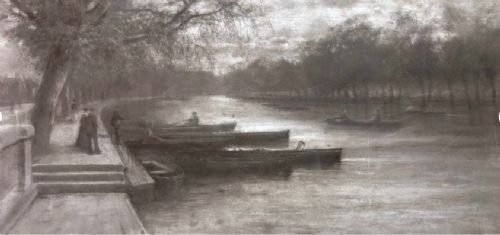
British River Landscape
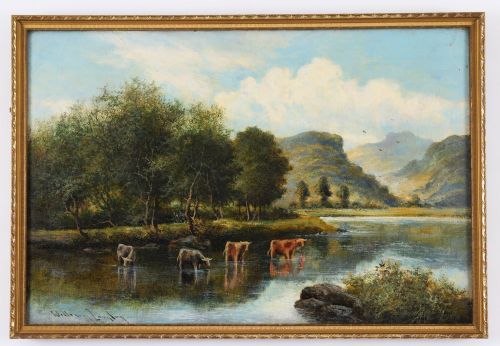
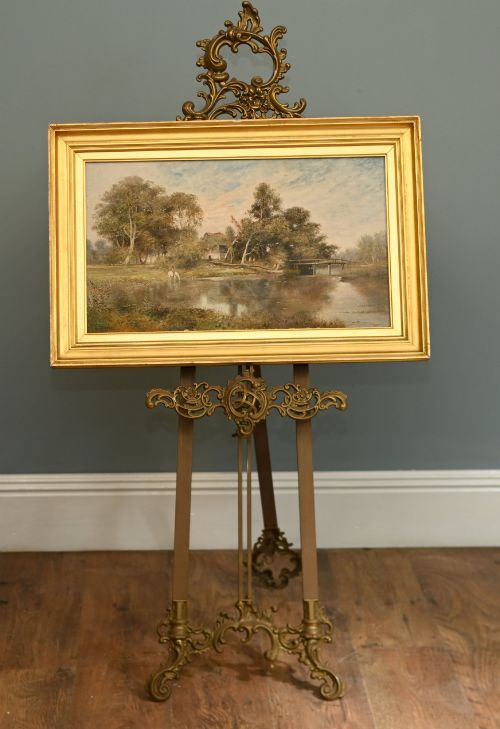
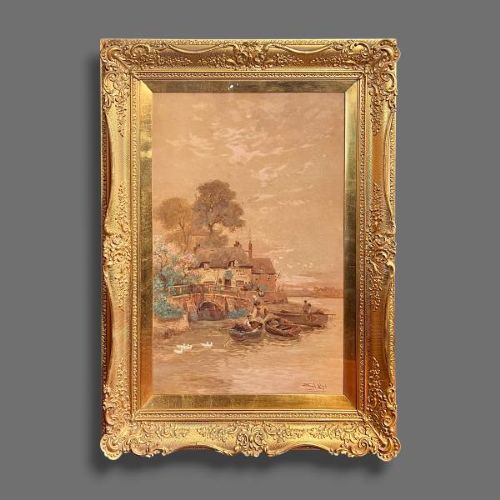
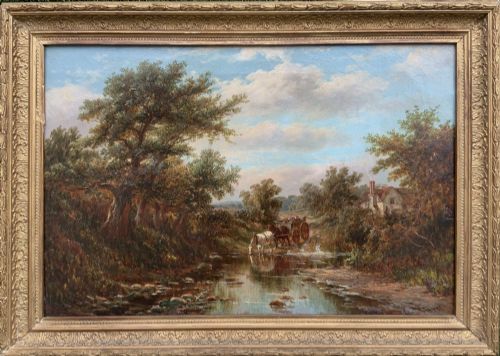
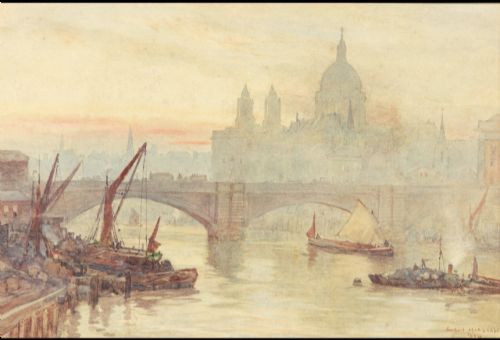
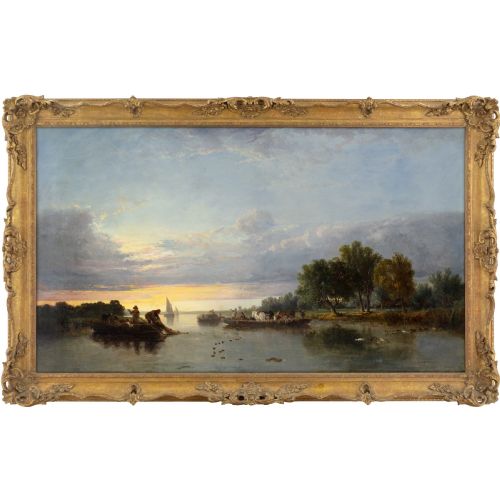
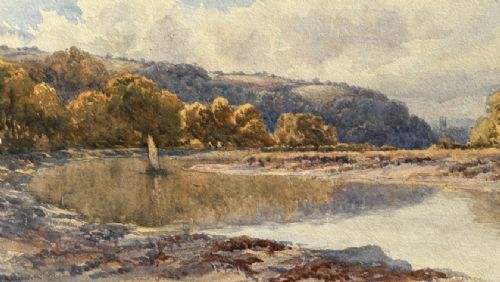
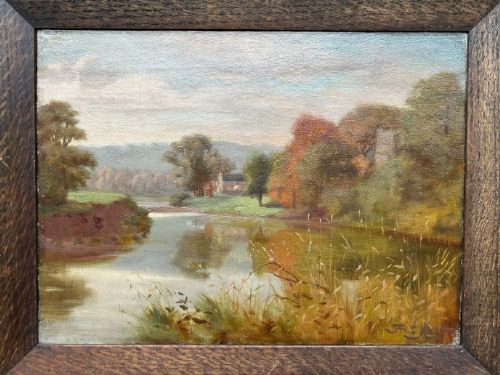
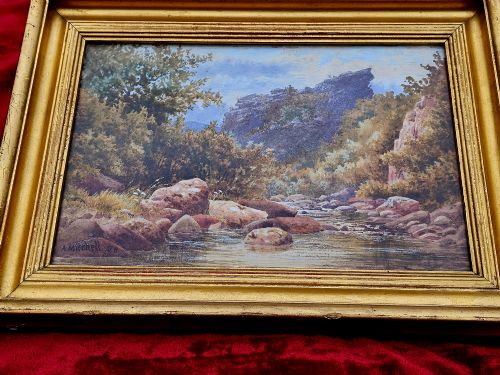
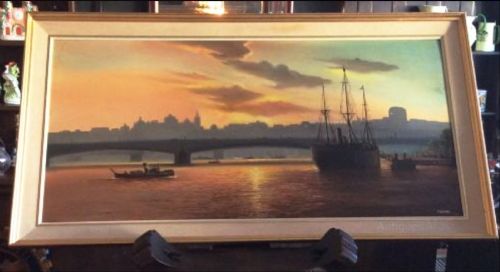
These pieces capture a british river landscape through oil and watercolour, bringing historic waterways, bridges and rural riverbanks directly into a room.
British River Landscape
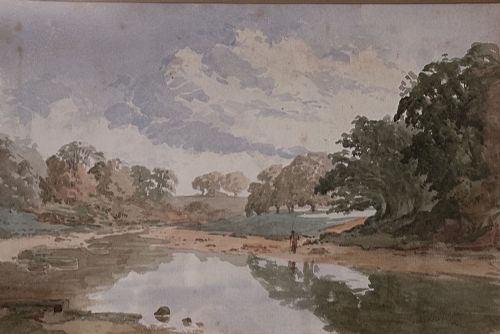
A british river landscape depicts natural waterways, urban stretches of the Thames, and rural riverbanks painted primarily during the nineteenth and early twentieth centuries. The works range from detailed Victorian watercolours to moody Edwardian tonalist oils, focusing on pastoral scenes, bridges, and maritime activity.
Most pieces encountered here originate from the nineteenth century, the Victorian era, and the Edwardian period, often executed by British artists working in oil on canvas, oil on board, or watercolour on paper. Subjects vary from quiet country streams to panoramic views of London bridges and industrial riversides.
Materials and construction
Artists painted these scenes using oil on canvas, oil on panel, and watercolour on paper, often supported by wooden stretchers and framed behind glass for works on paper. Charcoal drawings and etchings also appear, capturing preliminary detail and atmospheric depth.
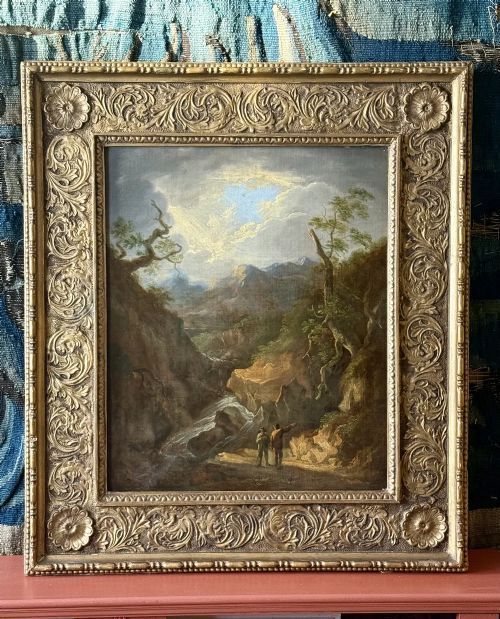
Framing frequently incorporates moulded wood and gesso to protect the painted surface, whilst the application of oil paint ranges from smooth, detailed brushwork to thick impasto, and watercolour utilises transparent washes to build light and movement.
Materials documented across the works include oil on canvas, watercolour, gesso, glass, and wood.
Factors determining quality
Quality rests upon the artist's ability to handle light, atmosphere, and perspective, distinguishing accomplished academic painters from competent regional amateurs. Stronger works demonstrate confident brushwork, balanced composition, and a convincing sense of place.
Condition also influences standing, particularly the stability of the canvas, the absence of excessive retouching, and the preservation of watercolour pigments against fading. Original frames and clear signatures further elevate individual pieces.
William Langley·Benjamin Barker of Bath·Stuart Lloyd·Herbert Menzies Marshall·Edward Williams
The British River Landscape Glossary
- Watercolour
- A painting method where fine pigment is suspended in a water-based, translucent solution applied to paper. It allows for delicate washes and luminous effects, commonly seen in nineteenth-century British landscape works.
- Oil on Canvas
- A traditional painting medium utilising pigments bound in drying oil applied to a stretched woven fabric. This combination provides rich colour depth and durability.
- Gesso
- A plaster-like mixture applied as a smooth base on wood panels or frames before painting or gilding. It creates a stable surface for detailed decorative work.
- Tonalism
- An artistic style that emerged in the late nineteenth century where artists painted landscapes with an overall dominant tone or shadow. It prioritises mood and atmospheric shadow over sharp line work.
British River Landscape: Frequently Asked Questions
How do I date a british river landscape?
Dating relies heavily on costume, architecture, and artistic style visible within the composition, alongside signatures and framing materials. Nineteenth-century works often feature distinct Victorian clothing or specific bridge designs that changed over time.
Examine the back of the canvas or paper for artist inscriptions, gallery labels, or stamps that offer direct clues to the period. Material analysis of the wood stretchers and paper types can also narrow down the creation date.
Where should I hang a watercolour painting?
Watercolour paintings require protection from direct sunlight to prevent the pigments from fading over time. Position them away from south-facing windows and high-moisture areas like kitchens.
Choose an interior wall with stable ambient light where the delicate washes can be viewed clearly without risk of environmental damage. Using UV-filtering glass during framing offers additional preservation.
How do I care for antique oil paintings?
Antique oil paintings benefit from a stable indoor environment with minimal fluctuations in temperature and humidity to prevent canvas warping and paint cracking. Dust them gently with a soft, dry brush without applying pressure.
Avoid using liquid cleaners or chemical solvents on the paint surface, as these can strip original glazes. Professional conservation is recommended if the canvas requires cleaning or structural repair.