


British Portrait Painter
A british portrait painter creates likenesses across canvas and paper, capturing sitters from the eighteenth century into the twentieth for collectors who value personal history.
British Portrait Painter
A british portrait painter records faces and figures across oil paintings, fine art, and portrait miniatures. The selection spans the eighteenth century, Regency period, nineteenth century, and early twentieth century.
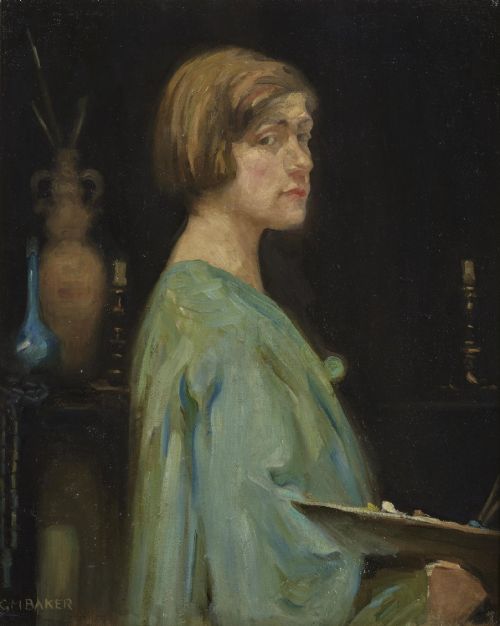
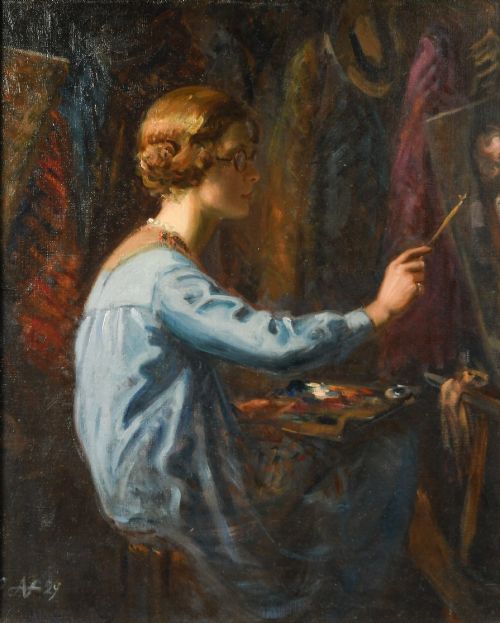
Buyers encounter works by named artists alongside pieces attributed to the twentieth century British school. Subjects range from naval officers and aristocrats to artists in studios and ladies in coral beads.
Materials and construction
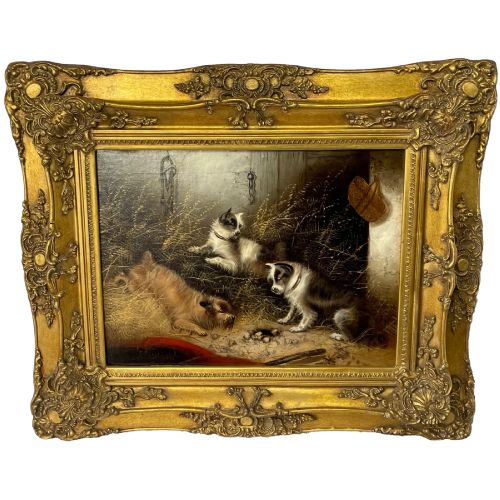
Works utilise oil on canvas or watercolour on paper, framed frequently in gilt wood or gilt metal under glass. Canvas provides the structural support for the larger oil paintings from the eighteenth and nineteenth centuries.
Watercolours and miniatures employ paper and delicate pigments, protected behind glass within ornate frames. Gilt framing complements the painted surfaces across both Regency and Victorian examples.
Listings feature oil paintings and watercolours spanning the eighteenth century to the nineteen-forties, utilising canvas, paper, and gilt wood frames.
Assessing quality
Quality rests in the precision of the brushwork and the psychological depth captured in the sitter's expression. Master works render fabric textures, lighting, and facial anatomy with convincing naturalism.
Lesser examples display stiffer linework and conventional composition lacking individual character. The reputation of the artist and the documentation of the sitter elevate the standing of the piece.
THOMAS BEACH·Henry Jacob Burch·Samuel John Milton Brown·Henry William Pickersgill·William Robinson·Geoffrey Robert Russell·William Woodhouse·William Dring RA·Henry Wyatt
The British Portrait Painter Glossary
- Oil on Canvas
- Pigment mixed with drying oil applied to stretched fabric. This medium dominated British portraiture for centuries due to its durability and depth of colour.
- Portrait Miniature
- A small-scale likeness painted with intricate detail. These portable works were often kept in private settings or worn as personal mementos.
- Watercolour
- Pigments suspended in a water-based solution applied to paper. It offers a luminous, transparent quality favoured for sketches and finished works alike.
- Gilt Wood
- Timber treated with gold leaf or gold paint. Frames finished in this manner were standard for displaying fine art portraits.
British Portrait Painter: Frequently Asked Questions
What periods do these portraits cover?
The listings span from the eighteenth century through the Regency era and the Victorian period into the nineteen-forties. Each era brings distinct clothing styles and painting techniques.
Earlier works reflect eighteenth-century formality, while twentieth-century pieces capture modern artistic environments.
How were these portraits displayed?
Historical portraits hung primarily in country houses, drawing rooms, and institutional galleries to display lineage and status. Smaller watercolours and miniatures found places in private chambers.
Frames in gilt wood or metal enhanced their presence on panelled or plastered walls.
How do I identify the sitter?
Sitter identification often relies on inscriptions on the reverse, historical records, or accompanying documentation. Some portraits depict notable historical figures, while others record private individuals.
Clothing, medals, and props within the composition frequently offer clues to the sitter's identity and profession.
What is the difference between an oil and a watercolour portrait?
Oil paintings utilise canvas supports and rich pigment layers that allow for deep shadows and blended tones. Watercolours employ paper and offer a lighter, more translucent finish.
Oils were typically grander commission pieces, whereas watercolours often served as studies or intimate likenesses.