

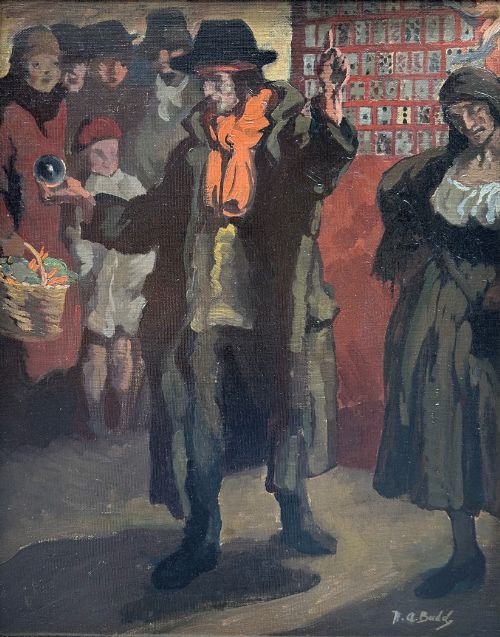
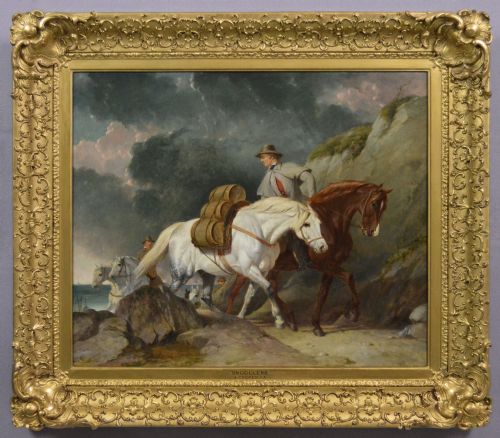
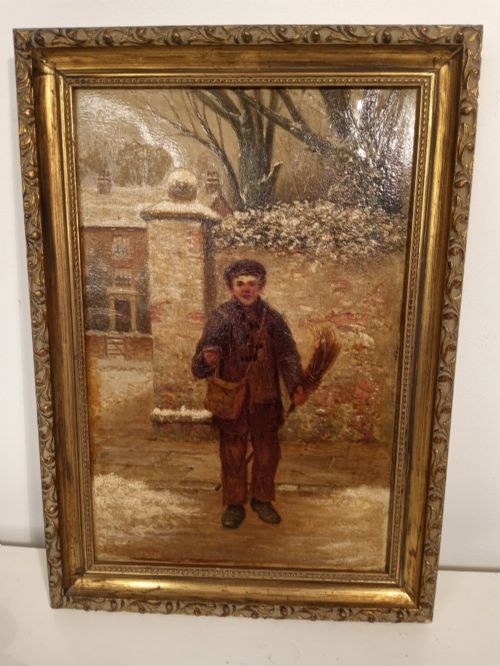
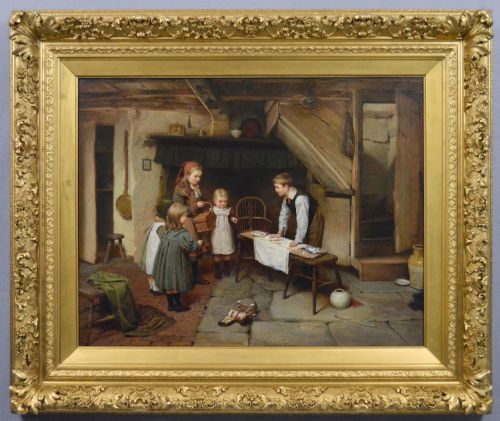



British Narrative Oil Painting
British narrative oil painting captures domestic dramas, historical episodes and rustic daily life across the nineteenth and early twentieth centuries.
British Narrative Oil Painting
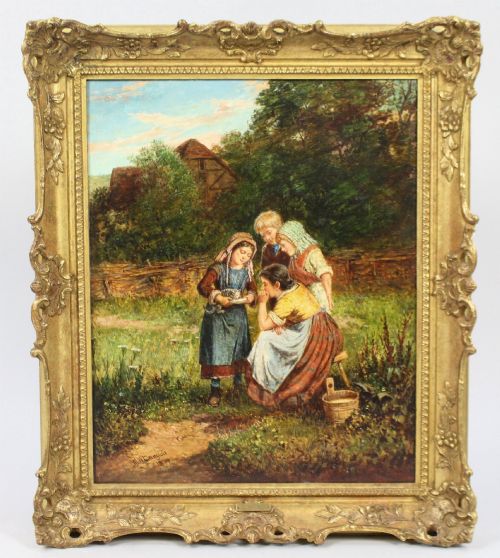
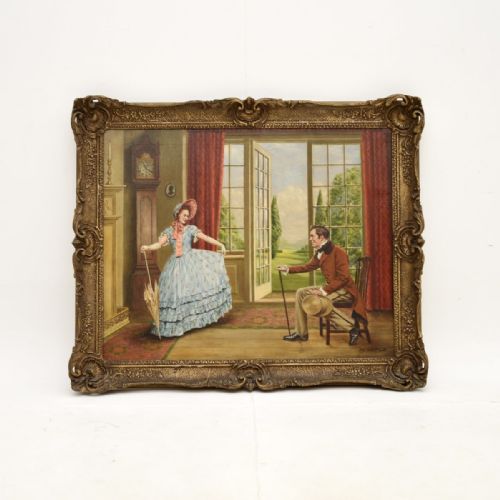
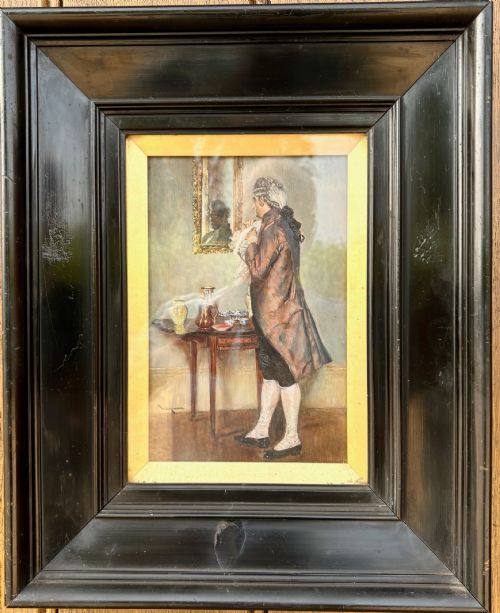
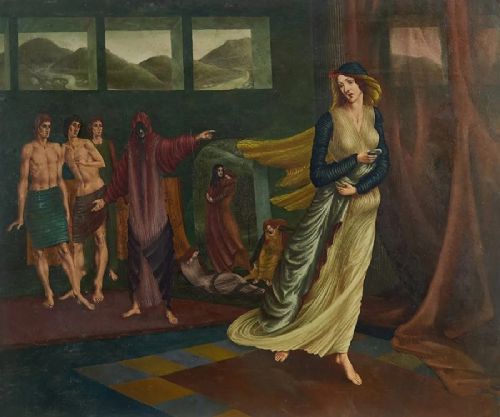
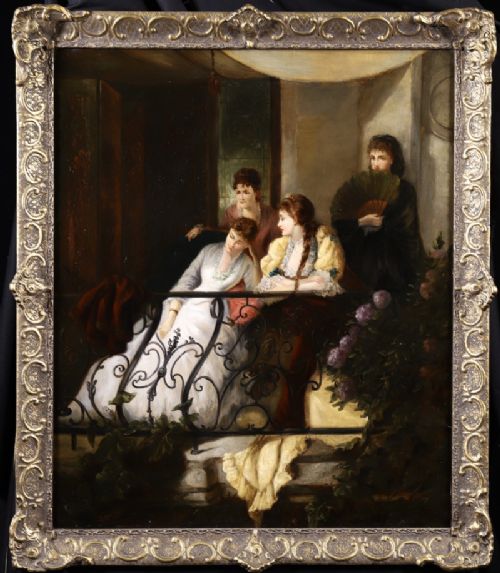
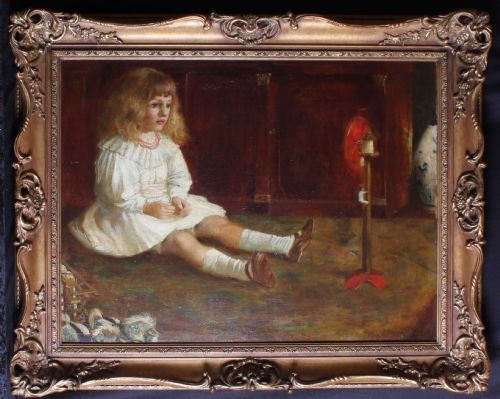
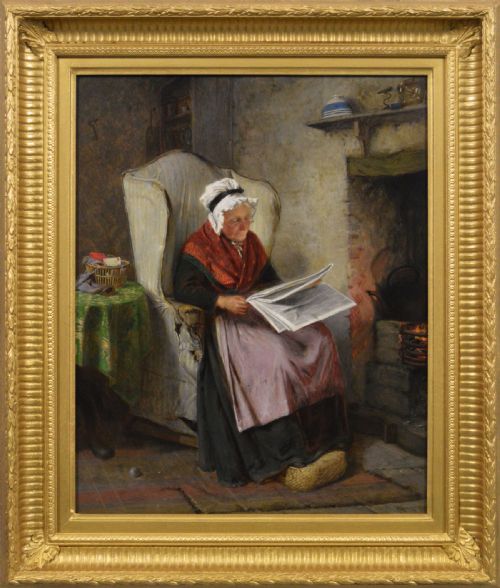
A british narrative oil painting tells a specific story, focusing on human figures engaged in domestic interiors, historical scenes or rural activities. You will encounter Victorian genre paintings and Edwardian works depicting cottage life, tea times, children and historical encounters.
The pieces on this page span from the mid-nineteenth century through the 1920s, reflecting changing tastes in social realism, domestic sentiment and historical illustration. These canvases act as visual windows into past social structures, everyday customs and theatrical storytelling.
How they were made
Artists painted primarily with oil paint on prepared canvas or wood panels, building up layers of pigment to achieve rich tones and narrative detail. Many surviving works retain their period frames constructed from wood, gesso and gold leaf.
Techniques combined careful academic draughtsmanship with expressive brushwork, capturing the play of light across interiors, fabrics and coastal paths. The physical support ranged from stretched canvas to solid wood boards.
British Narrative Oil Painting Retail Price Guide 2026
Typical asking prices for british narrative oil painting among the pieces listed under this phrase on Sellingantiques today, from the lower quarter to the upper quarter. They describe what is for sale here now, not the wider market.
Listings feature nineteenth-century and early twentieth-century pieces executed in oil on canvas or wood, encompassing Victorian social realism and domestic genre scenes.
What varies in quality
Quality rests upon the artist's command of anatomy, facial expression and narrative composition, where subtle gestures convey the emotional core of the scene. Superior works handle light and shadow with precision, drawing the viewer directly into the interaction between figures.
The preservation of the pigment layer and the originality of the frame also influence the standing of a piece. Finer examples maintain their original canvas tension and surface varnish without heavy restoration masking the artist's original touch.
Felix Stone Moscheles·Stephen Samuel Lewin·Mark William Langlois·Alfred Lyndon Grace·Abraham Cooper·Herbert Ashwin Budd·John Arthur Lomax·Charles Burton Barber·Robert Alexander Hillingford·Ralph Hedley·Frank Moss Bennett·Rolinda Sharples·Walter Dendy Sadler
The British Narrative Oil Painting Glossary
- Genre painting
- A style depicting scenes from everyday life, ordinary people, and domestic interiors rather than grand historical or mythological subjects. These works often carry strong narrative or moral undertones.
- Social realism
- An artistic movement highlighting the actual conditions of the working class and poor, addressing social issues and labour. In these paintings, subjects are depicted with directness and empathy.
- Gesso
- A plaster-like mixture used as a base coat on wooden panels and picture frames before gilding or painting. It provides a smooth surface for gold leaf application.
- Oil on panel
- A painting technique executed on a flat piece of wood rather than stretched canvas. Panels offered a rigid support favoured by many nineteenth-century artists for smaller, highly detailed compositions.
- Giltwood
- Wood that has been covered with a thin layer of gold leaf or gold paint. Period frames are frequently made of giltwood to complement the warmth of the oil paintings.
British Narrative Oil Painting: Frequently Asked Questions
What defines a narrative oil painting?
A narrative oil painting tells a distinct story involving human subjects, ranging from quiet domestic interactions to dramatic historical moments. Unlike pure landscapes or portraits, these pieces invite the viewer to interpret an ongoing action or social relationship.
Subjects often include family gatherings, literary scenes, or moments of rustic labour captured with theatrical staging and detailed characterisation.
How do I date these paintings?
Dating relies on stylistic evidence, artist biography records, clothing styles, and framing materials. Victorian works often feature detailed domestic realism, while later Edwardian pieces show shifts in brushwork and palette.
Signatures, exhibition dates, and handwritten inscriptions on the reverse or stretcher bars frequently provide precise chronological anchors for the canvas.
Where were these paintings displayed?
These works were created primarily for domestic display in Victorian and Edwardian middle-class homes, as well as for exhibition at major institutions like the Royal Academy. Collectors hung them in drawing rooms and parlours to spark conversation and reflect cultural tastes.
Smaller panel paintings suited intimate spaces, while monumental canvases anchored grand reception rooms and country house interiors.
How should I care for an antique oil painting?
Protect the canvas by keeping it away from direct sunlight, extreme temperature fluctuations, and high humidity. Stable environmental conditions prevent the oil paint and wood panel from cracking or warping over time.
Dust the surface and frame gently with a soft, dry brush, avoiding liquid cleaners or abrasive materials that could damage the fragile varnish layers.