






British Late Victorian Paintings
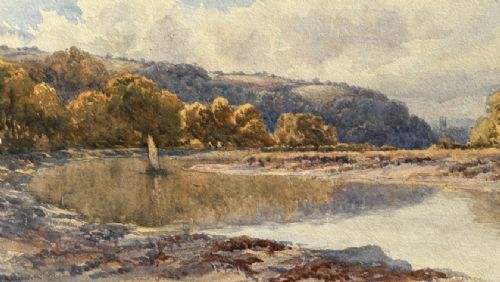
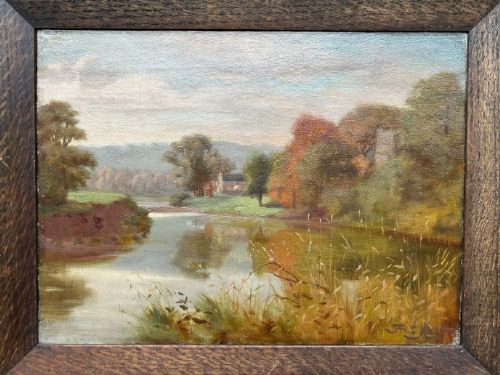
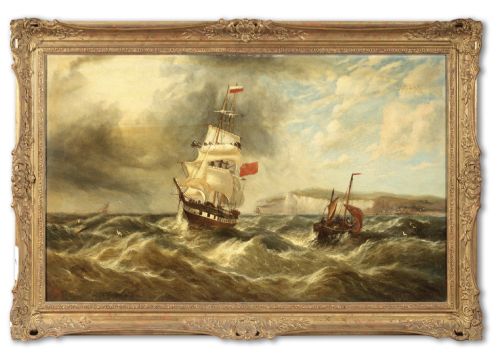
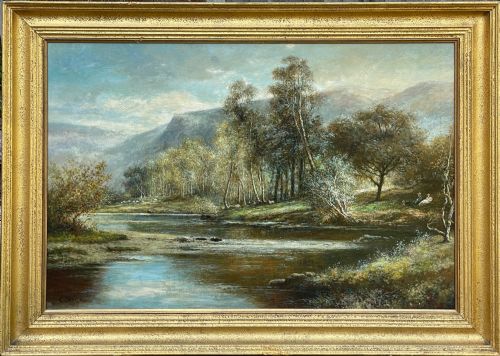
British late victorian paintings capture the shifting light of the countryside and coastal harbours through skilled brushwork on canvas and paper.
British Late Victorian Paintings
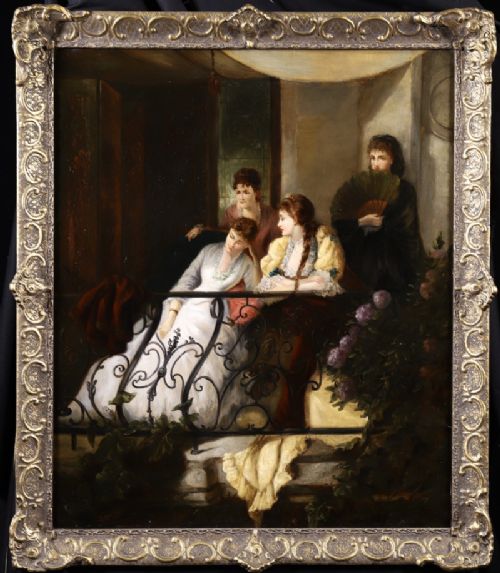
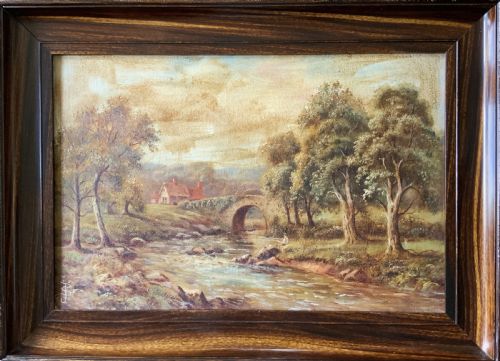
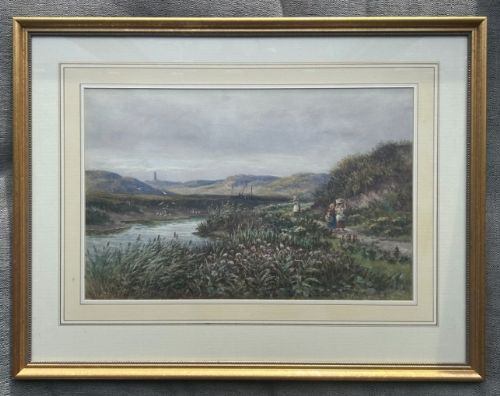
British late victorian paintings encompass regional landscapes, coastal scenes, and portraits created across the nineteenth and early twentieth centuries. These works reflect a period of artistic production focused on naturalism, maritime subjects, and pastoral life.
The most common examples on this page are signed watercolour and oil paintings depicting river valleys, fishing boats, and rural villages. Many bear the signatures of recognised regional artists alongside examples from the British School.
How they were made
Artists applied oil paint to canvas, card, or wood panels, building rich textures for woodland and marine scenes. Watercolours were worked on paper, often utilising pigment washes to capture transparent atmospheric effects over landscapes.
Support materials range from traditional woven canvas to heavy paper and card stock. Frames generally consist of wood moulding, preserving the original relationship between the artwork and its presentation.
One portrait records a three-year-old child born in Madras, proving that Victorian painting travels far beyond the rainy British countryside.
What varies in quality
Quality rests in the handling of light and perspective, distinguishing loosely composed student work from the confident brushwork of established painters. The clarity of detail in figures and natural elements defines the upper tier of these works.
The preservation of the pigment and the stability of the support material also mark differences across the range. Strong colour retention in watercolours and firm tension on canvas indicate careful historic storage.
David Law·James Orrock·Alfred Young Nutt·Frederick Marriott·William Banks Fortescue·John Rose Miles·Thomas W Lascelles·E Brown·John A Monteith·Sydney Yates Johnson·Robert Little·Arthur Herbert Rigg·Thomas Bromley Blacklock·Robert John Hammond·Colin H Greenwood·Henry Bailey·John Syer·Kate E Booth·William Manners·Kathleen Winifred Molesworth·Thomas Pyne·John Syer Junior·Frederick William Jackson·Mary Eley·Frederick J Knowles
The British Late Victorian Paintings Glossary
- Watercolour
- A painting method where coloured pigments are suspended in a water-soluble binder on paper. It allows for translucent washes and delicate tonal shifts.
- Canvas
- A heavy woven fabric stretched across a wooden frame to serve as a firm surface for oil paint. It provides a distinct textural tooth that interacts with the applied pigment.
- Grisaille
- A painting executed entirely in shades of grey or neutral monochrome. This technique often serves to mimic the appearance of relief sculpture.
- Seascape
- A work depicting the sea, coastal views, ships, or maritime activities. These subjects were popular among British artists recording coastal towns and harbours.
British Late Victorian Paintings: Frequently Asked Questions
What subjects do these paintings show?
The artworks primarily depict British rural landscapes, coastal harbours, river valleys, and domestic scenes. Artists recorded specific locations from Cornwall to Scotland, alongside maritime views featuring shipping vessels.
Portraits and silhouette art also appear within the selection, documenting individuals and family groups from the period.
How should I care for a watercolour?
Watercolours on paper require protection from direct sunlight to prevent the fading of delicate pigments. Framing behind glass with acid-free mount board shields the paper from atmospheric moisture and dust.
Displaying these works in rooms with stable temperature and humidity levels preserves both the paper support and the watercolour medium.
What is the difference between oil and watercolour?
Oils use slow-drying paint bound in oil, applied to canvas, wood, or card. This medium allows for thick impasto textures, rich colour blending, and subsequent adjustments.
Watercolours rely on water-soluble pigments applied to paper, creating transparent layers and luminous effects. The support material differs entirely, with watercolours requiring protective glass framing.
Where were these artists working?
The creators of these works operated across Britain, recording local topography from Welsh valleys to Yorkshire coasts and Thames waterways. Some artists exhibited widely in regional galleries and metropolitan institutions.
A number of painters captured specific rural industries, such as haymaking and fishing, reflecting the everyday environments of the late nineteenth and early twentieth centuries.