




British Landscape Illustration
British landscape illustration captures the scenery and architecture of the nation through works on paper.
British Landscape Illustration
When you search for British landscape illustration, you encounter original watercolours, ink drawings, and pencil sketches dating from the nineteenth century through the mid-twentieth century. These works depict rural scenes, castles, towns, and historic buildings across the British Isles.
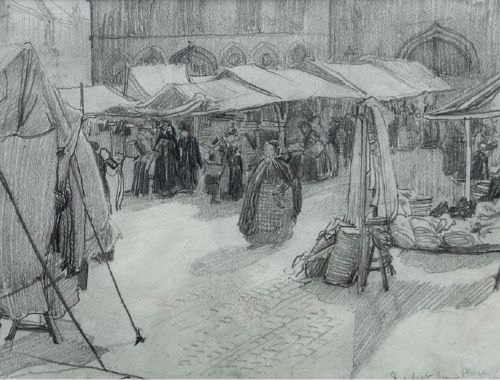
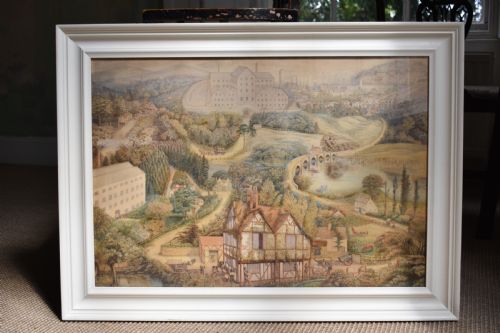
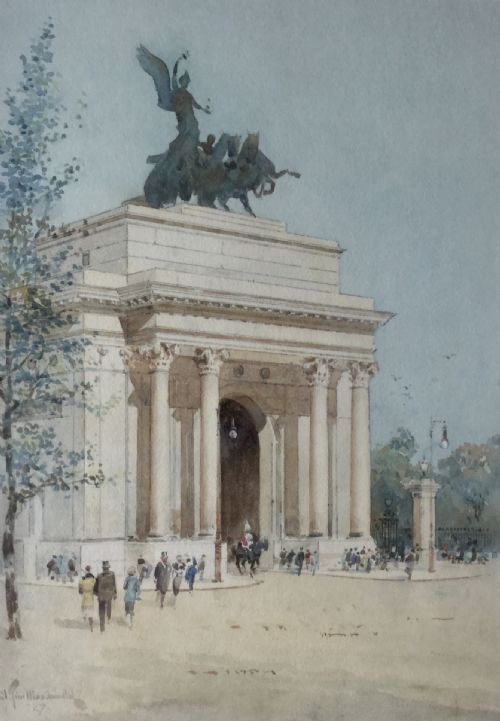
The pieces on this page most frequently take the form of works on paper executed by named artists such as Fred Lawson, alongside nineteenth-century school paintings and wartime drawings. Subjects range from Yorkshire villages and northern castles to London monuments and Belgian market scenes.
Buyers select these works to bring authentic historical topography and period draughtsmanship into domestic interiors. Each piece offers a direct connection to a specific location and the observational practices of its maker.
Assessing quality
Quality rests in the sureness of the draughtsmanship and the artist's ability to capture light and atmosphere within the landscape. Works by established practitioners demonstrate confident handling of ink and watercolour washes that define form without excessive reworking.
Condition of the paper and the retention of pigment vibrancy distinguish superior examples. Pieces with documented provenance, publication history, or direct association with specific bodies of work carry additional weight.
Fred Lawson's output ranges from Bolton Castle to the Glory Hole in Lincoln, capturing the quirks of vernacular British life.
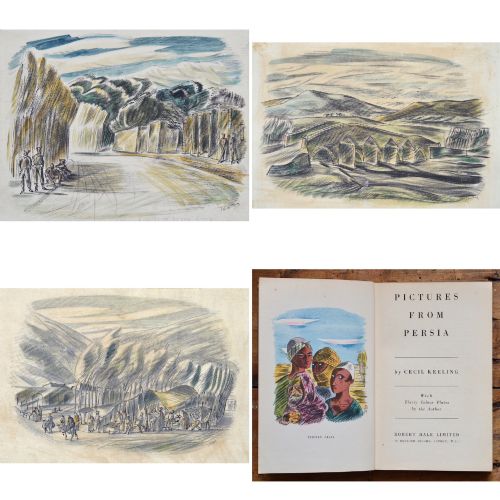
Cecil Keeling·Henry Percy Huggill·Frank Wood·Fred Lawson·Linnie Watt·J. Tim Macdonald·Edward Burrows·Minnie Smythe
The British Landscape Illustration Glossary
- Watercolour
- A painting method in which the paints are made of pigments suspended in a water-based solution. This technique allows for transparent washes of colour on paper.
- Ink
- A liquid containing pigments or dyes used for writing and drawing. Artists combine ink lines with watercolour washes to define architectural and natural forms.
- Pencil
- A graphite or tinted drawing implement encased in wood. Pencil is used both for preliminary sketches and finished works on paper.
- Gouache
- An opaque water-based paint that provides solid areas of colour. It is frequently used alongside watercolour in works from this period.
- Provenance
- The chronology of the ownership of a work of art. Documented provenance links a drawing or painting to its original publication or exhibition.
British Landscape Illustration: Frequently Asked Questions
What periods do these illustrations cover?
The available works span from the nineteenth century through the early twentieth century, with concentrations in the decades of the 1920s, 1930s, and 1940s.
This timeframe encompasses Victorian academic output, traditional British naturalism, and mid-century modern artistic movements.
How should I frame works on paper?
Works on paper require conservation framing under glass to protect delicate watercolours and inks from ultraviolet light and atmospheric moisture.
Using acid-free mounts ensures the paper does not discolour or degrade over time.
Are these works original?
The listings consist of original drawings, paintings, and watercolours executed by hand rather than mass-produced prints.
Many pieces bear artist signatures, dates, or titles inscribed directly on the paper.
What subjects appear in these illustrations?
Subjects include rural farmyards, northern castles, townscapes, market places, and collegiate architecture across Britain and Europe.
Selected items also feature wartime documentation and book illustrations.