




British General Portrait Painting
British general portrait painting captures the formidable military leadership of the nation across centuries in oil on canvas and watercolour.
British General Portrait Painting
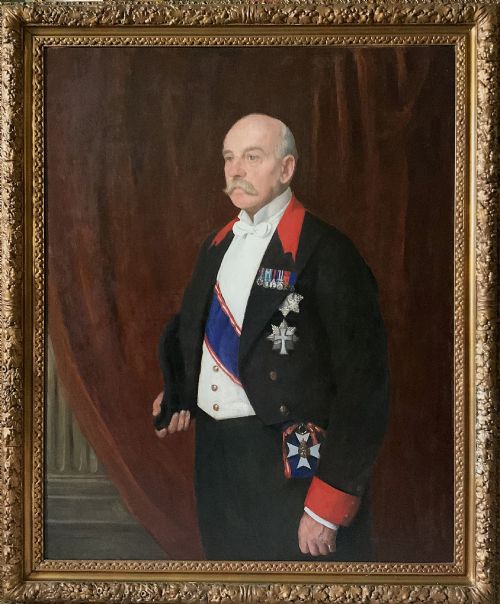
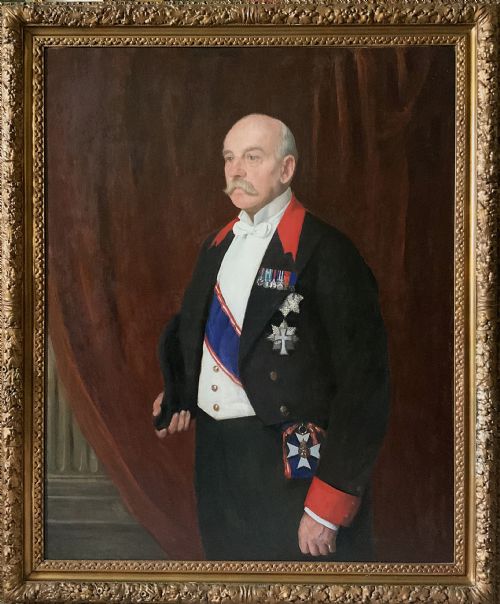
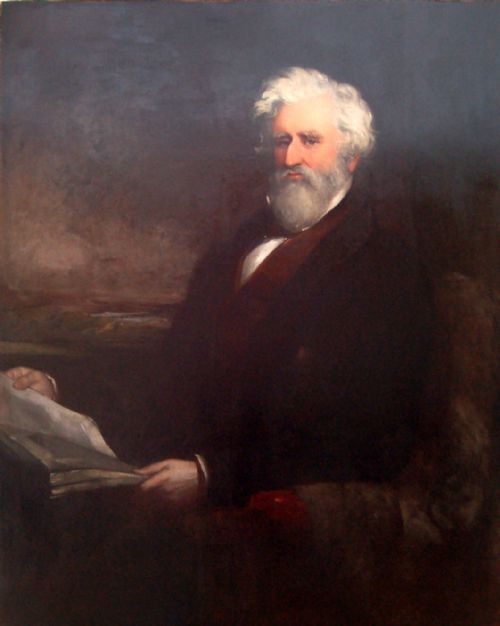
A british general portrait painting depicts notable military figures, commanders-in-chief, and governors general from the eighteenth, nineteenth, and early twentieth centuries. These works record the likenesses of historical figures such as Major-General Sir Stanley Clarke and Lieutenant-General Sir John Harvey.
The most common formats found on this page are oil paintings on canvas, linen canvas, or paper, alongside occasional portrait miniatures. Styles range from Georgian and Regency to Victorian and Edwardian periods.
Subjects appear in formal military attire, including redcoat tunics with gold braided shoulder epaulettes, reflecting their rank and service. The sitters include notable historical personalities painted by both named artists and the English school.
Distinctions in execution
Quality rests upon the skill of the brushwork and the psychological depth achieved in capturing the sitter's likeness. Works by documented portraitists display superior anatomical proportion and subtlety of expression compared to anonymous studio copies.
The preservation of the paint surface and the originality of the mounting frame influence the standing of a piece. Retained giltwood frames and undisturbed canvas grounds maintain the historical integrity of the artwork.
One major-general stands immortalised in an original swept frame while wearing his redcoat tunic with gold braided shoulder epaulettes.
Arthur William Devis·George Frederic Watts·Henry Walton·Henry Hoppner Meyer·Ruth Cecil Latter·George Duncan Beechey
The British General Portrait Painting Glossary
- Oil on canvas
- A painting technique utilising pigments suspended in drying oils applied to a woven fabric support. This combination allows for rich colour blending and longevity.
- Giltwood
- Wood that has been coated with a thin layer of gold leaf or powder. This finish appears frequently on the swept frames housing these military portraits.
- Portrait miniature
- A small-scale painted likeness, often executed on paper or ivory. These intimate works capture facial details with high precision.
- Epaulette
- An ornamental shoulder piece worn on military uniforms to denote rank. They are commonly rendered in gold braid within these officer portraits.
- English school
- A term used to describe works produced by British artists sharing stylistic traits of a particular era without a specific master attributed.
British General Portrait Painting: Frequently Asked Questions
What periods do these portraits date from?
The listings span from the seventeen-hundreds through the eighteenth and nineteenth centuries into the early twentieth century. Styles encompass Georgian, Regency, Victorian, and Edwardian periods.
Specific dates within the evidence range from seventeen-ninety-two up to nineteen-thirty, reflecting shifting artistic approaches across these eras.
How were these military portraits used?
These works served as official commemorations of high-ranking military commanders, governors general, and prominent officers. Families, regiments, or institutions commissioned them to record distinguished service.
They hung in private residences, mess halls, and public buildings as testaments to British military authority.
What materials make up the frames?
Frames are constructed from wood and finished with a gilded or giltwood surface. Some feature swept designs characteristic of specific historical periods.
These surrounds often remain original to the painting, preserving the complete period presentation.
Who are some of the sitters depicted?
Subjects include prominent historical commanders such as Major-General Sir Stanley Clarke and Lieutenant-General Sir John Harvey. Other sitters held significant administrative and military roles across the British Empire.
Artists recorded figures ranging from governors general to commanders-in-chief of the British Army.
How can I identify the artistic style?
Styles align with the prevailing artistic movements of the sitter's lifetime, moving from eighteenth-century realism to Victorian and Edwardian academic portraiture. Attributions often point to specific British schools or named practitioners.
Brushwork, palette, and uniform details assist in determining the approximate date of execution.