



British Floral Art Canvas
British floral art canvas pieces bring botanical subjects into domestic interiors through oil paint applied directly to woven grounds.
British Floral Art Canvas
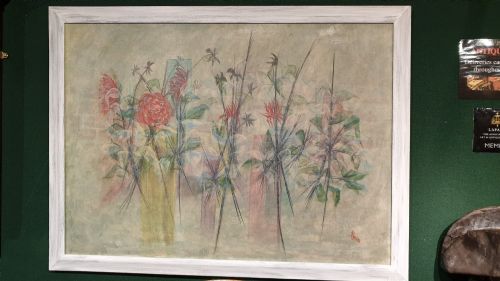
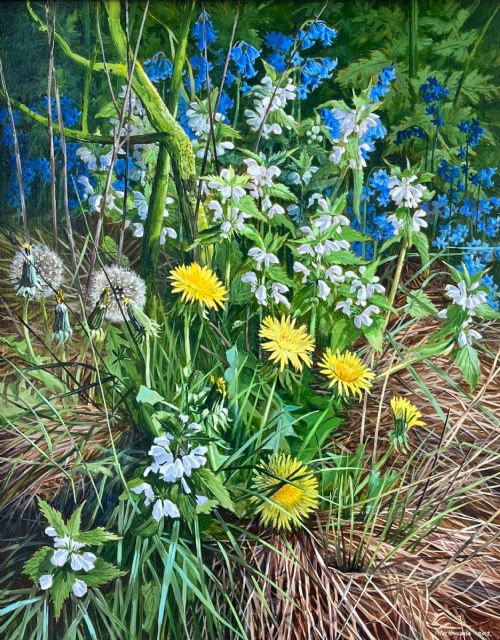
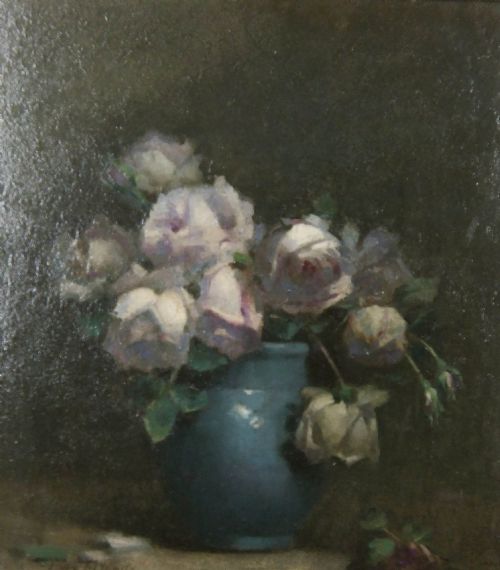
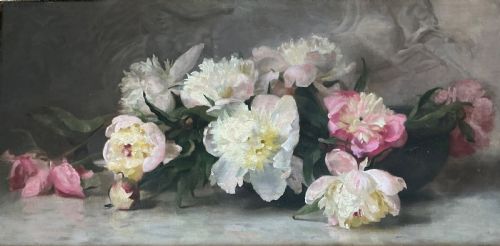
A british floral art canvas presents botanical subjects, garden views and tabletop arrangements rendered in pigment across Victorian, Edwardian and mid-century periods. These works capture seasonal blooms through distinct regional movements including the Staithes Group and early twentieth-century realism.
The format ranges from intimate studies of individual stems to large landscape compositions featuring hedgerows and cultivated gardens. Most examples employ traditional stretchers supporting woven textile grounds housed within wooden surrounds.
Materials and construction
Makers built these works using oil paint applied to woven canvas stretched over wooden frames, often incorporating gesso preparations to seal the ground before painting. Pigments were worked with brushes and palette knives to build texture, capturing the weight of petals and foliage.
Frames frequently utilise wood finished with gold leaf or giltwood, framing the painted surface to complement the composition. Tempera occasionally appears alongside oil paint as a medium on canvas or panel supports.
One mid-century canvas depicts lily of the valley intended specifically to serve as a painted lucky charm.
Gradations in execution
Quality rests in the handling of light and the structural integrity of the botanical forms, where confident brushwork distinguishes perceptive observation from mechanical replication. The cohesion of the composition and the preservation of the original painted surface dictate the standing of an individual piece.
Framing materials also contribute, as period giltwood surrounds designed specifically for the canvas indicate higher original investment than later replacements. The subtlety of colour harmony within the floral arrangements separates standard decorative work from accomplished fine art.
Owen Bowen·Ernest Higgins Rigg·Kershaw Schofield·Freda Marston·William Thomas Wood
The British Floral Art Canvas Glossary
- Canvas
- A heavy woven fabric, typically flax or cotton, used as the foundational support for oil paintings. It is stretched tightly over a wooden frame before application of the ground layer.
- Gesso
- A traditional mix of binder and chalk used to prepare canvas surfaces for painting. This layer provides a smooth, stable ground for oil pigments.
- Giltwood
- Wood carved and coated with a thin layer of gold leaf or metallic powder. It is commonly found on period picture frames.
- British Impressionism
- A painting style developed in Britain during the late nineteenth and early twentieth centuries. It focuses on light, loose brushwork and everyday scenes.
- Staithes Group
- A regional association of painters working on the North Yorkshire coast. Their output includes plein-air landscapes and garden studies.
British Floral Art Canvas: Frequently Asked Questions
How do I hang a canvas safely?
Hang the piece using appropriate picture wire attached securely to the wooden stretcher bars rather than the frame alone. Ensure the wall placement avoids direct sunlight and dramatic temperature fluctuations.
Keep the painting away from damp environments to protect the woven support and the oil layers from deterioration over time.
What is the difference between an oil and a tempera painting?
Oil paint utilises a drying oil binder, allowing for slow blending, rich textures and luminous colour layering. Tempera employs a water-soluble binder like egg yolk, resulting in a fast-drying, opaque matte finish.
Both media appear on canvas supports across the periods represented here.
How do I identify the period of a painting?
Examine the style of brushwork, the pigments used, and the framing materials for stylistic clues matching Victorian, Edwardian or mid-century aesthetics. Signatures, inscriptions on the reverse, and stretcher construction also offer chronological indicators.
Compare the handling with known works by documented painters from groups such as the Staithes artists.