



British Etching Print
British etching print pieces combine ink and paper with skilled mark-making, offering buyers striking historical depth for domestic walls.
British Etching Print
A british etching print brings together works executed across the nineteenth and twentieth centuries, spanning Victorian, Edwardian, Modern British, and Mid-Century Modern British styles. Buyers exploring this category encounter framed art, wall art, and fine art prints depicting rural scenes, architectural landmarks, literary subjects, and animal studies.
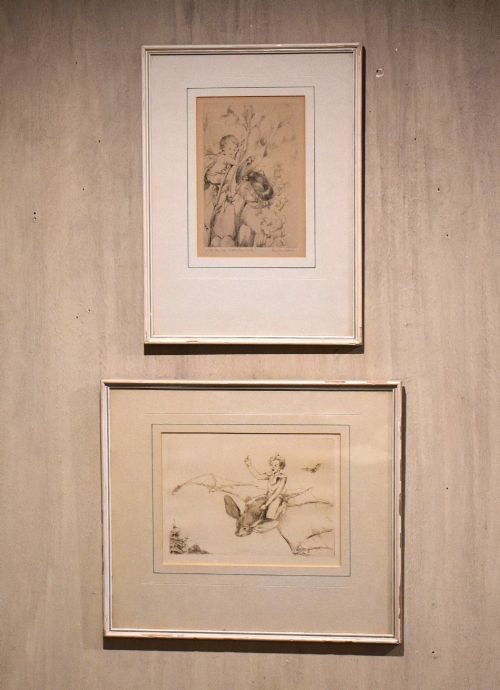
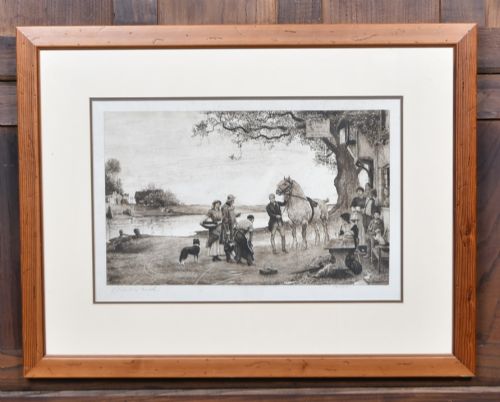
The selections range from nineteenth-century rural and hand-coloured plates to twentieth-century drypoint and aquatint works by named artists. Common formats include single framed compositions and paired miniatures, often preserved behind glass with wooden or gilt wood frames.
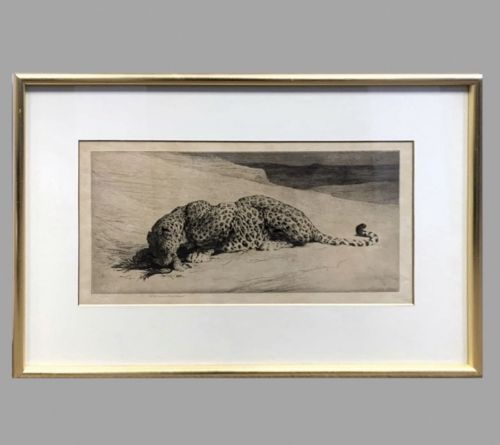
Most examples originate from the Victorian era through to the nineteen-sixties, reflecting the shifts in printmaking from traditional illustrative methods towards modern British sensibilities. These works capture specific domestic and international subjects, from London landmarks to domestic animals and ballet dancers.
Materials and construction methods
These works rely fundamentally on paper, cardboard, and ink, frequently enhanced through drypoint technique, aquatint, or hand colouring. Artists employed metal plates to cut lines before transferring ink onto paper sheets, sometimes applying watercolour additions by hand.
Framing materials observed in the listings include wood, gilt wood, and glass, alongside protective cardboard backings. Signed artist proofs, pencil signatures, and period labels indicate the standard workshop and studio practices of the printmakers.
British Etching Print Retail Price Guide 2026
Typical asking prices for british etching print among the pieces listed under this phrase on Sellingantiques today, from the lower quarter to the upper quarter. They describe what is for sale here now, not the wider market.
Listings feature paper, glass, ink, wood, gilt wood, and gold leaf across periods from the nineteenth century to nineteen-sixty.
Quality factors in printmaking
Quality in a british etching print rests upon the clarity of the line work, the crispness of the plate impression, and the preservation of the paper substrate. Stronger impressions demonstrate deeper contrast between the inked lines and the surrounding paper.
The presence of original artist pencil signatures, limited edition designations, and period framing enhance the standing of a piece. Furthermore, surviving documentation such as gallery provenance labels contributes significantly to the historical record of individual works.
Marjorie L Davies·Robert W Macbeth·Herbert Dicksee·T A Prior·John Merrifield·Augustus Edwin John·Francis Dodd·Edgar J Maybery·Norman Janes·Frank Greenwood·David Wilkie·Deidre Borlase·Edward Burrows
The British Etching Print Glossary
- Etching
- A printmaking process where lines are bitten into a metal plate with acid before ink is applied and transferred to paper. This technique allows for fine, detailed linear work.
- Drypoint
- A printmaking method where the artist scratches directly into the metal plate with a sharp needle, raising a burr that holds ink for a velvety line. It is closely related to etching.
- Aquatint
- A printmaking technique used to produce tonal areas of grey or colour rather than simple lines, often combined with standard etching. It relies on powdered resin dusted onto the plate.
- Hand Coloured
- A print finished with watercolour or other pigments applied by hand after the initial monochrome impression is pulled. This adds specific hues to individual sheets.
- Artist Proof
- An impression taken during the printing process to allow the artist to check the state of the plate, typically retained outside the numbered edition. These proofs often carry pencil signatures.
British Etching Print: Frequently Asked Questions
What is a british etching print?
A british etching print is a work created by transferring ink from an etched metal plate onto paper, produced by British artists across various historical periods.
These pieces encompass subjects ranging from rural landscapes and architectural views to animal studies and literary illustrations.
How do I hang framed etching art?
Framed etching works require stable placement away from direct sunlight to protect the paper and ink from fading over time.
Using secure wall fixings suited to the weight of the wood frame and glass ensures safe display in domestic spaces.
Are these prints signed by artists?
Many examples feature original signatures written in pencil by the artist below the image area, alongside limited edition notations.
Signed proofs and numbered runs indicate closer association with the creator's intended print run.
How do I identify Victorian etchings?
Victorian etchings typically exhibit subjects, framing styles, and paper types characteristic of the nineteenth century, sometimes accompanied by hand colouring.
Reference to historical periods and specific artist dates within the listings helps distinguish nineteenth-century works from later twentieth-century productions.