



British Etching Art
British etching art brings together printed impressions on paper from the nineteenth and twentieth centuries, offering direct contact with historic printmaking traditions.
British Etching Art
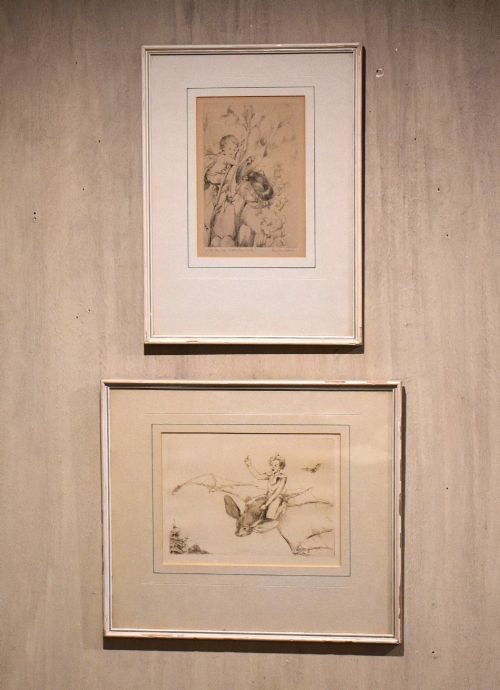
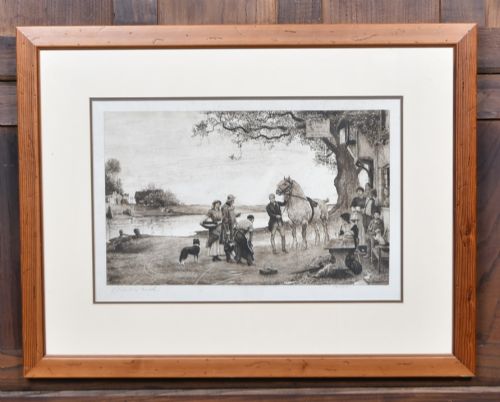
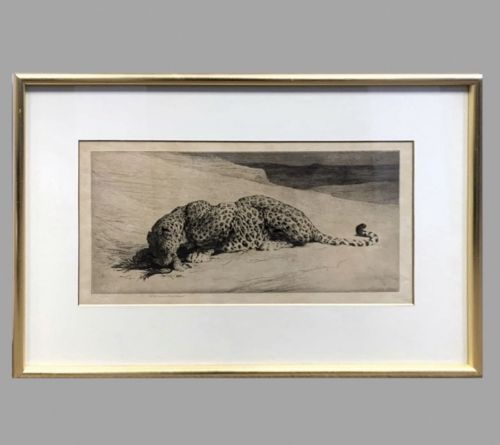
British etching art comprises printed works on paper produced across the nineteenth and twentieth centuries, spanning Victorian, Edwardian, and mid-century movements. Buyers seeking these pieces encounter framed prints, wall art, and fine art prints capturing rural scenes, architectural views, and animal studies.
The selections on this page range from nineteenth-century hand-coloured plates to early twentieth-century drypoint proofs and mid-century colour etchings. Works often depict specific subjects such as London landmarks, coastal beaches, and domestic or wild animals.
These items originate from various periods including Victorian decades, the 1900s, 1910s, 1920s, 1930s, and the 1960s. Each piece reflects the particular aesthetic sensibilities of its era, from traditional illustrative detail to modern British abstraction and realism.
How they were made
Makers produced these works using ink transferred from metal plates onto paper surfaces, sometimes employing drypoint techniques where the artist scratched directly into the plate. Certain examples incorporate hand-colouring or aquatint methods to add tonal depth and varied hues to the printed image.
Framed presentation typically involves protective glass, wooden frames, and occasionally gold leaf or gilt wood accents, mounted with cardboard backings. Provenance labels sometimes appear on the reverse, documenting the gallery or exhibition history of the physical object.
British Etching Art Retail Price Guide 2026
Typical asking prices for british etching art among the pieces listed under this phrase on Sellingantiques today, from the lower quarter to the upper quarter. They describe what is for sale here now, not the wider market.
Listings include works on paper utilising ink, watercolour, and cardboard, housed in glass and wood or gilt wood frames.
What varies in quality
Quality differences emerge in the crispness of the ink impression and the subtlety of the plate mark left on the paper during the printing process. Signed artist proofs and limited editions demonstrate a closer connection between the creator and the final output than unsigned general print runs.
The preservation of the paper substrate, the clarity of hand-applied watercolour washes, and the integrity of period framing materials contribute significantly to the overall standard of any given piece.
Robert W. Macbeth·Herbert Dicksee·T.A Prior·John Merrifield·Augustus Edwin John·Francis Dodd·Edgar J. Maybery·Norman Janes·Frank Greenwood·David Wilkie·Deidre Borlase·Edward Burrows
The British Etching Art Glossary
- Etching
- A printmaking method where acid bites lines into a metal plate to hold ink before pressing onto paper. Artists use this technique to achieve fine linear detail.
- Drypoint
- A printmaking process where an artist scratches directly into a metal plate with a sharp needle without using acid. This produces soft, velvety lines due to the metal burr raised on the plate.
- Aquatint
- An intaglio printmaking technique that creates tonal areas of grey or colour rather than lines. It uses powdered resin on the plate to produce varied shades when etched.
- Artist proof
- An impression of a print taken before the main edition is printed, retained by the artist for review. These proofs often carry pencil signatures and annotations.
- Hand coloured
- A print that has received additional pigment by hand after the initial monochrome impression is struck. This adds distinct colour variation to individual sheets.
British Etching Art: Frequently Asked Questions
What is a drypoint etching?
A drypoint etching is created when an artist draws directly onto a metal plate with a sharp needle, pushing up a ridge of metal called a burr.
When inked and printed, this burr gives the lines a rich, velvety appearance that distinguishes them from acid-bitten engraved lines.
How should I frame these prints?
These works require framing under glass with acid-free mount board to protect the delicate paper and ink from environmental damage and fading.
Traditional wood or gilt wood frames complement the historical nature of nineteenth and twentieth-century prints.
Are these works signed?
Many examples feature pencil signatures by the artist in the margin below the image area, often designating specific proofs or limited edition runs.
Unsigned impressions also exist, reflecting standard publishing practices of the nineteenth century and earlier decades.
What periods do these pieces cover?
The selection spans from the Victorian era and the nineteenth century through the Edwardian period and the early twentieth century.
Later examples extend into the 1930s and mid-century Modern British periods of the 1960s.