


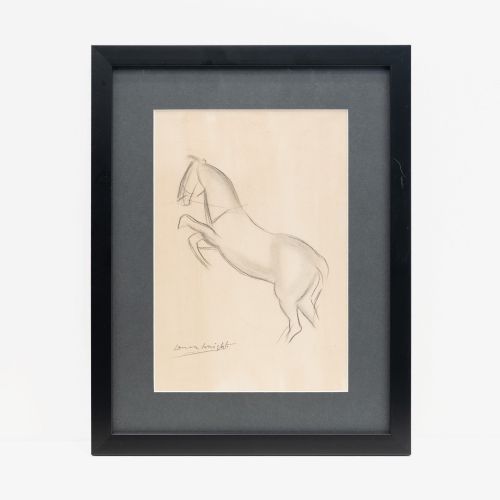


British Equine Art
British equine art captures the power and character of horses through centuries of oil paintings and watercolours.
British Equine Art
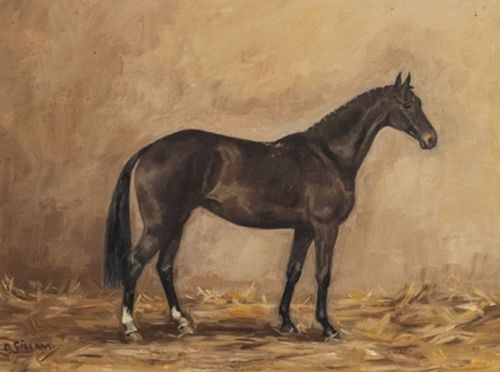
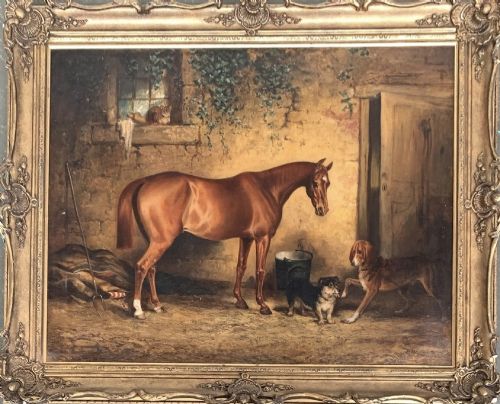
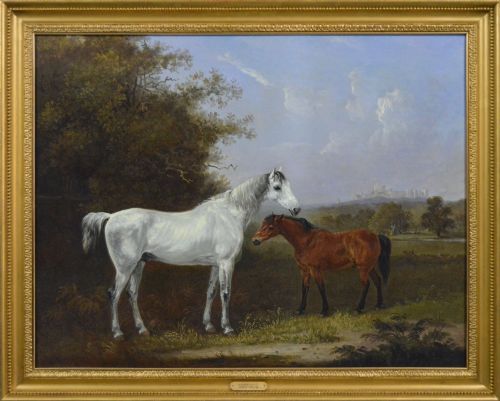
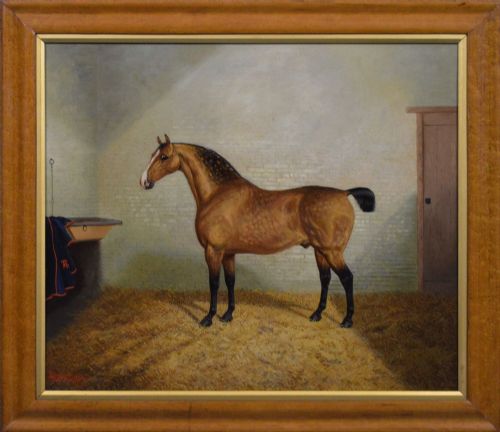
British equine art centres on framed horse portraits and sporting scenes executed in oil paint or watercolour across the Georgian, Victorian, and twentieth-century periods. These works range from detailed depictions of individual hunters and champions by named painters to rural landscape scenes featuring working horses.
Buyers will encounter oil paintings on canvas alongside works on paper, often housed within wood and gesso frames embellished with gold leaf. The subjects vary from single animal portraits in stables to racing scenes and horses at work in pastoral landscapes.
Materials and construction
Painters applied oil paint and gouache onto canvas or paper substrates, capturing the musculature and coats of horses with fine brushwork. Canvases are stretched over wood supports and secured within traditional frames finished with gesso and gold leaf.
Framed artwork utilises glass to protect works on paper such as watercolours, while oil paintings on canvas remain unglazed. Period frames often feature moulded ornamentation that complements the era of the painting.
British Equine Art Retail Price Guide 2026
Typical asking prices for british equine art among the pieces listed under this phrase on Sellingantiques today, from the lower quarter to the upper quarter. They describe what is for sale here now, not the wider market.
Several canvases capture horses sharing the frame with attentive dogs and hardworking ploughmen.
Distinctions in quality
Quality rests upon the artist's ability to render the correct anatomical proportions and energetic movement of the horse, alongside the depth achieved in the surrounding landscape or stable interior. Works by established Victorian and Georgian sporting painters demonstrate superior handling of light on horse coats.
The integrity of the original canvas, the preservation of the paint layers, and the authenticity of the period frame contribute significantly to the standing of a piece.
Henry Barraud·Edmund Bristow·Albert Clark·Dame Laura Knight·John Ferneley Senior·John Rattenbury Skeaping·Arthur Winter Shaw·Abraham Cooper·Ernest Higgins Rigg·George Cole·William Shayer Snr
The British Equine Art Glossary
- Oil painting
- A work created using pigments bound in a drying oil, typically applied to canvas.
- Gouache
- An opaque water-based paint medium used for works on paper.
- Gesso
- A plaster-like mixture applied to wood frames before gilding with gold leaf.
- Sporting art
- Depictions of rural sports, hunting, and prized animals, prominent in British painting.
- Provenance
- The documented history of ownership associated with a work of art.
British Equine Art: Frequently Asked Questions
What subjects appear in British equine art?
These works depict individual hunters, champion stallions and mares, horses at work with ploughmen, and racing scenes. Artists frequently placed the animals within pastoral landscapes, river valleys, or stable interiors.
Portraits capture specific animals known to their owners or celebrated in sporting circles during the Georgian and Victorian eras.
How do I identify the period of a horse painting?
Dating relies upon the clothing of figures, the framing style, and the painting technique characteristic of Georgian, Victorian, or twentieth-century British schools. Examining the canvas preparation and stretcher construction provides further chronological clues.
Signatures, inscriptions, and artist records help link specific works to active dates in the nineteenth and twentieth centuries.
Where should I hang an oil painting?
Oil paintings on canvas suit principal reception rooms or studies where stable humidity and temperature can be maintained. Avoid positioning works in direct sunlight or above active heat sources to protect the canvas and paint layers.
Ensure the wall fixings safely support the weight of the wood and gesso frame.
What is the difference between oil and watercolour horse paintings?
Oil paintings utilise pigment suspended in oil on canvas, offering rich texture and deep colour saturation that does not require glass protection. Watercolours and gouache use water-soluble binders on paper and require framing beneath glass to prevent moisture damage.
Oils typically project a heavier presence with gilded gesso frames, whilst watercolours present a lighter aesthetic.